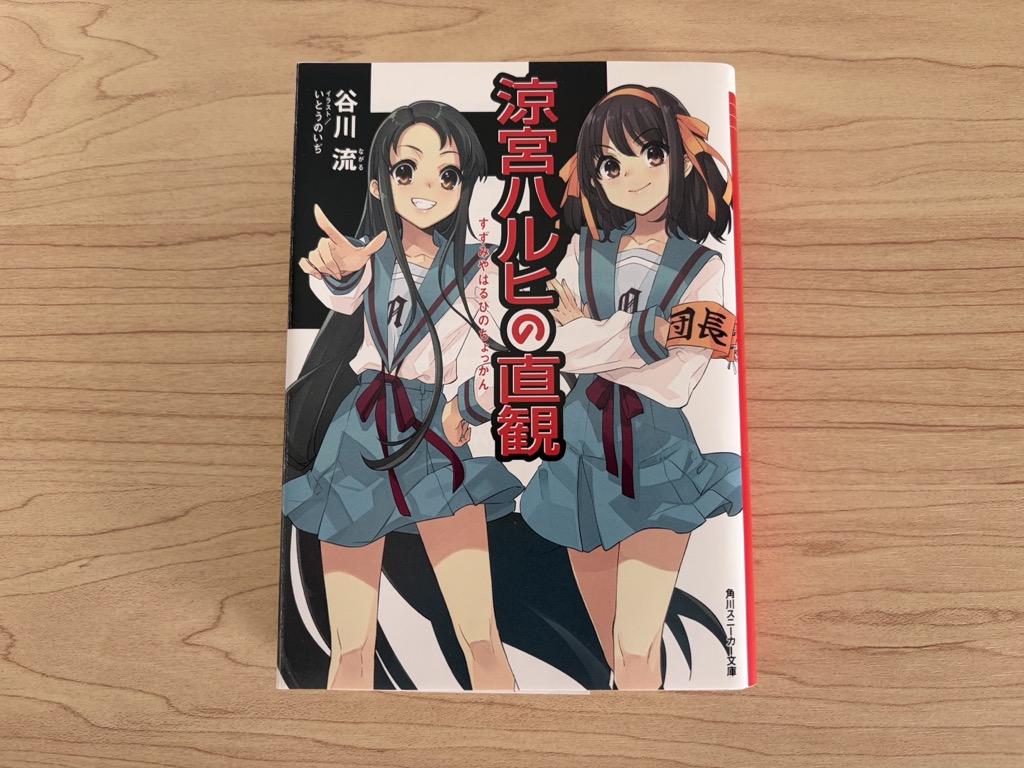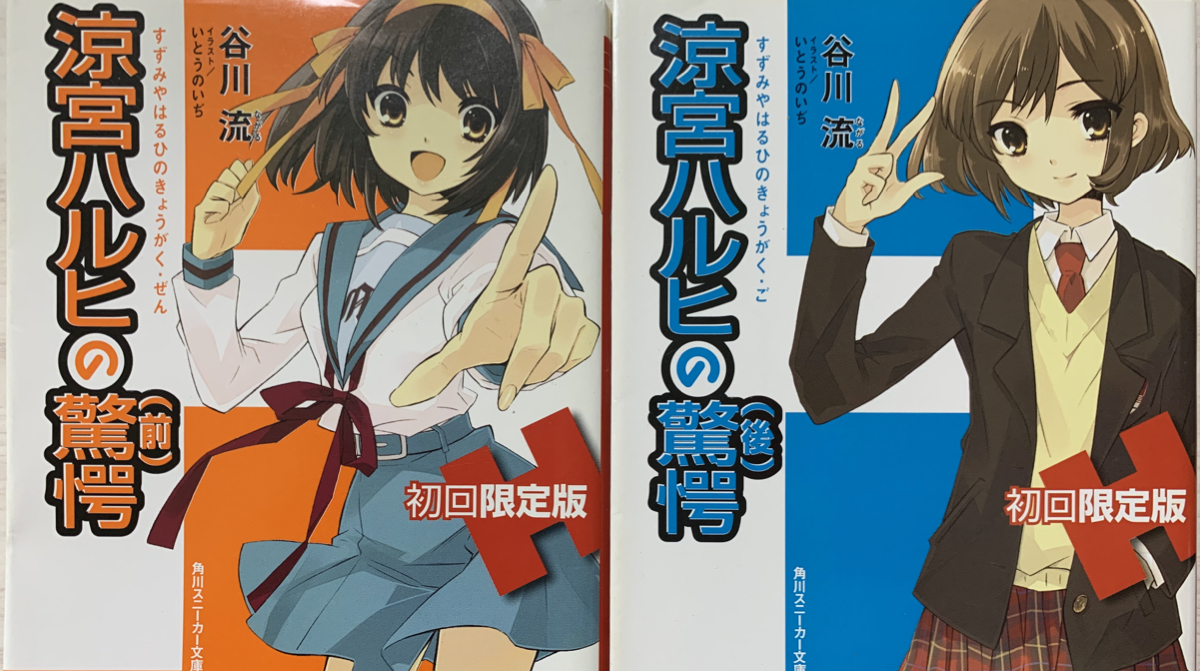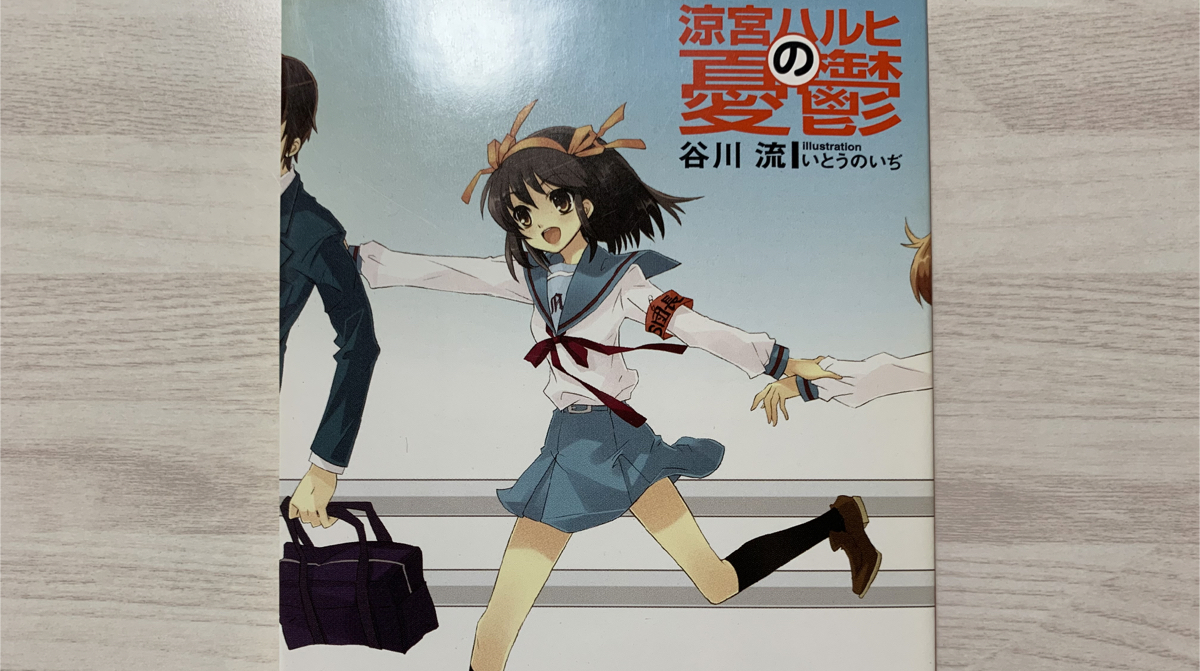
The Melancholy of Haruhi Suzumiya (涼宮ハルヒの憂鬱) is a Japanese light novel by Nagaru Tanigawa, illustrated by Noizi Ito. Kadokawa Sneaker Bunko published it on 6 June 2003, and it is the first volume of the series.
The short answer: if you go in expecting flashy battles or a clear coming-of-age arc, this book will confuse you. It works through everyday conversation and rhythm, letting a sense of wrongness build up slowly. Whether the narrator’s voice suits you decides almost everything about how you will feel.
This article is about my own experience reading the first volume. It should help you judge what kind of atmosphere the story has and whether it fits your taste.
Sponsored
1. What kind of book is The Melancholy of Haruhi Suzumiya?
The short answer: it is the first volume of the series and the winner of the 8th Sneaker Grand Prize.
| Item | Detail |
|---|---|
| Author | Nagaru Tanigawa (谷川流) |
| Illustrator | Noizi Ito (いとうのいぢ) |
| Imprint | Kadokawa Sneaker Bunko (角川スニーカー文庫) |
| Japanese release | 6 June 2003 |
| Pages | 328 |
| Award | 8th Sneaker Grand Prize, top prize |
The Sneaker Grand Prize is the debut award run by the Kadokawa Sneaker Bunko imprint, so this book was a debut work that won its publisher’s own top prize. It also took first place in the 2005 edition of Kono Light Novel ga Sugoi!, an annual Japanese ranking guide for light novels, and it was adapted into a TV anime in 2006.
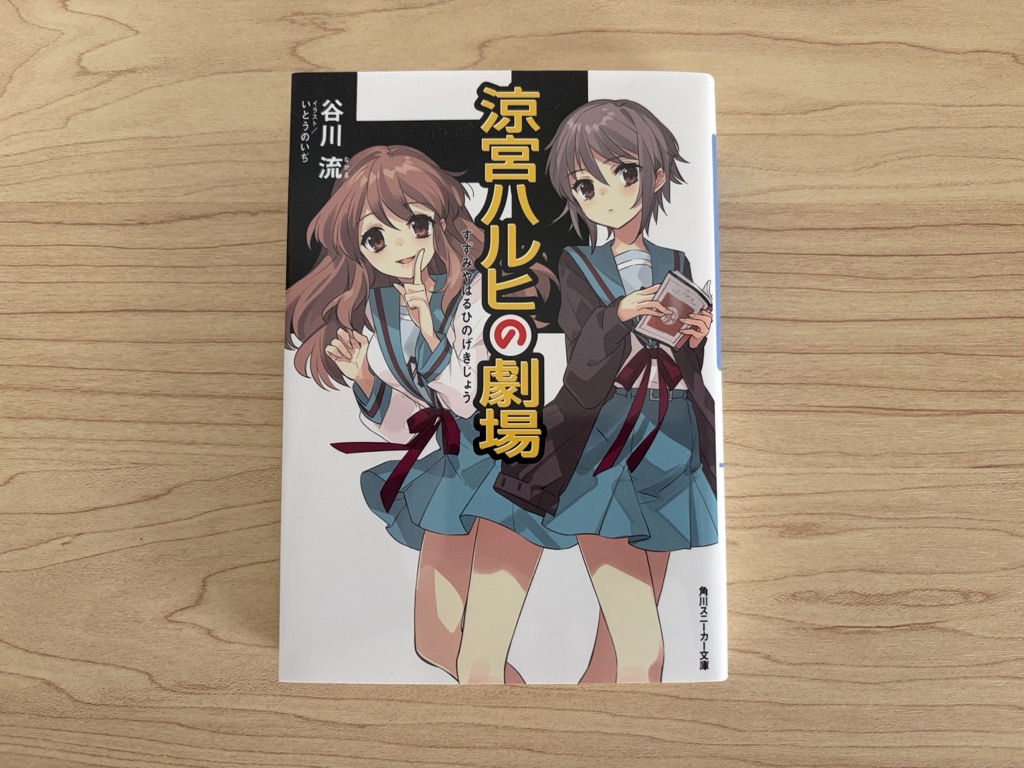
The series did not stop there. As of 29 November 2024, when The Theater of Haruhi Suzumiya was published, Kadokawa Sneaker Bunko has released thirteen books in total.
2. What I paid attention to while reading
The short answer: I judged this book by how it felt to read, not by how well the plot or the world-building was constructed.
I kept four things in mind.
- The overall mood and pacing of the story
- Whether the first-person narration felt comfortable to read
- The emotional distance between characters and how their conversations felt
- What kind of aftertaste remained once the book was finished
Rather than looking for the “correct” reading, I paid attention to what lingered afterward. Everything below follows from that.
Sponsored
3. What is the story about, without spoilers?
The short answer: an ordinary high school boy gets pulled into the orbit of an eccentric classmate, Haruhi Suzumiya, and steps into the space where ordinary life and the abnormal blur together.
The opening is surprisingly calm. Nothing dramatic happens right away. The story builds through small moments where you sense that something is slightly off. A comment here, an action there, and each one adds to a growing feeling that the normal rules do not fully apply.
The novel relies on dialogue and narrative rhythm rather than spectacle. That is the main thing separating it from what people usually picture when they hear “light novel.”
4. What left the strongest impression: the narrator’s voice
The short answer: the tone of the whole book is set by the first-person narration of the protagonist, nicknamed Kyon.
His voice is ironic and detached, but never completely cold. That measured distance is what keeps the story readable even when the events themselves get strange.
The pacing feels light without being rushed. Many scenes run on conversation with minimal explanation. At times you will not fully follow what is happening, and the writing carries you anyway. I found that slightly disorienting flow deliberate and effective.
How you respond to this narrative voice will decide most of your opinion of the book.
Sponsored
5. Is Haruhi Suzumiya a likeable character?
The short answer: not especially, and the book does not ask you to like her.
Some of her actions are plainly self-centered, and there are moments where empathy does not come easily. Even so, I never felt the story was forcing her on me, because the narrative never excuses or glorifies her behaviour.
Everything is filtered through the protagonist’s perspective, so you share his confusion at the same distance he does. That shared distance is what makes her compelling rather than simply unpleasant.
Whether or not you end up liking her, she holds your attention.
6. What the word “Melancholy” means by the end
The short answer: the book is not dark, but it leaves an unresolved feeling behind.
After finishing it, the word in the title read differently to me than it had at the start.
Not everything gets explained. Some elements click into place by the last page, while others stay open. That mixture leaves an emotional residue rather than a clean ending.
For some readers, that residue is exactly what makes them pick up the next volume. For others, it reads as unsatisfying. Both reactions seem fair to me.
7. Who is this novel for?
The short answer: it suits readers who choose books by atmosphere and voice, and frustrates readers who want a clear payoff.
| Likely to enjoy it | Likely to struggle with it |
|---|---|
| Readers who enjoy dialogue and atmosphere | Readers who want fast plots and clear payoff |
| Readers who like dry, ironic first-person narration | Readers who need to empathise with a lead to keep going |
| Readers drawn to a blurred line between normal life and the strange | Readers who want every setting explained |
| Readers comfortable with unresolved endings | Readers who need one book to feel complete on its own |
8. Is the first volume worth reading?
The short answer: yes, for the right reader it lands hard.
If you expect a conventional light novel, it may feel confusing. If you are curious about a story with an unusual mood and narrative voice, it is worth trying.
It is not a book that makes you say “that was amazing” the moment you finish. It does leave something behind. I found myself thinking about it afterward and wondering what came next.
9. Read the series in order, at least through Volume 4
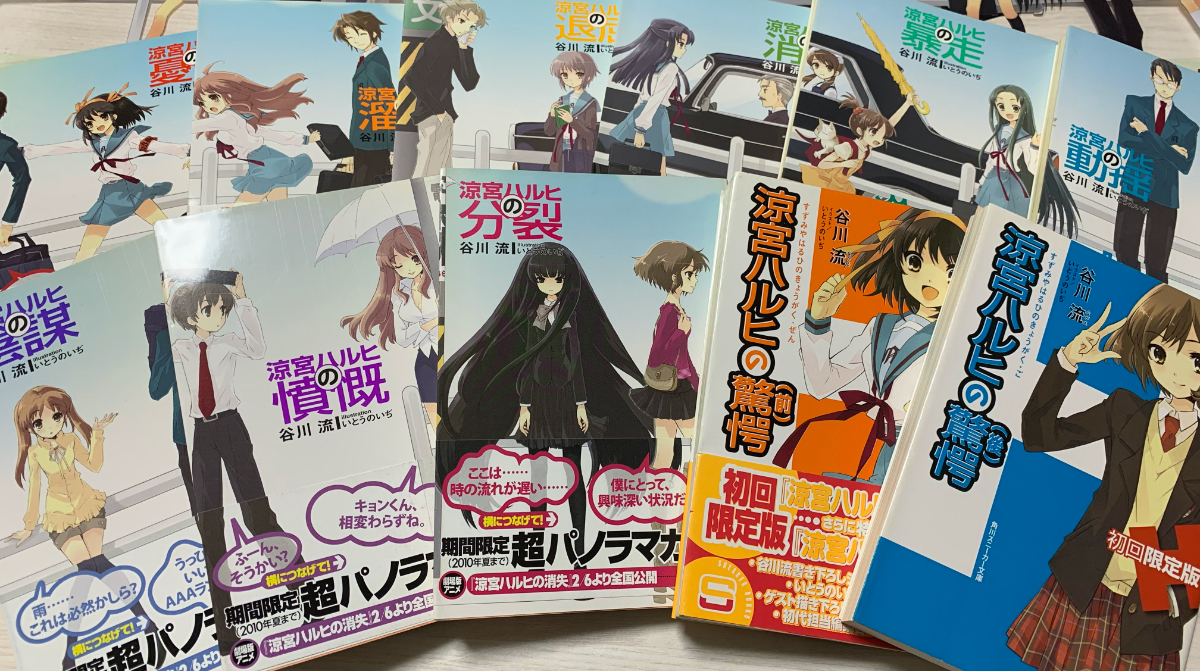
The short answer: read the Haruhi Suzumiya novels in publication order, and carry on at least as far as the fourth volume, The Disappearance of Haruhi Suzumiya.
| Order | English title | Format |
|---|---|---|
| Volume 1 | The Melancholy of Haruhi Suzumiya | Novel |
| Volume 2 | The Sigh of Haruhi Suzumiya | Novel |
| Volume 3 | The Boredom of Haruhi Suzumiya | Short stories |
| Volume 4 | The Disappearance of Haruhi Suzumiya | Novel |
The fourth volume changes the mood of the series completely. I will not describe it for anyone who has not read it, but it hit me with a mixture of shock and genuine feeling that the earlier books had not.
That reaction does not come from reading Volume 4 on its own. It works because you have spent three books with Haruhi and the SOS Brigade until their world starts to feel routine, and then it lands. Volume 4 is the reason I have stayed with this series for so long.
The Disappearance of Haruhi Suzumiya was also adapted into an animated feature film by Kyoto Animation, released in Japan on 6 February 2010. It runs 162 minutes, earned 840 million yen at the box office, and won the Feature Film award at the 15th Animation Kobe Awards. For a film spun out of a late-night TV anime, that was an unusual result, which says something about how strongly this particular volume landed with readers.
If you want the whole picture first, I have written an overview of every volume in the Haruhi Suzumiya series. My thoughts on the ending are in the review of The Surprise of Haruhi Suzumiya.