Short version: The Haruhi Suzumiya Theater is a book for readers who already know the series. It is not a continuation of the main storyline but a linked parody in which the SOS Brigade is recast into one genre world after another, with none of the escalation or payoff the longer novels build toward.
I approached it with hesitation as a long-time reader. I wasn’t sure whether to expect something on the scale of the main novels, or to treat it as bonus material. After finishing it, my conclusion was clear: this is not a substitute for the main storyline, but a sideways look at the Haruhi Suzumiya universe.
What this article covers:
- What kind of book Theater actually is, in structure and content
- Where it works, and where preferences are likely to split among existing fans
- How it fits within a series largely defined by longer, plot-driven novels
Sponsored
What kind of book is it?
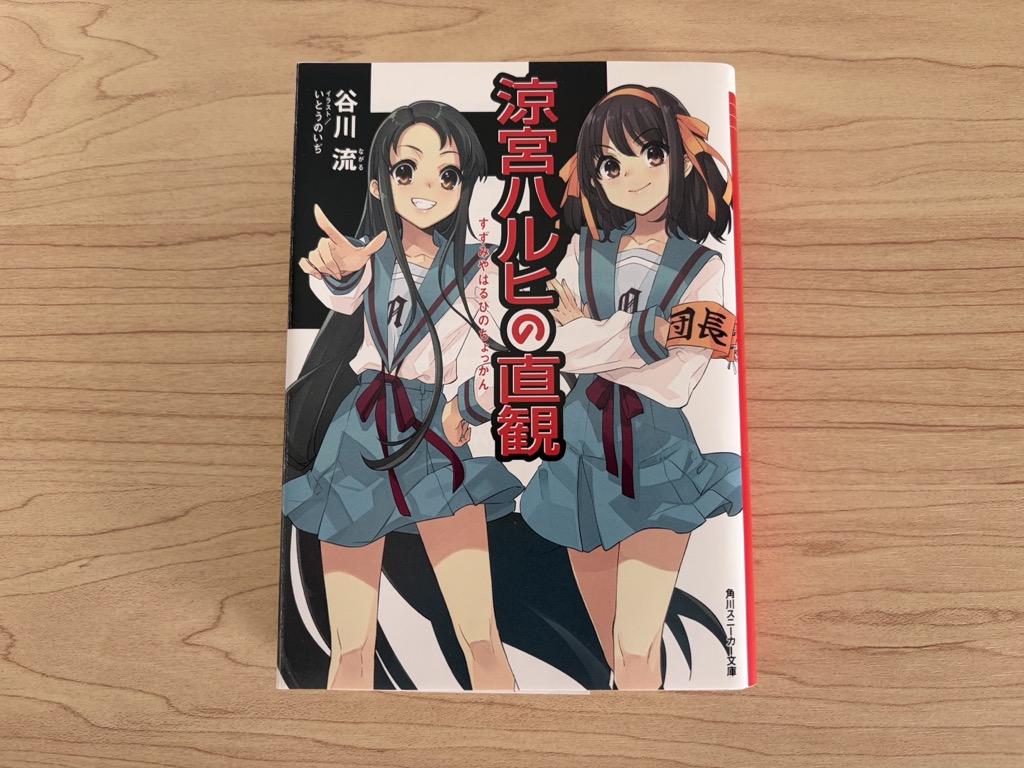
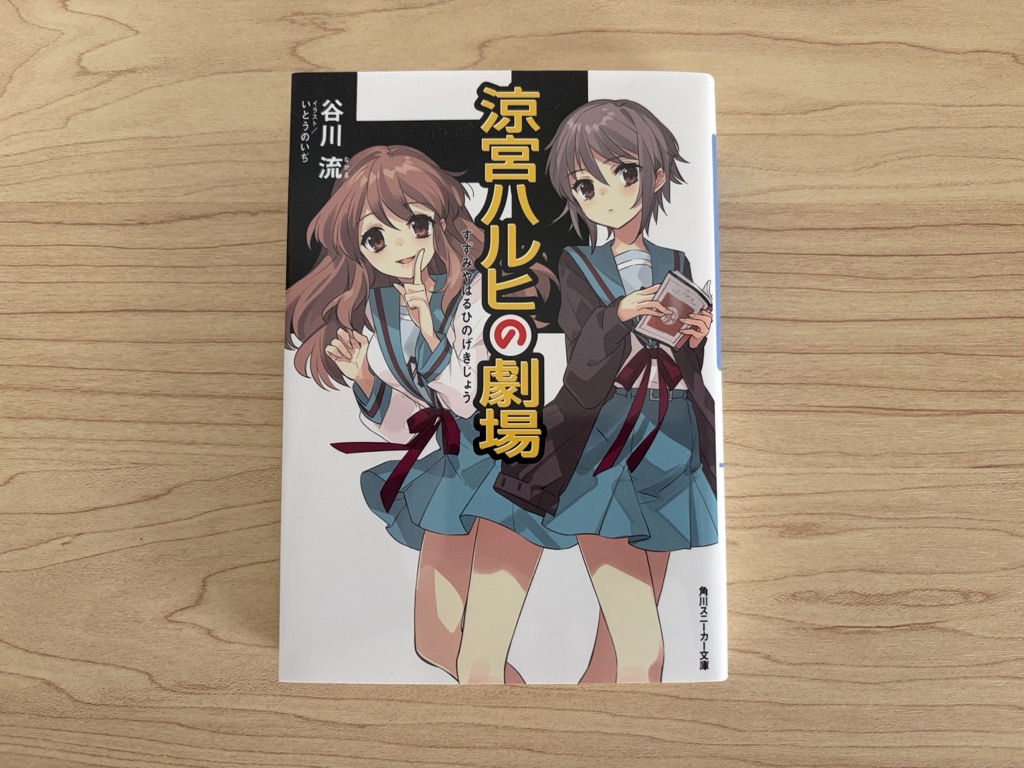
It is the 12th work in the series: a parody in which the SOS Brigade is handed roles in other genre worlds. It arrived four years after The Intuition of Haruhi Suzumiya (2020) and was released worldwide on November 29, 2024.
| Title | Suzumiya Haruhi no Gekijo (The Haruhi Suzumiya Theater) |
|---|---|
| Author / Illustrator | Nagaru Tanigawa / Noizi Ito |
| Imprint | Kadokawa Sneaker Bunko |
| Release date | November 29, 2024 |
| Length / Price | 328 pages / 770 yen |
| ISBN | 978-4-04-115439-7 |
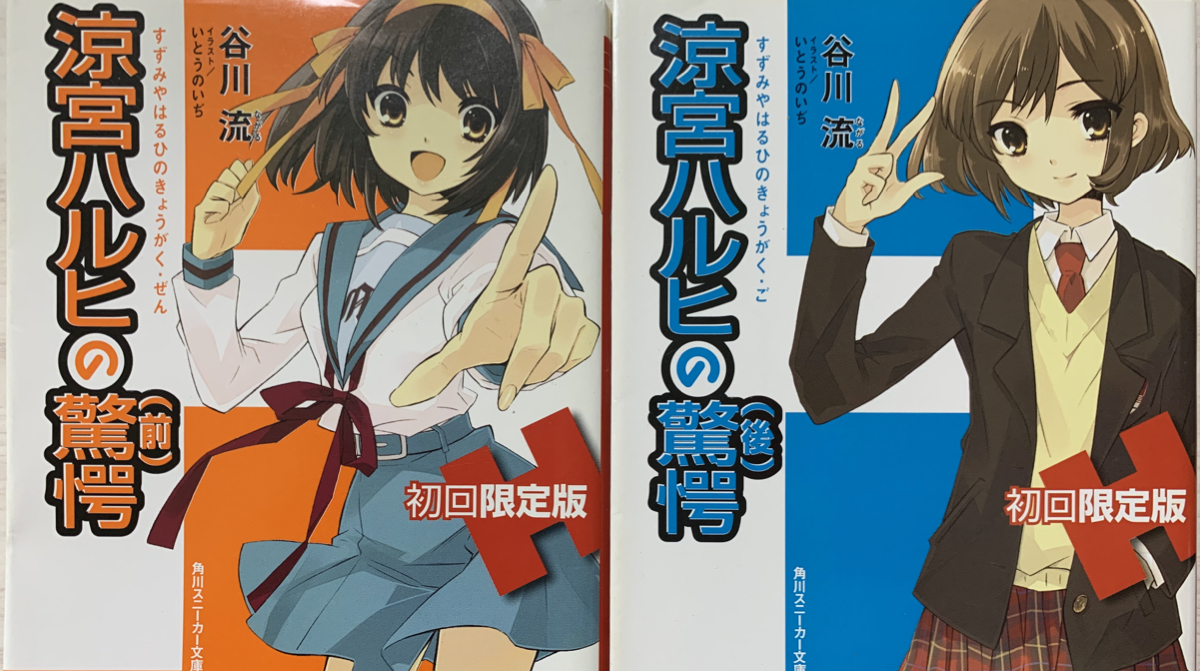
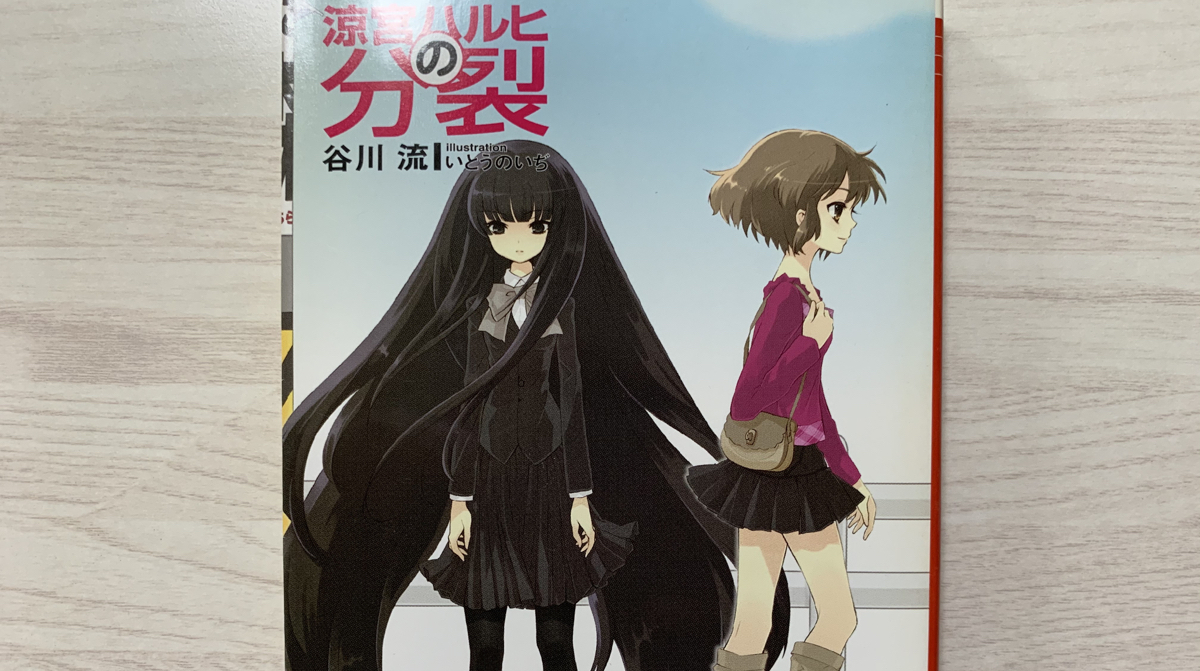
| Place in the series | 12th work (13th volume, since The Surprise is split in two). Preceded by The Intuition of Haruhi Suzumiya (2020) |
The book has four chapters. Chapters 1 and 2 are reprints from the magazine The Sneaker — the 2004 “Haruhi Suzumiya Theater: Fantasy” and the 2006 “Haruhi Suzumiya Theater Returns” — while chapters 3 and 4 are newly written.
It opens with Kyon dropped into a fantasy RPG world. The casting is Haruhi as the hero, Yuki Nagato as the thief, Mikuru Asahina as the mage, and Itsuki Koizumi as the bard. From there the stage moves through a Western, Prohibition-era America, pirates, and the Trojan War.
In other words, this is not “the next chapter” but a project book that drops familiar characters into other genres. Getting that wrong is what makes the book easy to misjudge.
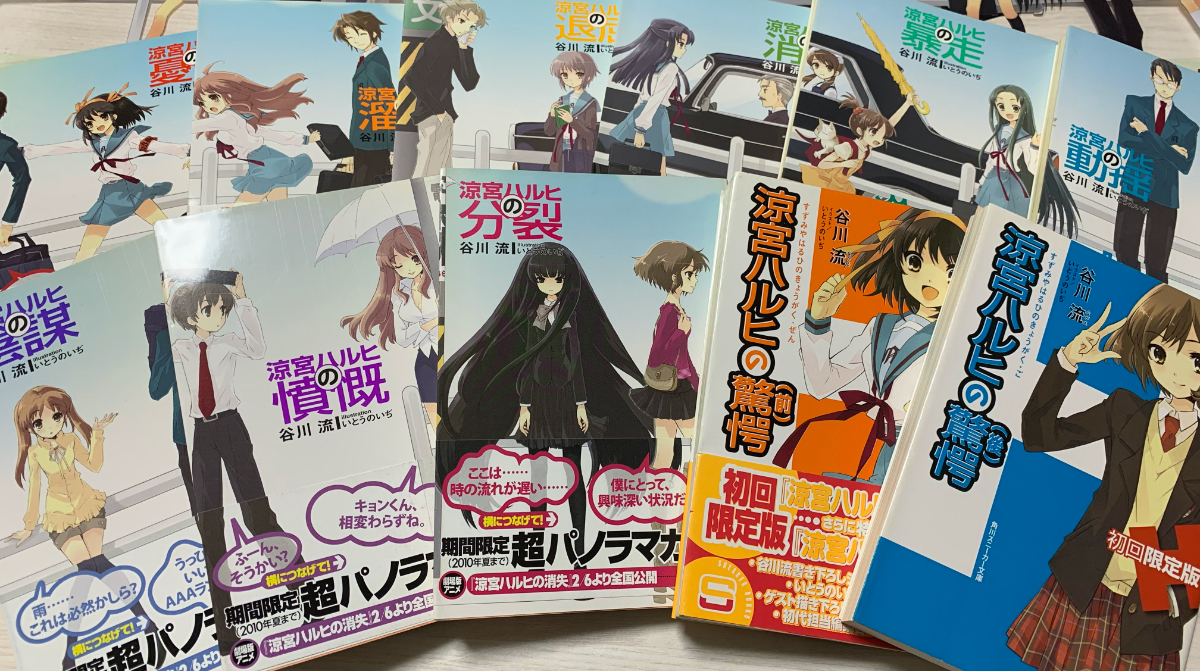
The full publication order is covered in the Haruhi Suzumiya series reading order guide.
Evaluation criteria used in this review
To keep this review grounded, I focused on three things:
- Narrative structure, particularly the short, experimental format
- Narrative voice and stylistic shifts compared to the main novels
- How character relationships are presented, especially in the absence of change
Everything below follows those three criteria.
Sponsored
Lightness and limitation from the short story structure
The book lives up to its title: it reads as a collection of short acts rather than one accumulating narrative.
Each story is compact. There is little escalation or long-term tension, in stark contrast to the series’ longer arcs. The focus is closer to what happens if we play with this premise once, or what if we recast everyone and see what falls out. Since the setting jumps from an RPG to a Western to Prohibition-era America to pirates to the Trojan War, the lack of sustained tension is by design rather than by accident.
That said, the two newly written chapters lean on world history and physics, and reading speed drops noticeably. This is less a casual side story than a book that takes its own joke seriously.
While reading, I occasionally thought, “Is that all?” At the same time, that lightness made it easier to watch the characters without pressure.
For me the structure worked as both a strength and a weakness — comfort and ease on one side, a clear ceiling on the other.
A shift in narrative voice, and the distance it creates
The premise carries more weight here than Kyon’s interior monologue does.
Compared to the main novels, where Kyon’s narration anchors the reader, the emphasis is less personal and more situational. Many stories prioritize the setup itself: the premise, the structure, the conceptual joke. Given that the whole book is genre parody, that is a reasonable choice.
The result was an unexpected sense of distance in several stories, despite my familiarity with this world. This is less a flaw than a mismatch of expectations. Readers who value Kyon’s running internal commentary will feel it most.
This is exactly where it diverges from The Intuition of Haruhi Suzumiya, which was also a short story collection but stayed inside the main timeline with a mystery slant.
Sponsored
Relationships as reinforcement rather than development
Character relationships are reaffirmed, not evolved.
No matter how far the setting shifts, Haruhi behaves as Haruhi always does, and Nagato, Mikuru, and Koizumi stay firmly inside roles the reader already knows. Haruhi as the hero and Nagato as the thief are funny precisely because the casting is so inevitable — and that only works if the characters are already in your head. The fact that nobody’s position changes even in a fantasy world is the joke the book runs on.
At times this felt like stagnation. It also provided stability. Having followed longer novels where relationships shift meaningfully, I found value in stepping back and observing the established dynamics without expecting progression. The book sits as a pause, not a turning point.
Who this book is for
Existing readers who are not looking for the tension of the longer novels.
| A good fit | Likely to feel underwhelmed |
|---|---|
| Readers who have already read several Haruhi novels | First-time readers of the series |
| Those not seeking high tension or major plot developments | Those expecting a dramatic payoff or large-scale conflict |
| Fans who enjoy small-scale, experimental episodes | Anyone expecting the main timeline to advance |
This is not a first book. Without knowing how these characters normally behave, the parody reads as a list of settings rather than a joke. The Melancholy of Haruhi Suzumiya is the place to start.
Final verdict: is it worth recommending?
For existing fans, yes — with conditions. Treat it not as a core installment but as a companion volume that lets you linger in the world from a different angle.
If you expect momentum, it will disappoint. If you want to spend more time with a familiar cast without demanding narrative intensity, it offers exactly that. Four years of waiting for this was a strange feeling, but as something to read while waiting for the real continuation, it works.
Summary
- The Haruhi Suzumiya Theater is the 12th work in the series (November 29, 2024; 328 pages; 770 yen)
- It is a casting parody across an RPG, a Western, Prohibition-era America, pirates and the Trojan War — not a continuation
- Four chapters: 1 and 2 reprinted from The Sneaker, 3 and 4 newly written
- The short format brings ease and limitation together; sustained tension is not on offer
- The writing leans on premise over Kyon’s narration, which creates unfamiliar distance
- For existing readers. Start with The Melancholy of Haruhi Suzumiya instead if you are new