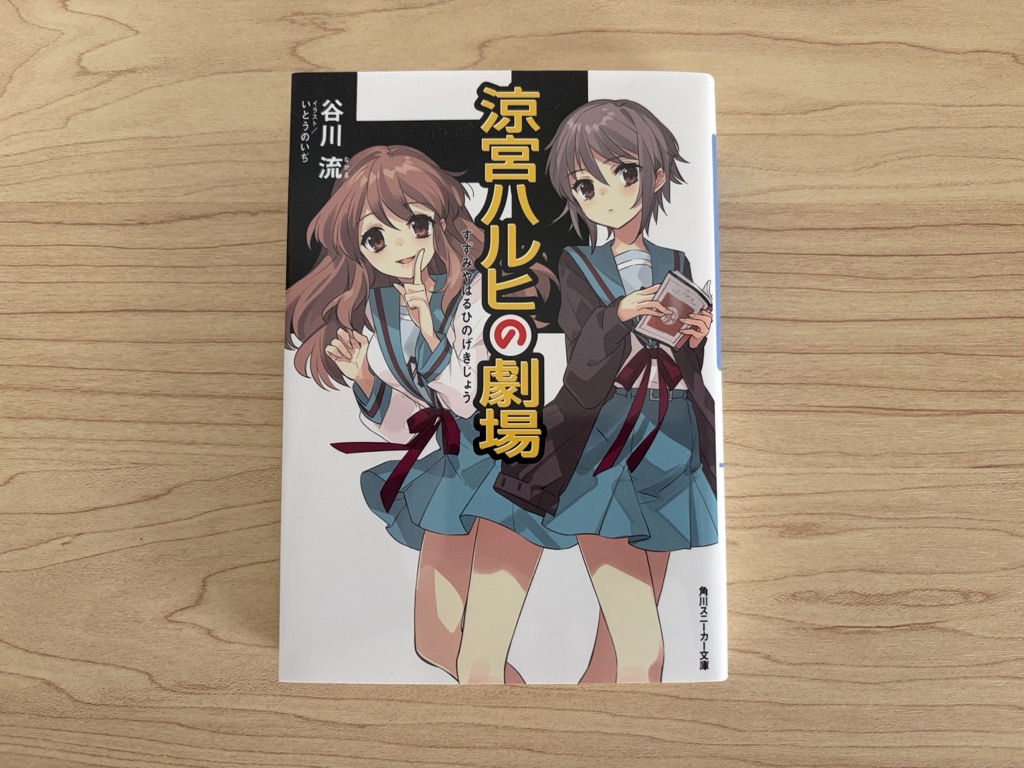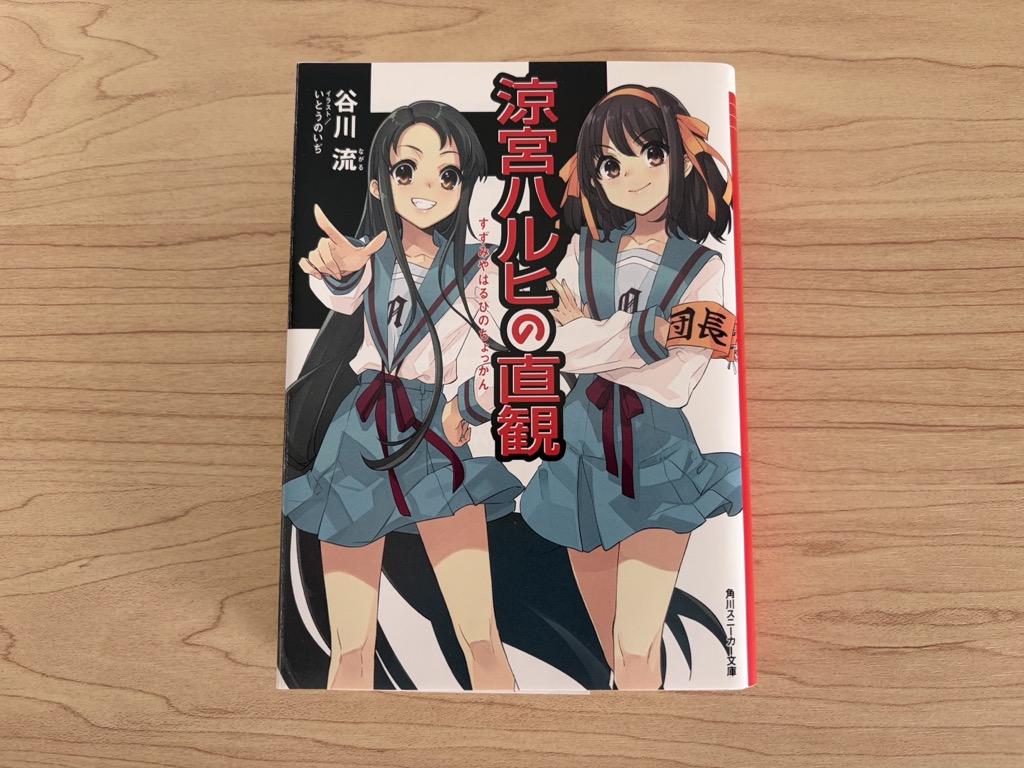
I closed The Surprise of Haruhi Suzumiya (涼宮ハルヒの驚愕) and stayed there for a while with the book resting in my hands. Not because of shock twists, but because everything the series had been quietly accumulating finally came together and settled.
The short answer: this is not just another sequel. It is the convergence point the series had been building toward. What lingered was not excitement but clarity, and a calm aftertaste that took time to process.
This article is about the kind of experience the book offers and whether it aligns with your taste. There are no detailed spoilers.
Sponsored
1. What kind of book is The Surprise of Haruhi Suzumiya?
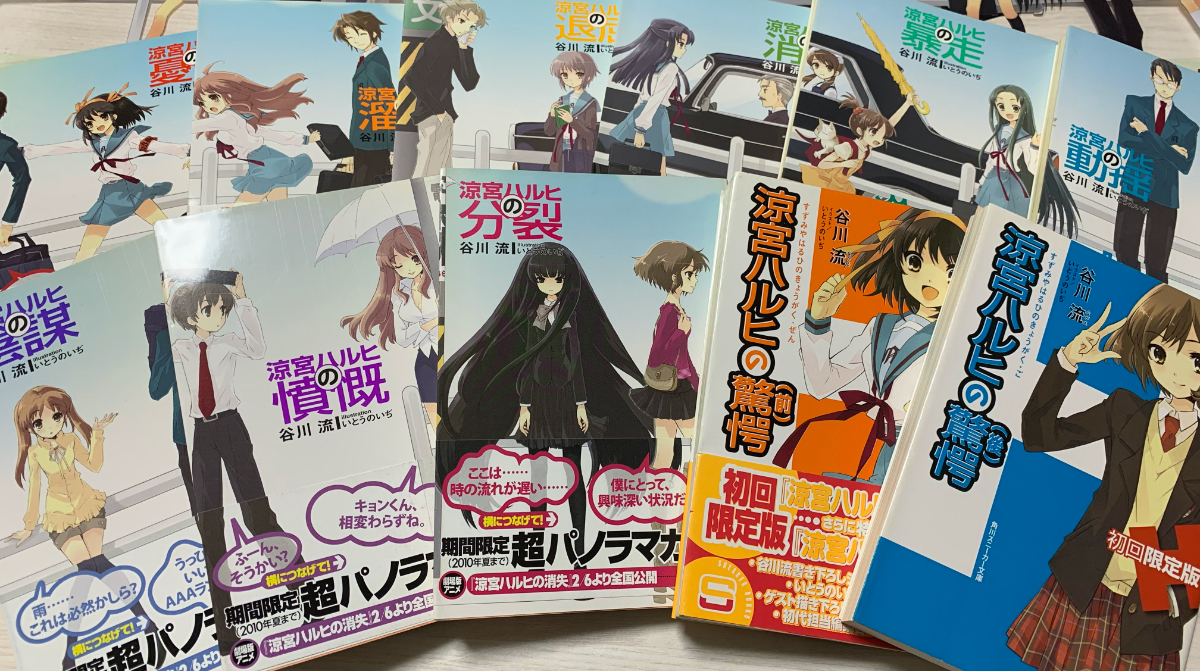
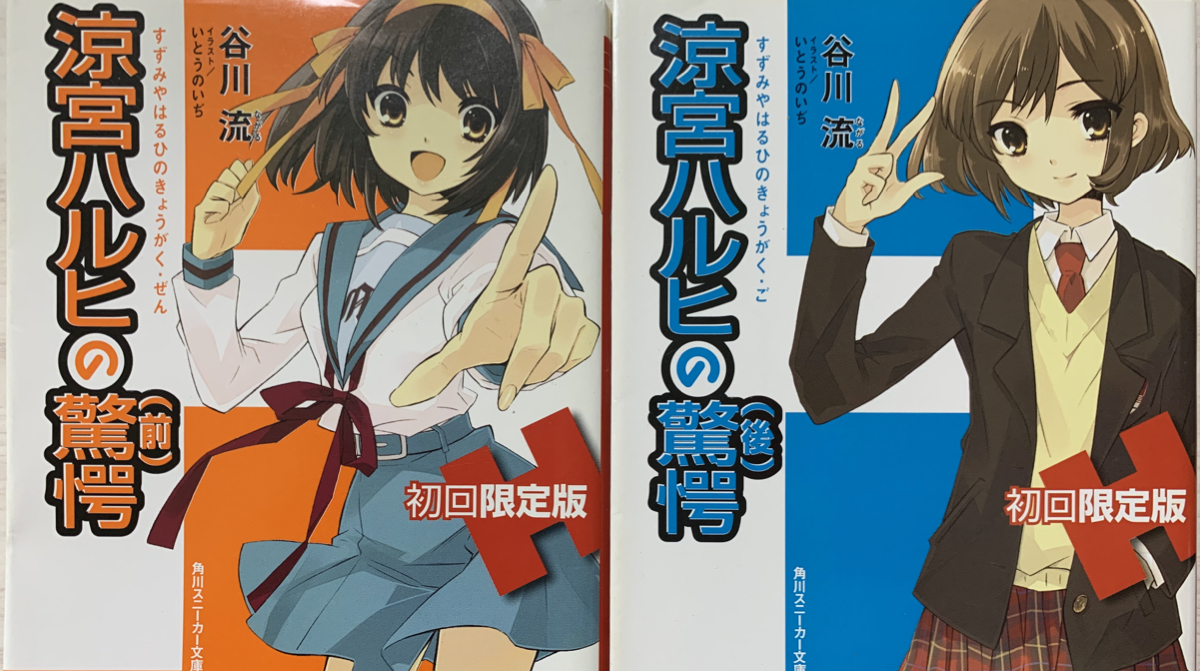
The short answer: it is Volumes 10 and 11 of the series, published as a two-part set on 25 May 2011.
| Item | Detail |
|---|---|
| Author | Nagaru Tanigawa (谷川流) |
| Illustrator | Noizi Ito (いとうのいぢ) |
| Imprint | Kadokawa Sneaker Bunko (角川スニーカー文庫) |
| Japanese release | 25 May 2011 (both parts on the same day) |
| Position | Volumes 10 and 11, continuing from Volume 9 |
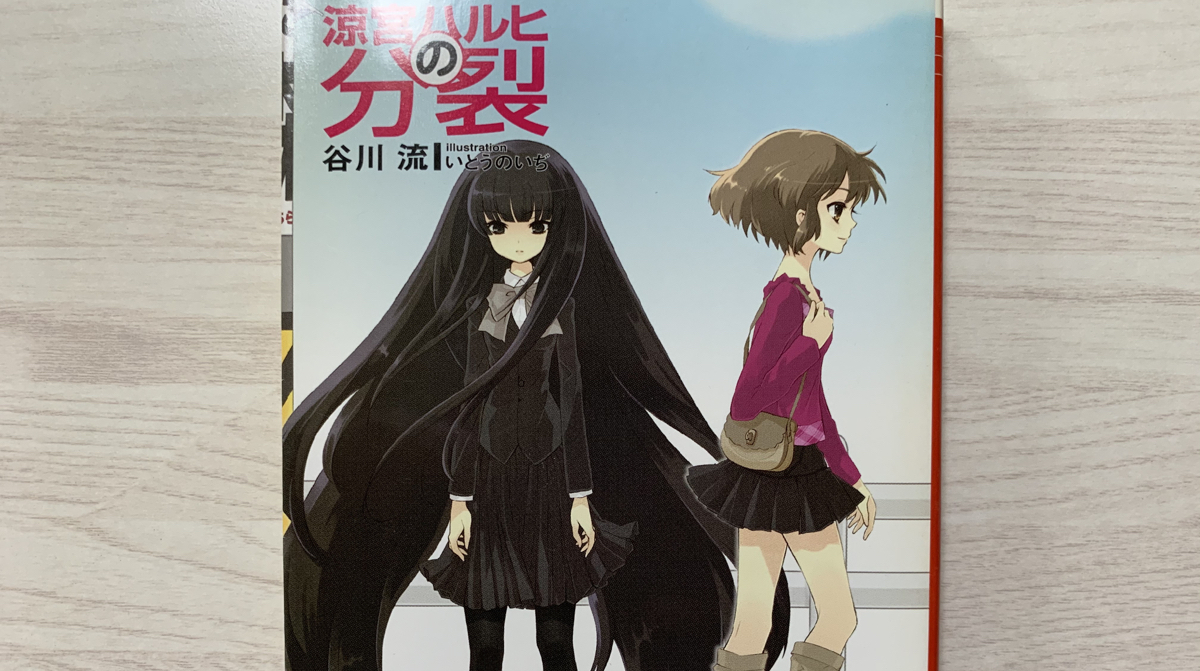
It continues directly from the ninth volume, The Dissociation of Haruhi Suzumiya, which came out on 31 March 2007. Readers waited more than four years. The two parts are separate books, so plan on having both before you start.
2. Who is this book for?
The short answer: it rewards long-term readers and is heavy going for anyone else.
| Likely to enjoy it | Likely to struggle with it |
|---|---|
| Readers who have followed the series over time | Readers wanting a fast, standalone school comedy |
| Readers who enjoy ordinary life and existential risk coexisting | Readers who find dense information a burden |
| Readers who like narratives that reward structural awareness | Readers who want everything resolved cleanly |
| Readers who value emotional aftereffects over flashy endings | Readers dipping in and out of the series |
Sponsored
3. What I paid attention to while reading
The short answer: how emotional meaning is organised through narrative divergence, and what remains once the worlds quietly rejoin.
Three reactions stood out.
- The structural satisfaction of split worlds that eventually reconverge
- The subtle emotional distance between characters, and where that distance settles
- The deliberate restraint in explanation, which creates lasting aftereffects
4. How do the divided worldlines create tension?
The short answer: through contrast rather than complexity.
One worldline keeps the familiar tone of the series: casual conversations, routine interactions, the illusion of normalcy. The other carries a palpable sense of irreversible danger.
Because both tones run at once, you stay constantly aware of where you are in the narrative. That awareness deepens immersion rather than disrupting it. The tension comes from comparison, not confusion.
Sponsored
5. What does Yasumi bring to the story?
The short answer: Yasumi works as a narrative catalyst and as emotional insulation for the reader.
Through her scenes I sensed something like protected time: a temporary shelter created inside an unstable structure. It is not permanent and not meant to be, and it feels necessary.
Her presence softens the trajectory. Without her the novel might have tipped entirely into severity. With her, it keeps the tonal elasticity that defines this series.
6. Why does Sasaki linger?
The short answer: because she never fully takes centre stage, and she knows she was not chosen.
Rather than functioning as an antagonist or a rival, Sasaki embodies something quieter: the feelings of someone who is not chosen, and who understands that fact.
There is no malice in her actions, only sincerity. That sincerity paired with restraint makes her presence emotionally heavy. She became a character worth returning to in thought long after I closed the book.
7. Is the density a problem?
The short answer: the book is dense, and that density is where its reread value comes from.
Especially in the second part, developments arrive quickly and full comprehension is not immediate. I often felt compelled to keep reading while knowing I would need to revisit earlier sections.
This is a novel that changes slightly when revisited, because later context reshapes earlier impressions.
8. Is it worth reading?
The short answer: yes, and it only works because of what came before it.
It prioritises accumulated meaning over accessibility, and emotional coherence over neat resolution. It does not answer every question cleanly, and that is intentional. The unresolved edges are part of what gives it lasting presence.
Readers starting from the first volume get the most from it. Anyone expecting lighthearted comedy alone should adjust expectations first.
9. Rainy Day: a small scene that stayed with me
The short answer: the first-press limited edition came with a 64-page full-colour booklet, The Secret Episodes of Haruhi Suzumiya (涼宮ハルヒの秘話), containing a 33-page original short story called “Rainy Day.”
The story depicts a moment from middle school, with Kyon and Sasaki caught in an unexpected downpour. Sasaki is visibly uncomfortable, her clothes soaked through and her composure slightly shaken. She speaks lightly, even jokingly, and there is an underlying vulnerability.
What struck me was not the situation but the emotional misalignment. Kyon, characteristically oblivious, fails to register her discomfort. Sasaki seems caught between irritation and a quiet wish to be acknowledged. Not dramatically, just noticed.
In that moment she felt disarmingly human. Not a narrative role, but a person with contradictions: reserved yet expressive, composed yet quietly frustrated.
The scene also gives context to Kyon’s trademark “good grief.” This is the episode where it originates, which makes it read less like a catchphrase and more like a coping mechanism that starts early and persists.
It is a small episode, and it reinforced why Sasaki remains such a compelling presence.