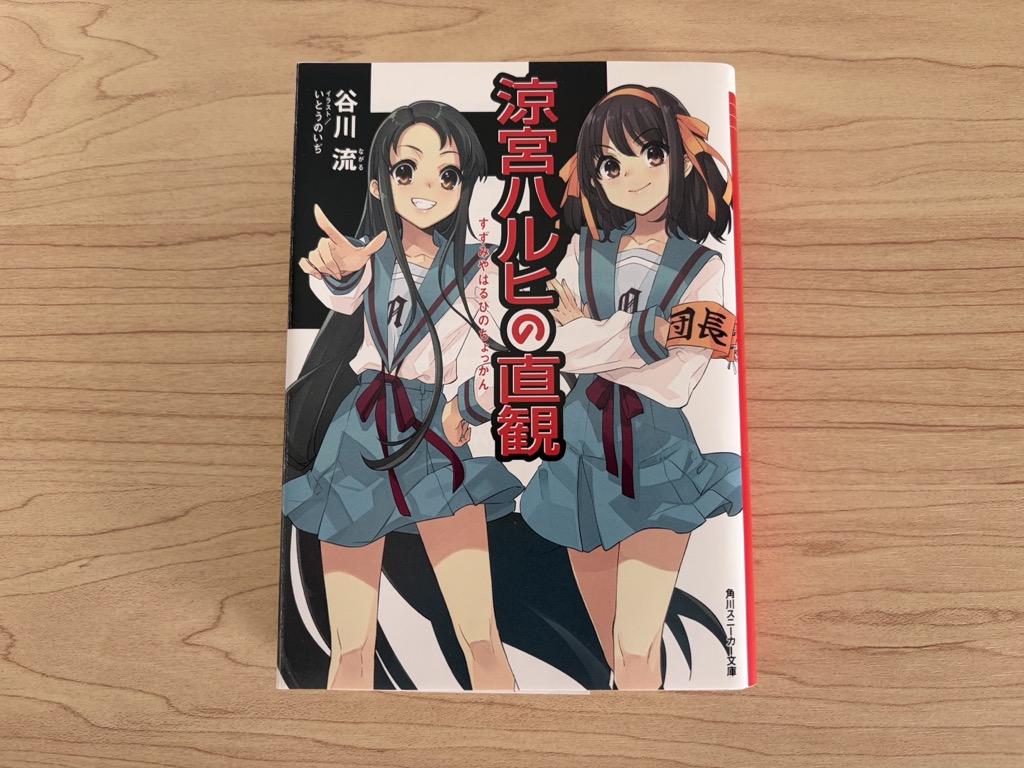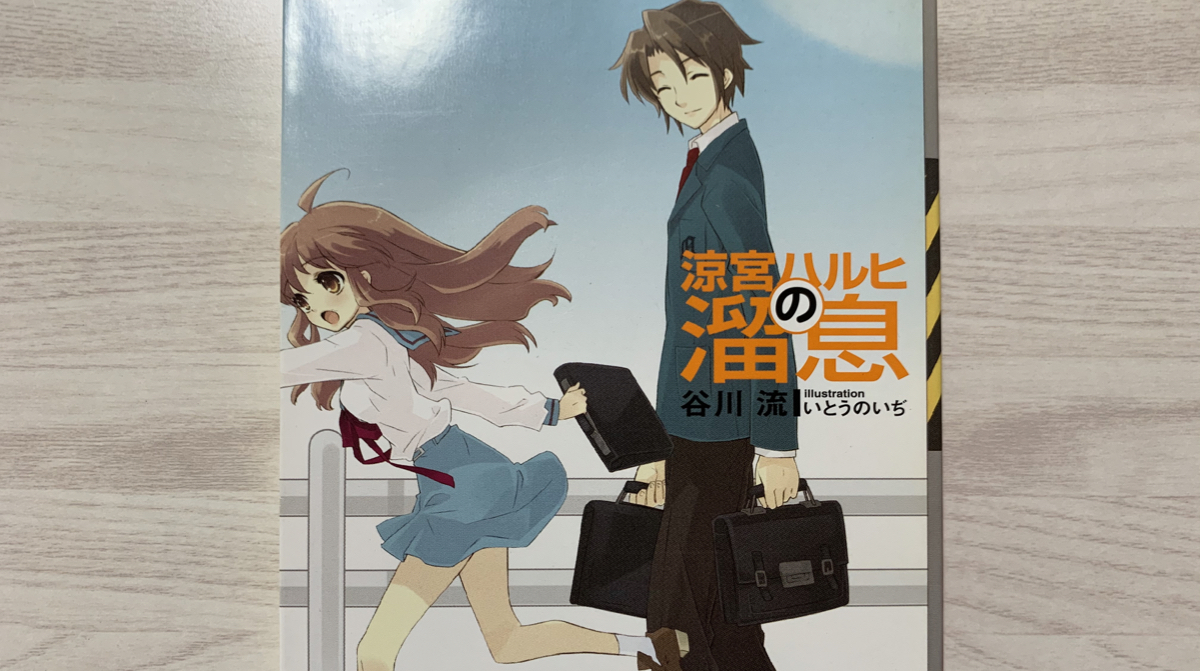
Before reading The Sigh of Haruhi Suzumiya (涼宮ハルヒの溜息), I had already heard that it was one of the most divisive volumes in the series. I was honestly worried that it might not suit me, or that I would feel exhausted partway through.
The short answer: this is not an enjoyable book, and it is still the one I would tell you not to skip. What it leaves behind is fatigue rather than satisfaction, and that fatigue is what changes how the later volumes land.
This article does not judge the book from a critical or academic standpoint. It focuses on how the story felt while I was reading it, and on which readers will connect with this volume and which will not.
Sponsored
1. What kind of book is The Sigh of Haruhi Suzumiya?
The short answer: it is the second volume of the series, a full-length novel published on 30 September 2003.
| Item | Detail |
|---|---|
| Author | Nagaru Tanigawa (谷川流) |
| Illustrator | Noizi Ito (いとうのいぢ) |
| Imprint | Kadokawa Sneaker Bunko (角川スニーカー文庫) |
| Japanese release | 30 September 2003 |
| Position | Volume 2 (full-length novel) |
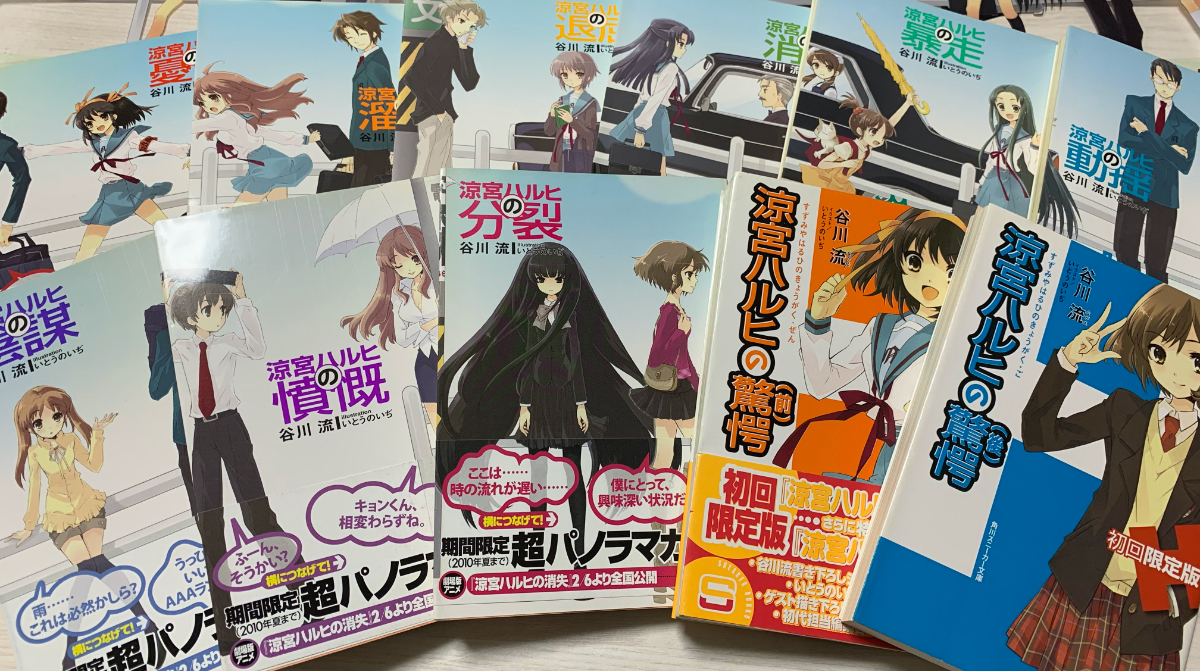
My thoughts on the first volume are in the review of The Melancholy of Haruhi Suzumiya. The series has continued since: as of The Theater of Haruhi Suzumiya on 29 November 2024, Kadokawa Sneaker Bunko has published thirteen books.
2. What I paid attention to while reading
The short answer: I judged this book by the emotional movement while reading, not by narrative structure or technical execution.
I kept three things in mind.
- The stress and discomfort I felt while reading
- The emotional distance and tension between characters
- The feelings that lingered after finishing the book
How I approach book reviews on this blog is set out in my blog policy and how I think about writing articles.
Sponsored
3. What is the story about, without spoilers?
The short answer: the SOS Brigade sets out to shoot an amateur film for their school festival, and the process goes badly wrong socially rather than dramatically.
Instead of twists or action, the story builds emotional pressure. Interpersonal friction, awkward silences and uncomfortable dynamics accumulate chapter by chapter.
As I read on, moments of tension became more frequent. Scenes where I found myself thinking “this is hard to watch” or “this is emotionally draining” kept arriving.
4. What felt genuinely difficult to read?
The short answer: what stayed with me was not enjoyment but fatigue.
Haruhi Suzumiya’s forceful and self-centered behaviour stands out sharply in this volume. What made it harder was the surrounding atmosphere, where nobody effectively stops her and discomfort is quietly tolerated.
There were scenes that felt as if harmony held only because someone chose to endure. Reading those moments left a heavy feeling, similar to watching an awkward joke get laughed off after it has clearly crossed a line.
A note for readers outside Japan: the school festival (bunkasai) is a student-run event where classes and clubs each mount a production, and refusing to take part is socially costly. That pressure is part of why nobody walks away here.
Sponsored
5. Why did I keep reading anyway?
The short answer: because the suffocating atmosphere felt deliberate rather than accidental.
This is not a lighthearted school comedy. It portrays imbalance, friction and unfairness without softening them, and once I read it that way I stopped wanting to put it down.
Kyon’s narration also matters. His internal reactions create a buffer between the reader and the situation, making it clear that the unease is shared. Knowing I was not the only one finding this uncomfortable mattered more than I expected.
6. What remained after finishing the book?
The short answer: no refreshment, but a foundation the rest of the series stands on.
My honest reaction on the last page was “that was tiring.” Even so, the fatigue did not feel pointless.
Looking back at the series as a whole, this volume quietly changes how later episodes are perceived. The shift in the fourth volume, The Disappearance of Haruhi Suzumiya, works partly because you have already carried the weight of this one.
7. Who is this book for?
The short answer: it suits readers who take characters’ flaws seriously, and punishes readers who want comfortable storytelling.
| Likely to appreciate it | Likely to struggle with it |
|---|---|
| Readers interested in character flaws and immaturity, not just likable traits | Readers who prefer consistently comfortable or upbeat storytelling |
| Readers who can sit with discomfort and think about what it means | Readers who feel strong stress from Haruhi Suzumiya’s behaviour |
| Readers following long-term changes in character relationships | Readers who want each book to satisfy on its own |
If this volume wears you down, the third book, The Boredom of Haruhi Suzumiya, is a short story collection with a very different mood. Stopping here would be a shame.
8. Is it worth reading?
The short answer: not for everyone, but yes if you want to take the series seriously.
Many readers will find it exhausting, and I would not pretend otherwise. If you want to engage with the series accepting both its light and its shadow, this book earns its place.
The lingering discomfort is part of what the story is meant to leave behind. You do not need to like it. Reading it to find out how you actually feel about it is reason enough.