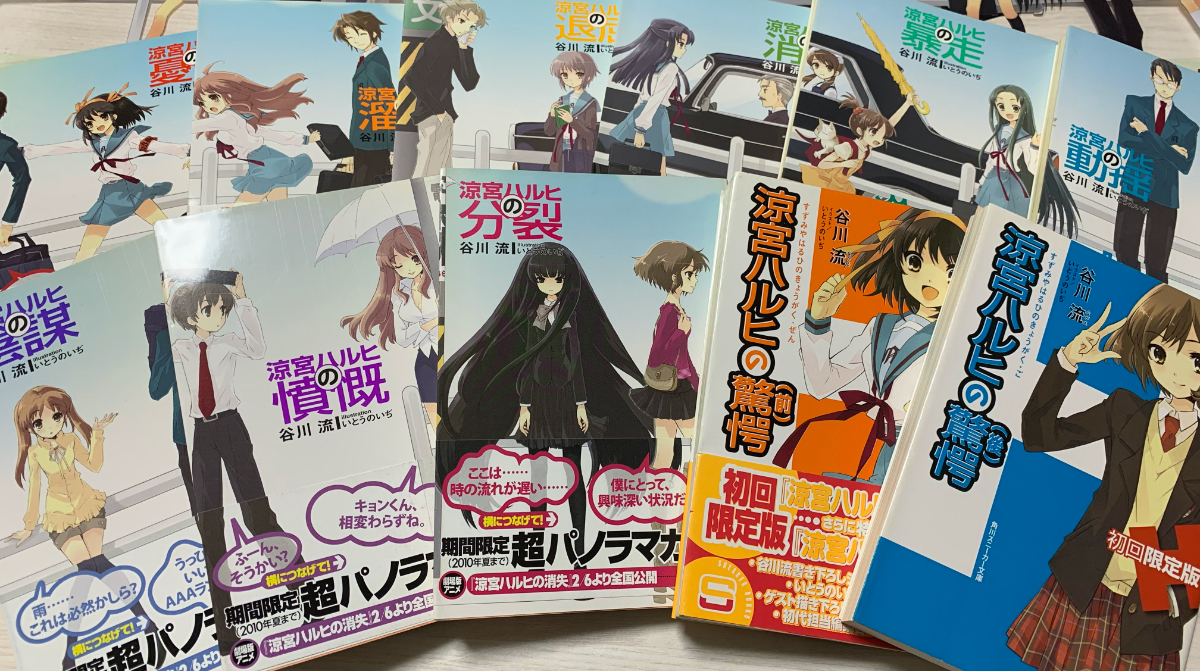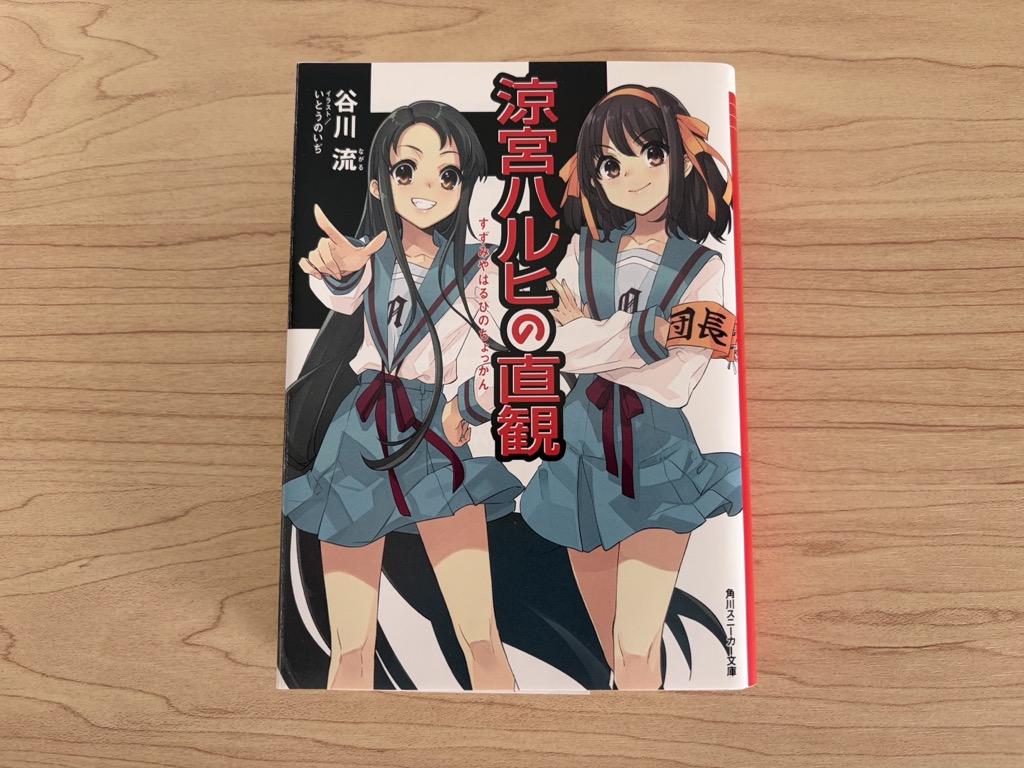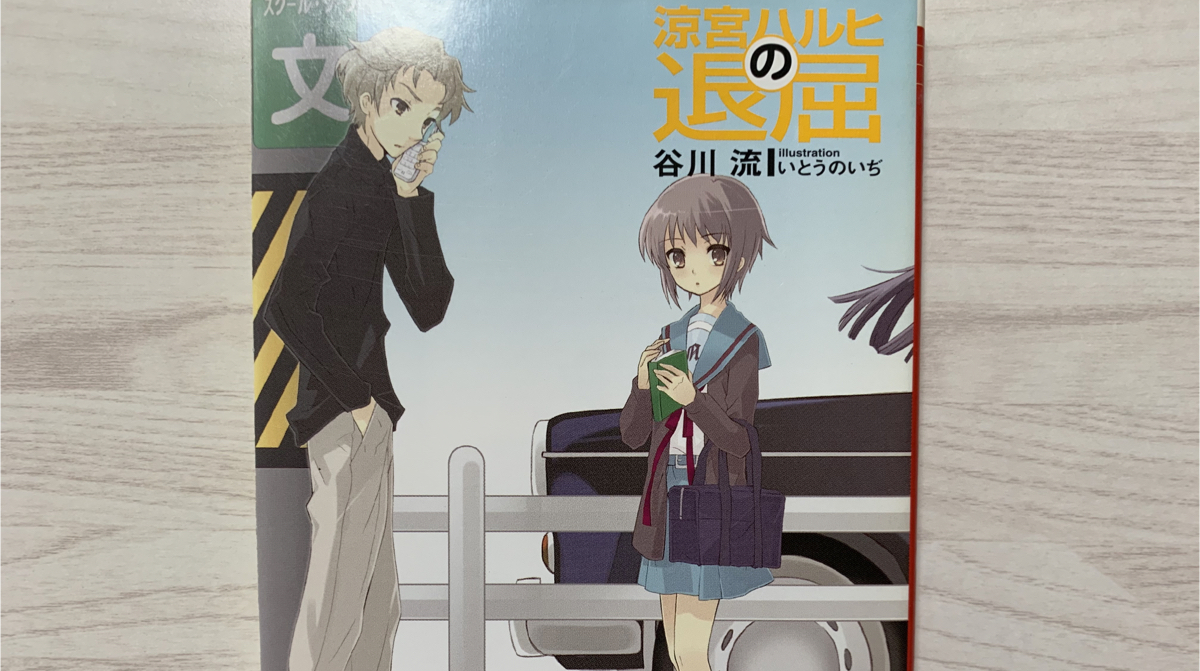
The Boredom of Haruhi Suzumiya (涼宮ハルヒの退屈) occupies a unique position in the series. Rather than pushing the story forward with one large incident, it presents four short stories that capture fragments of the SOS Brigade’s everyday life.
The short answer: by deliberately writing about uneventful time, this collection shows the core of the series more clearly than the longer novels do. Its appeal comes from character relationships and group dynamics, not from escalation.
This article covers what kind of book it is, what each of the four stories does, and who will appreciate it most.
Sponsored
1. What kind of book is The Boredom of Haruhi Suzumiya?
The short answer: it is the third volume of the series and its first short story collection, published on 27 December 2003 with four stories.
| Item | Detail |
|---|---|
| Author | Nagaru Tanigawa (谷川流) |
| Illustrator | Noizi Ito (いとうのいぢ) |
| Imprint | Kadokawa Sneaker Bunko (角川スニーカー文庫) |
| Japanese release | 27 December 2003 |
| Position | Volume 3 (short story collection) |
| Contents | The Boredom of Haruhi Suzumiya / Bamboo Leaf Rhapsody / Mysterique Sign / Remote Island Syndrome |
The four stories run across spring, summer and early autumn, filling gaps between the larger arcs. There is no single overarching plot, so the book focuses on what the SOS Brigade does when no crisis appears to be unfolding.
If the previous volume wore you down, this one will feel like relief. My thoughts on it are in the review of The Sigh of Haruhi Suzumiya.
2. What I paid attention to while reading
The short answer: I read this as a collection that reveals the core of the series by portraying calm, ordinary moments.
Three things stood out.
- How the short-story format reveals the everyday rhythm of the SOS Brigade
- How each episode highlights a different character without forcing the focus
- How boredom itself works as a stabilising force in this world
Sponsored
3. What happens in each of the four stories?
The short answer: each story has a different flavour, and together they divide up the things the series does well.
3-1. The Boredom of Haruhi Suzumiya: everyday absurdity
The short answer: Haruhi Suzumiya signs the group up for a city baseball tournament to kill time, and the triviality of that motive is the point.
The situation escalates in scale, but the striking part is familiarity rather than surprise. It reads like a normal day for the SOS Brigade that happens to carry unusually high stakes underneath.
An amateur team facing a skilled opponent is entertaining. What lingers is the effort happening off-page to stop things spiralling out of control. The episode quietly shows how precarious this group’s normal life actually is.
3-2. Bamboo Leaf Rhapsody: quiet emotion across time
The short answer: a Tanabata event triggers a trip through time, and the centre of the story is connection between people rather than mechanism.
Tanabata is a Japanese festival on 7 July where people write wishes on strips of paper and tie them to bamboo, which is what sets the episode in motion.
Classic science fiction elements are present, but the explanation is not the focus. By the end, the story leaves a strong impression that everything may have been shaped by a single moment.
Revisited after the later volumes, this episode gains weight. It works on its own, and it deepens considerably as part of the larger structure.
3-3. Mysterique Sign: the loneliness underneath
The short answer: the surface is a small mystery, and the real subject is Yuki Nagato’s loneliness.
Yuki Nagato usually operates silently and independently. There is a moment here that implies a wish not to solve everything alone, but together with the group.
Whether that reading is intentional or my own projection is unclear. What matters is that the story leaves enough space for it. Of the four, this one left the strongest emotional aftertaste.
If you want the volume that goes furthest into this character, it is the fourth book, The Disappearance of Haruhi Suzumiya.
3-4. Remote Island Syndrome: a mystery on Haruhi’s terms
The short answer: it borrows the shape of a classic isolated-island murder mystery, so readers wanting rigorous detection may find it thin.
The purpose lies elsewhere. Rather than the puzzle, the story emphasises how Haruhi Suzumiya behaves and how the people around her adapt to that behaviour.
The ending is consistent with the identity of the series. It is a slightly experimental piece that works precisely because it is short.
4. What remains after reading the collection?
The short answer: these stories do not celebrate one protagonist’s triumph; they show the SOS Brigade functioning as a group.
Different characters stand out in different episodes, but the emotional centre always returns to the collective.
The recurring theme is clear: maintaining boredom takes effort, and somebody is always working behind the scenes to keep things from breaking. The next short story collection, The Rampage of Haruhi Suzumiya, pushes that same idea into much heavier territory.
Sponsored
5. Who is this book for?
The short answer: it suits readers who want atmosphere, and underwhelms readers who want escalation.
| Likely to enjoy it | Likely to struggle with it |
|---|---|
| Readers who enjoy the characters of the series | Readers looking for nonstop action |
| Readers who prefer atmosphere and interaction over escalation | Readers who want one large plot to follow |
| Readers who like short stories with distinct tones and pacing | Readers who need a book to move the world forward |
6. Is it worth reading?
The short answer: yes, and its restraint is the reason.
This is one of the quieter entries in the series. It offers a clear look at everyday life inside an unstable world, showing relationships and emotional undercurrents that the longer arcs pass over.
For readers who value mood, structure and subtlety, this short story collection earns its place.