Hyouka (氷菓) by Honobu Yonezawa will disappoint you if you arrive expecting a dramatic crime or a large twist.
The short answer: this is not a story about solving mysteries. It is a story about emotions coming untangled. That is how my sense of the book shifted as I read.
Hyouka is Yonezawa’s debut and the first book in the Classic Literature Club series. It was published in November 2001 by Kadokawa Sneaker Bunko under its Sneaker Mystery Club line, after winning an Encouragement Prize in the young mystery and horror category of the 5th Kadokawa Gakuen Novel Award. It is now available in Kadokawa Bunko.
This article reflects on what caught my attention while reading and what stayed afterwards. It does not touch the central solution.
Sponsored
1. The three criteria I used
The short answer: I look at narrative voice, relationships, and what is left once the mystery is answered.
This novel cannot be discussed through the drama of its incidents, so without deciding where to place the evaluation the review just ends at “it was quiet.”
- Narrative voice and style: how Houtarou Oreki’s first person works
- Character behaviour and relationships: how the distance between the four club members changes
- Emotional friction and aftertaste: what remains after the answer arrives
2. What does the energy-saving narrator do to the book?
The short answer: the prose refuses to explain emotion and lists only what happened and what was thought, and that restraint is what eventually works.
The story is told in the first person by Houtarou Oreki, a high school student whose stated philosophy is that if he does not have to do something, he will not do it. That character becomes the temperature of the prose itself.
Honestly, the opening felt distant. This is not a style that invites easy identification. But as small events accumulate, a question about the title of a club anthology, a trivial thing that happened long ago, the restraint starts paying off.
Oreki repeats his energy-saving principle and still cannot leave other people’s unanswered questions alone. That wobble in his thinking comes through without a single dramatic description. By not writing the emotion, the book makes the emotion visible.
Sponsored
3. What changes inside the Classic Literature Club?
The short answer: this is a novel that follows four people’s distances shifting, not a team assembling to solve cases.
The four are Houtarou Oreki, Eru Chitanda, Satoshi Fukube and Mayaka Ibara. The distance between Oreki and Chitanda is what stayed with me.
Chitanda’s well-known line, “I’m curious!”, turns out not to be a catchphrase but her operating principle. She never orders anyone to do anything. She simply wants to know, and that alone gradually moves a boy who does not want to move.
Fukube and Ibara matter too. They reinforce Oreki’s thinking, and sometimes throw doubt at it. They are written as high school students talking, not as roles assigned to advance a deduction, and that is what keeps the book a calm coming-of-age story.
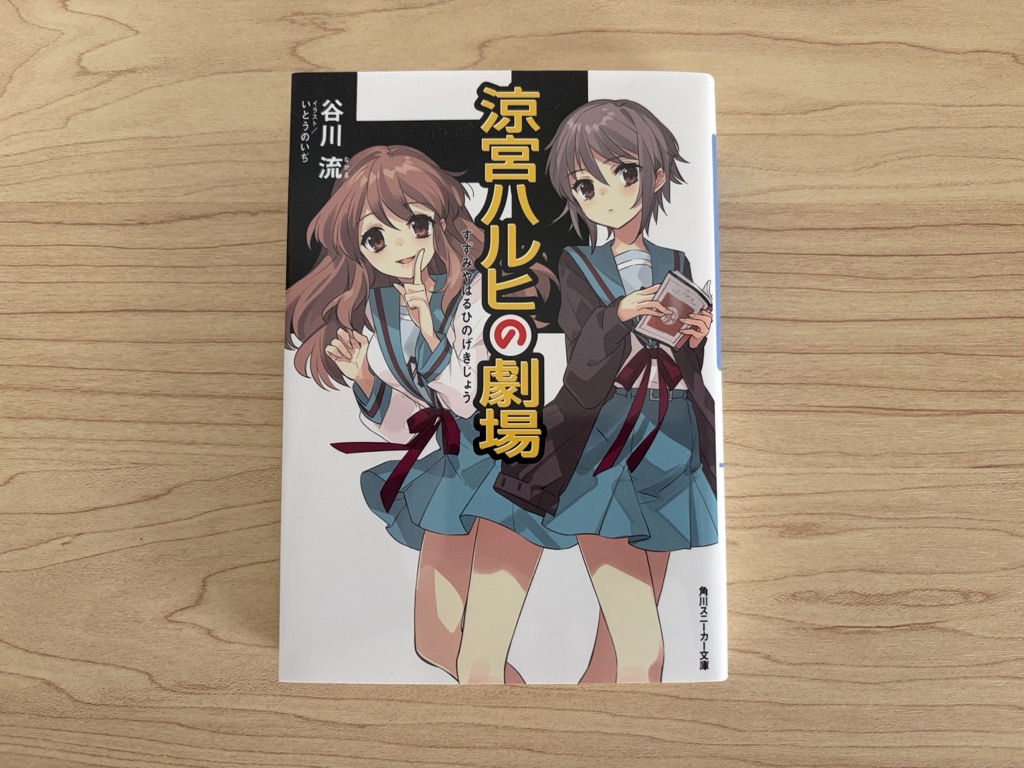
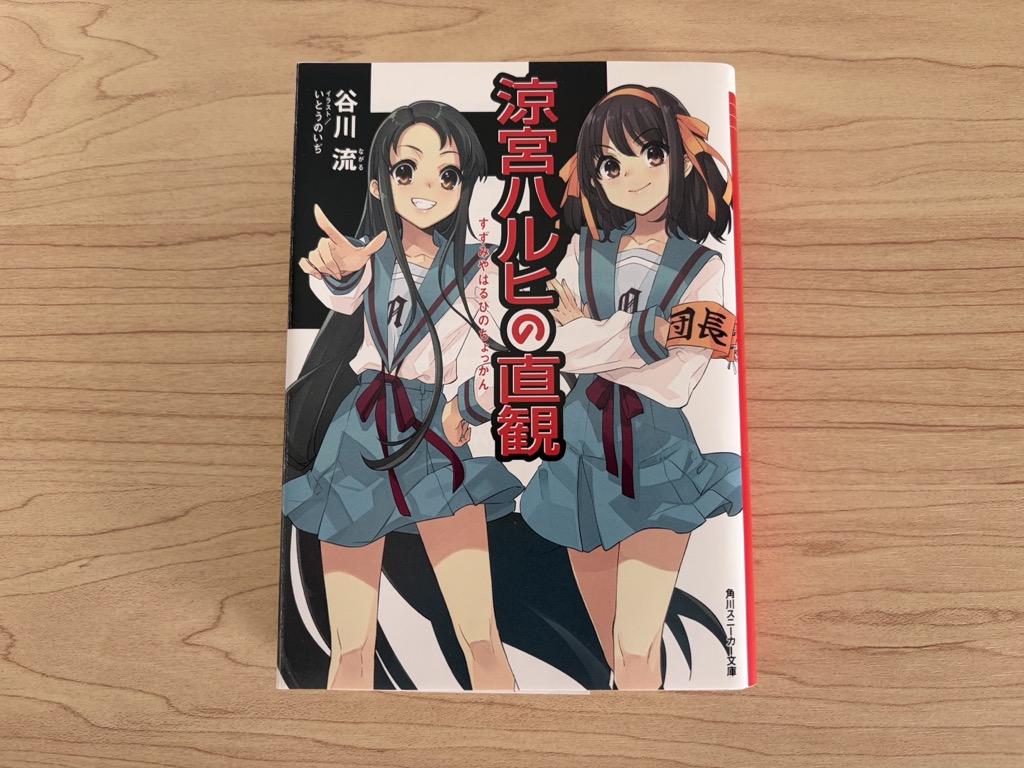
For a school-club setting where the extraordinary crashes in instead, The Melancholy of Haruhi Suzumiya moves in a completely different way. Reading them side by side makes the quietness of Hyouka obvious.
4. What is left once the mystery is answered?
The short answer: the mysteries are tied to old misunderstandings and feelings nobody put into words, so solving them does not bring relief.
Two questions carry the book: why the club anthology is called Hyouka, and why Eru Chitanda cannot let go of something that happened 33 years earlier.
As the anthology’s story comes to light, what I felt was not the satisfaction of a solved puzzle. It was closer to “so that is what it was,” sitting in the chest.
An answer arrives, and nobody is completely saved by it. What does happen is that a feeling which had been misread for decades finally gets a name. That quiet landing is the book at its most characteristic.
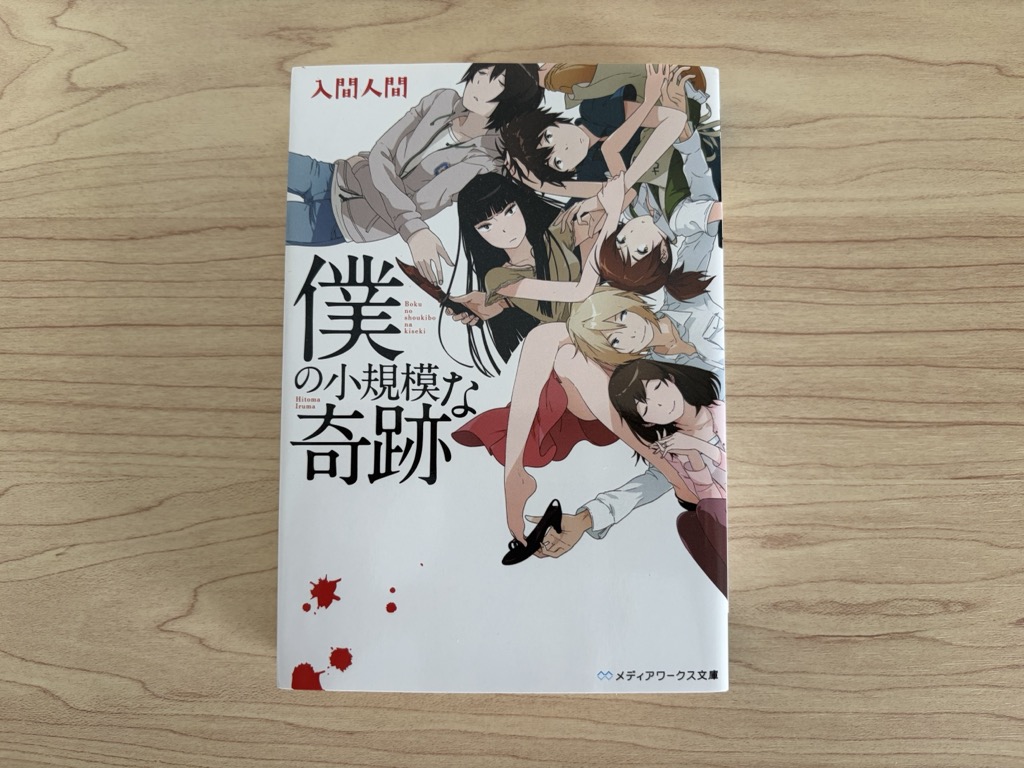
Afterwards I found myself thinking less about what happens next and more about how these four would carry on at slightly changed distances from each other. For a similar aftertaste, where an unease inside ordinary life quietly stays put, My Small Miracle by Hitoma Iruma left me in much the same place.
5. Who is Hyouka for?
The short answer: strongly recommended if you care about gaps between what people feel and why they act; frustrating if you want catharsis.
| Likely to enjoy it | Likely to struggle with it |
|---|---|
| Interested in emotional gaps and people’s reasons for acting | Wants a large incident and a twist |
| Enjoys quiet accumulation more than pace | Values speed of development |
| Wants a coming-of-age story light on sentiment | Wants a romance that clearly progresses |
| Prefers an aftertaste to a clean resolution | Wants to finish feeling settled |
If you want to follow carefully how a small “why” inside daily life touches someone, this one lands quietly. I do not expect to reread it often. I expect to remember it at odd moments.
The series continues with The Credit Roll of the Fool and Kudryavka’s Order. The third book moves to a school festival and scales up considerably; I wrote about it in my review of Kudryavka’s Order.