If you want Okinawan food in Fukuoka, Okinawa Miyakojima Shokudo Saiya in the Takasago area near Yakuin is a solid choice. I grew up in Okinawa, and what this place does is serve the standards as standards, without blurring their direction.
It is open 17:00–24:00 (food last order 23:00), closed Sundays and public holidays, about ten minutes on foot from Yakuin Station. Dinner only—there is no lunch service.
This article walks through the ten dishes I ordered, so you can judge whether Okinawan cuisine suits you. That includes limited-quantity items like the seared Miyako beef nigiri, and standards like goya champuru and Miyako soba.
Sponsored
Saiya: address, hours, and access
| Name | Okinawa Miyakojima Shokudo Saiya (おきなわ宮古島食堂 彩家) |
|---|---|
| Genre | Okinawan cuisine / izakaya |
| Address | Liebe Takasago 103, 2-23-2 Takasago, Chuo-ku, Fukuoka 810-0011 |
| Phone | 092-287-4937 |
| Hours | 17:00–24:00 (food L.O. 23:00 / drinks L.O. 24:00) |
| Closed | Sundays and public holidays |
| Access | 10 minutes on foot from Yakuin Station (Nanakuma Line / Nishitetsu Tenjin Omuta Line) |
| Budget | Around 4,000 yen for dinner |
Two things to plan around: it is dinner only, and it is closed on Sundays and public holidays. Hours can shift by season, so call ahead if you are travelling in.
Shimanchu salad, seared Miyako beef nigiri, jimami tofu
Of these first three, the one to prioritise is the seared Miyako beef nigiri, which is limited in quantity. If it is gone, order the jimami tofu—either will tell you what this kitchen is aiming at.
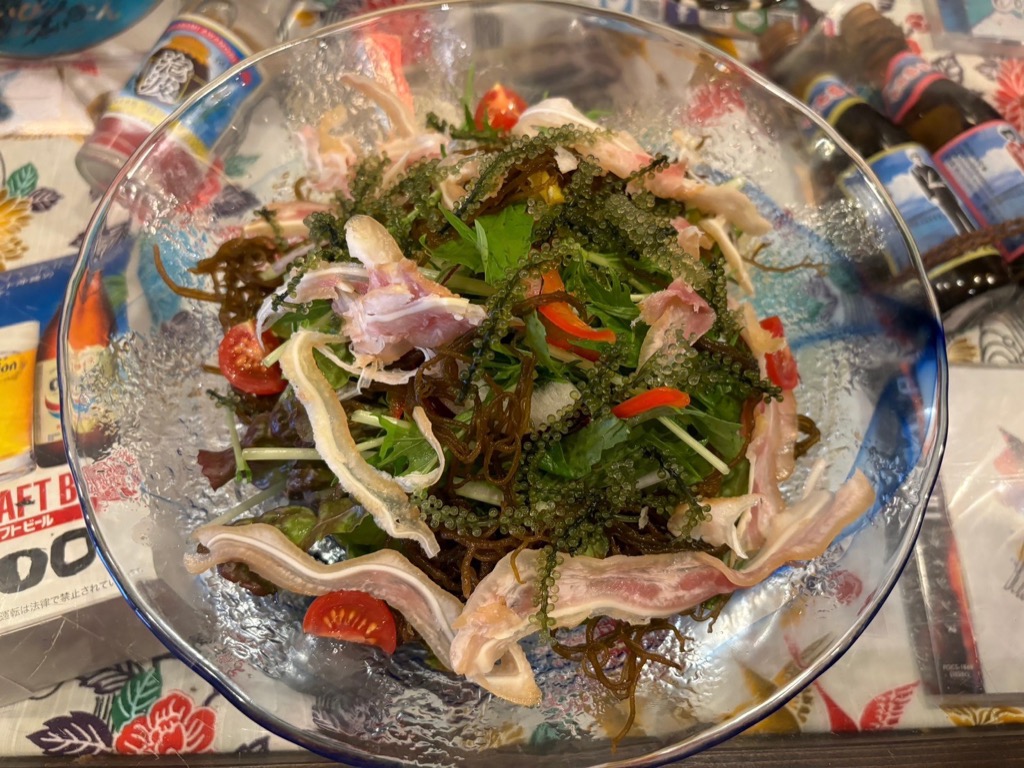
I started with the shimanchu salad, built around island vegetables. The leaves have a clean crispness, and the dressing never gets heavy. It sets up the meal the way an Okinawan starter should—light without being insubstantial—and it clears the palate for what follows rather than competing with it.
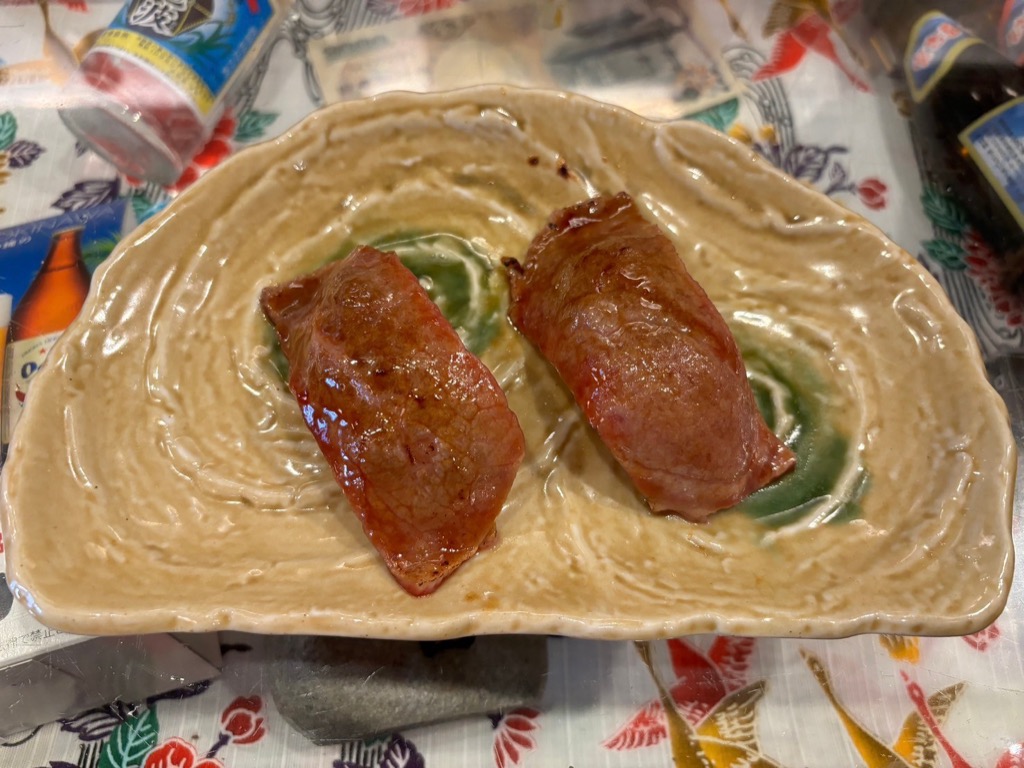
The Miyako beef nigiri is seared to order, and the aroma lifts as it arrives. The fat melts into a sweet-edged savouriness that binds to the rice, and a single piece is genuinely satisfying. It is a limited-quantity item, so getting one felt like a small win.
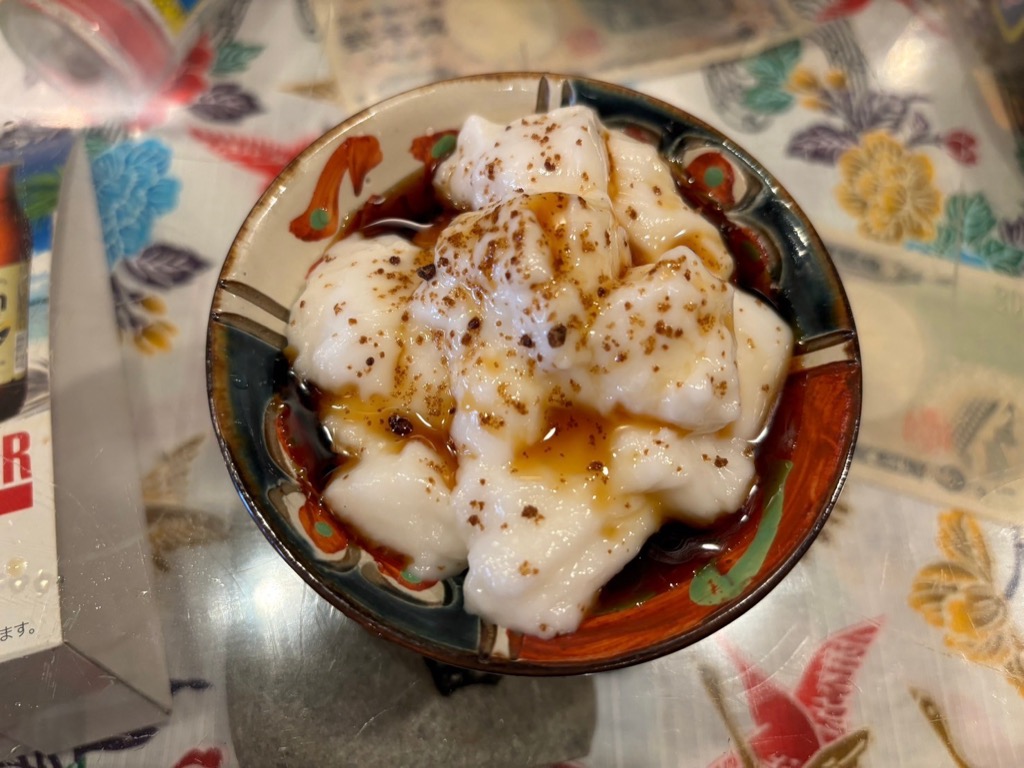
Jimami tofu has a dense, chewy richness from the peanuts, and the sweetness builds the more you chew. Despite the name, it contains no soybeans—it is made from peanuts (jimami in Okinawan). The texture is closer to a firm sesame tofu than to bean curd.
Sponsored
Mozuku vinegar, ninjin shirishiri, slow-braised soft-bone soki
Of these three, my favourite is the slow-braised soft-bone soki. It carries the depth of Okinawan cooking more clearly than anything else on the table, and it works with any drink.
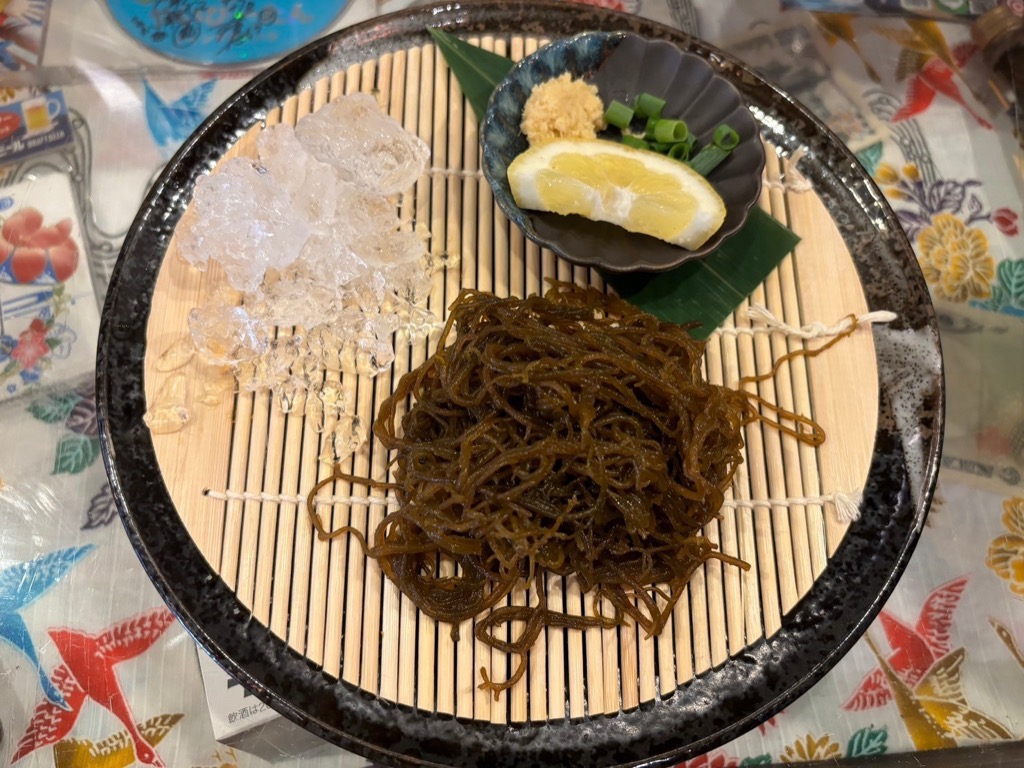
The mozuku vinegar has a tight acidity and a smooth, slippery texture, and the umami of Okinawa’s thick-stranded mozuku comes through clearly. The vinegar is not sharp enough to bury the ingredient. It resets the palate, which is a good reason to order it mid-meal.
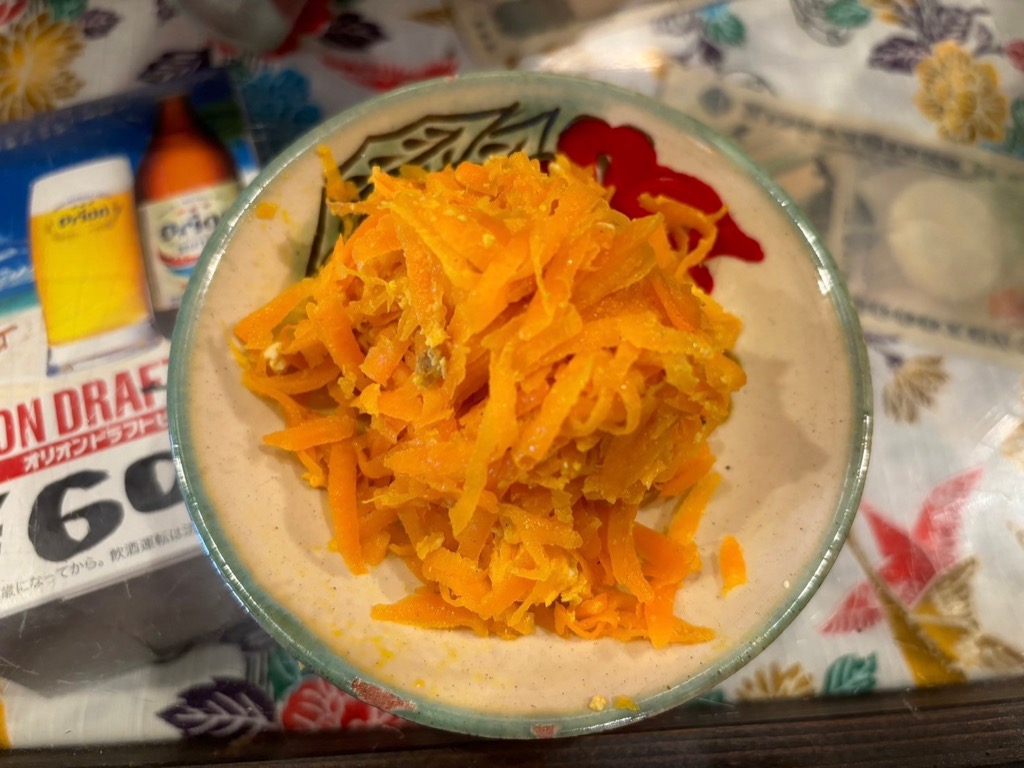
Ninjin shirishiri—shredded carrot with egg—is gentle, the sweetness of the carrot bound by the egg. The carrot keeps some bite, so the sweetness comes in waves as you chew. Eating it again made it obvious why it became a standard. It works between drinks and as a side with rice.
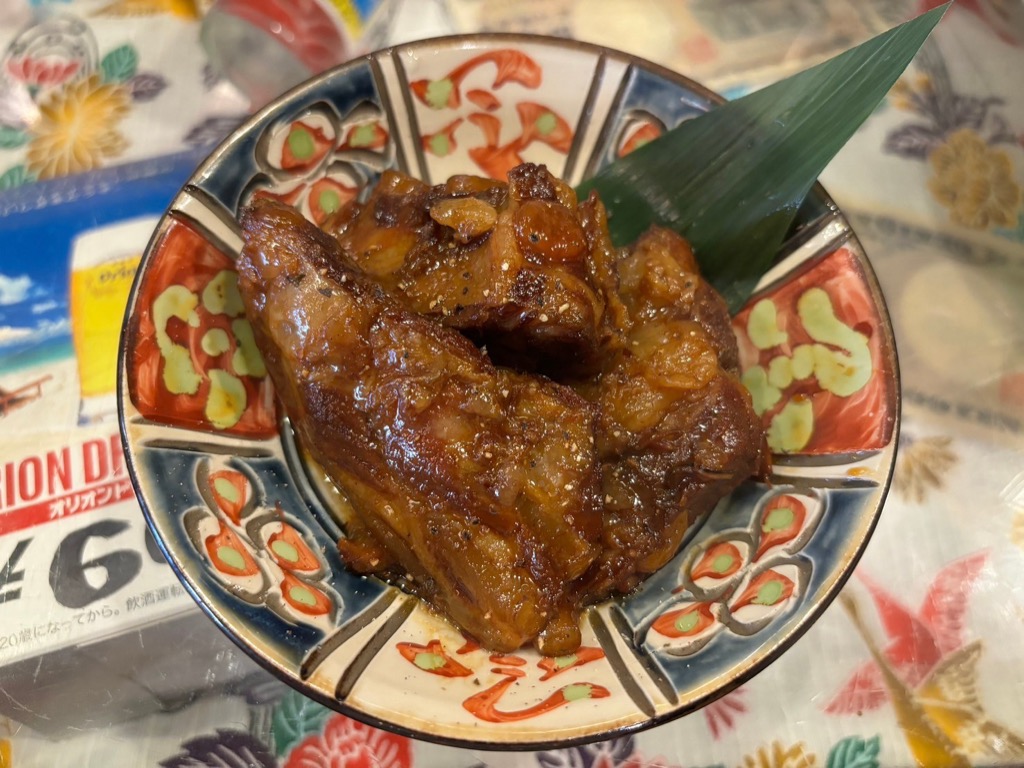
The soft-bone soki is braised until it falls apart with chopsticks, and you get parts that dissolve alternating with parts that still have bite. Pork savouriness fills the mouth.
For context, “nankotsu soki” is pork rib containing cartilage, distinct from “hon soki,” which is bone-in. For long braising, the cartilage cut is the better one.
Mozuku tempura, goya champuru, chili cheese curly fries
These three show the character of the place: the standards stay standard, with a bit of contemporary Okinawa added on top.
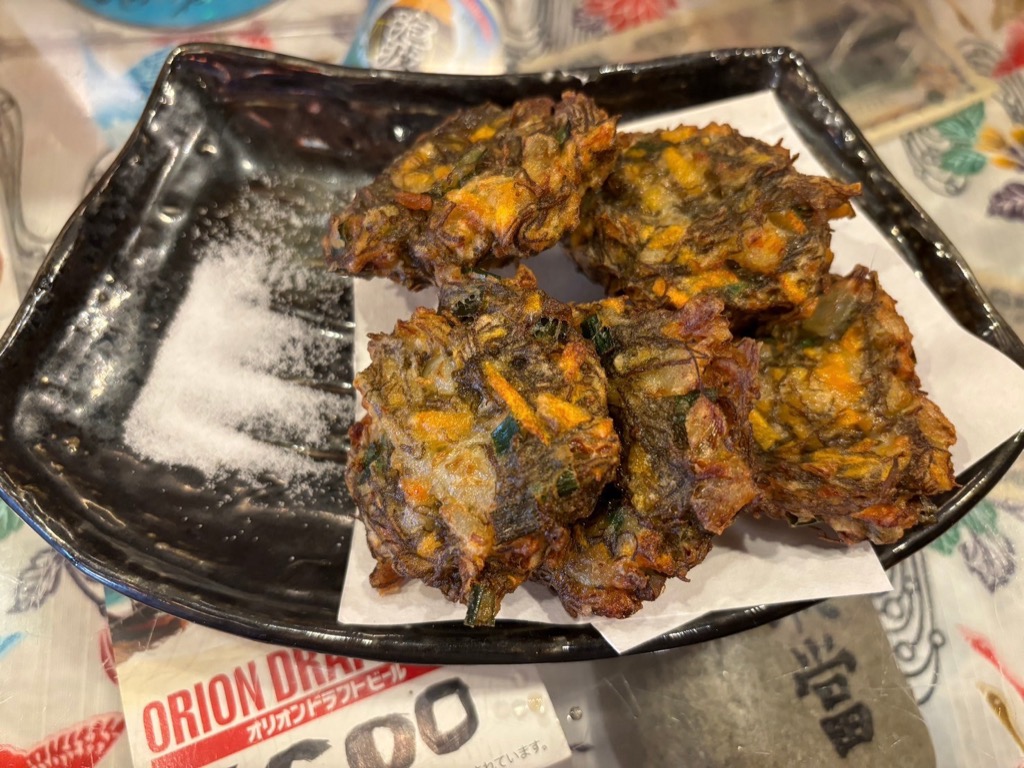
The mozuku tempura keeps the batter light and the seaweed distinct—crisp outside, clearly mozuku inside, and easy to keep eating for a fried dish. Eating it with salt makes the seaweed flavour easier to read.
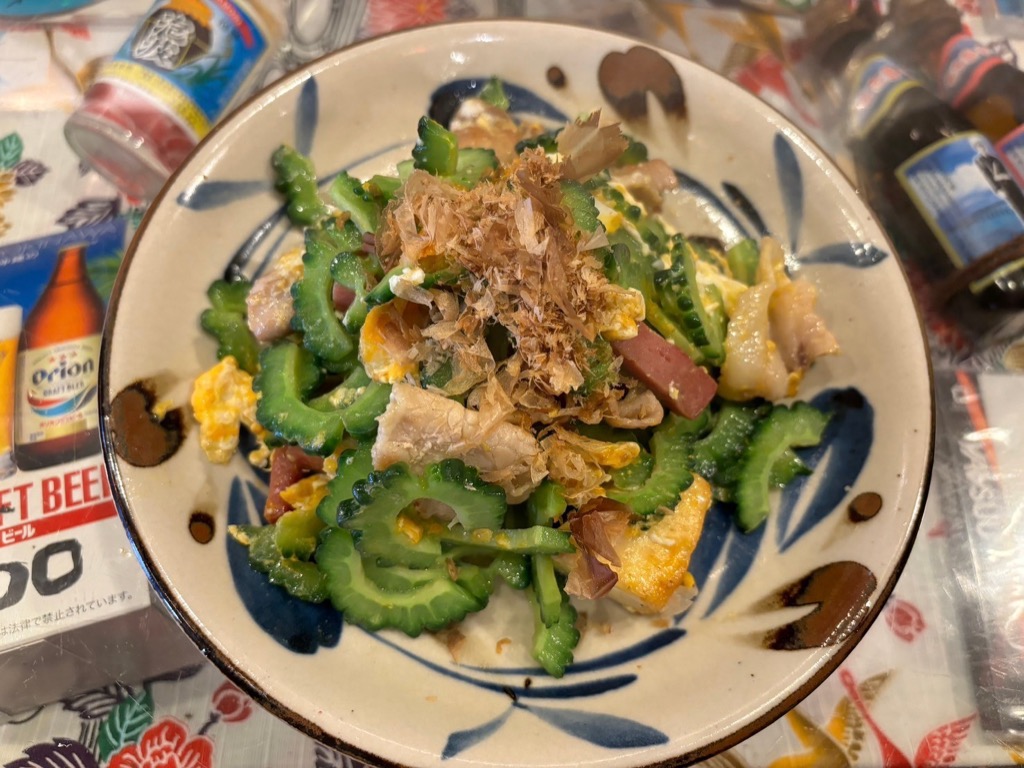
The goya champuru gets the bitterness right: not overwhelming, but not sanded down either. It is balanced against the tofu and the other ingredients while keeping its direction. Plenty of places kill the bitterness entirely, so this is worth crediting.
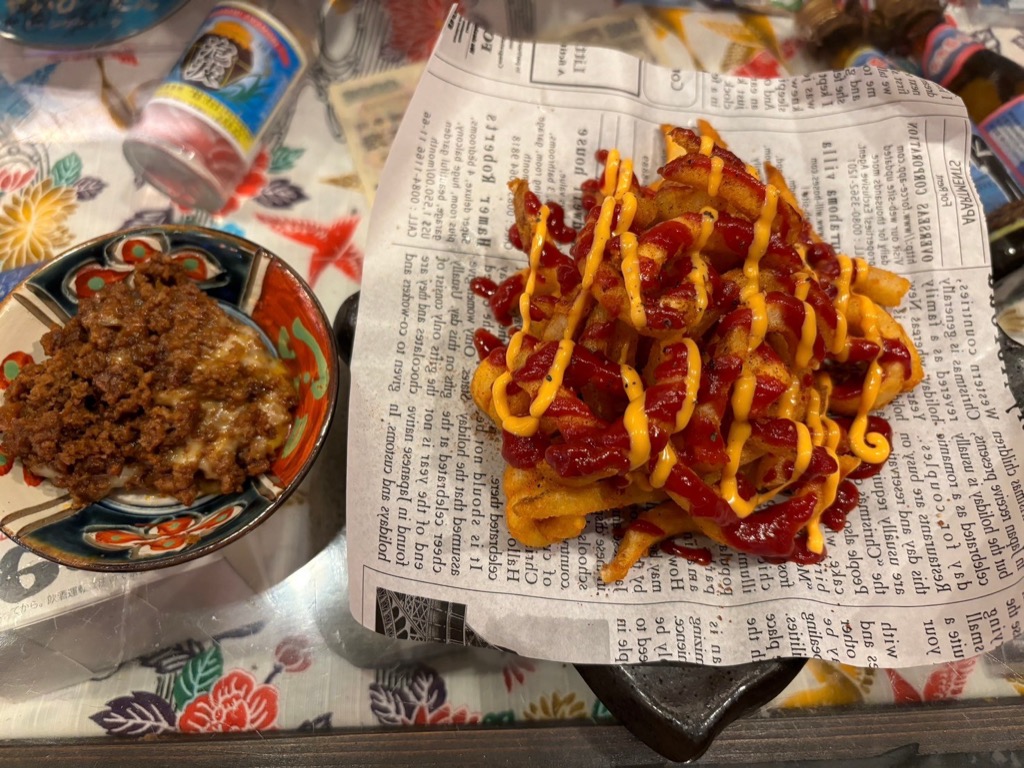
Chili cheese curly fries looked like an outlier on the menu, but I ordered them thinking of A&W, the fast-food chain Okinawans call “Enda”. Rich cheese against the heat of the chili—satisfying enough on its own.
Sponsored
Miyako soba and beni-imo sesame dumplings
Finish with the Miyako soba. With “Miyakojima” on the sign, skipping it would be missing the point.
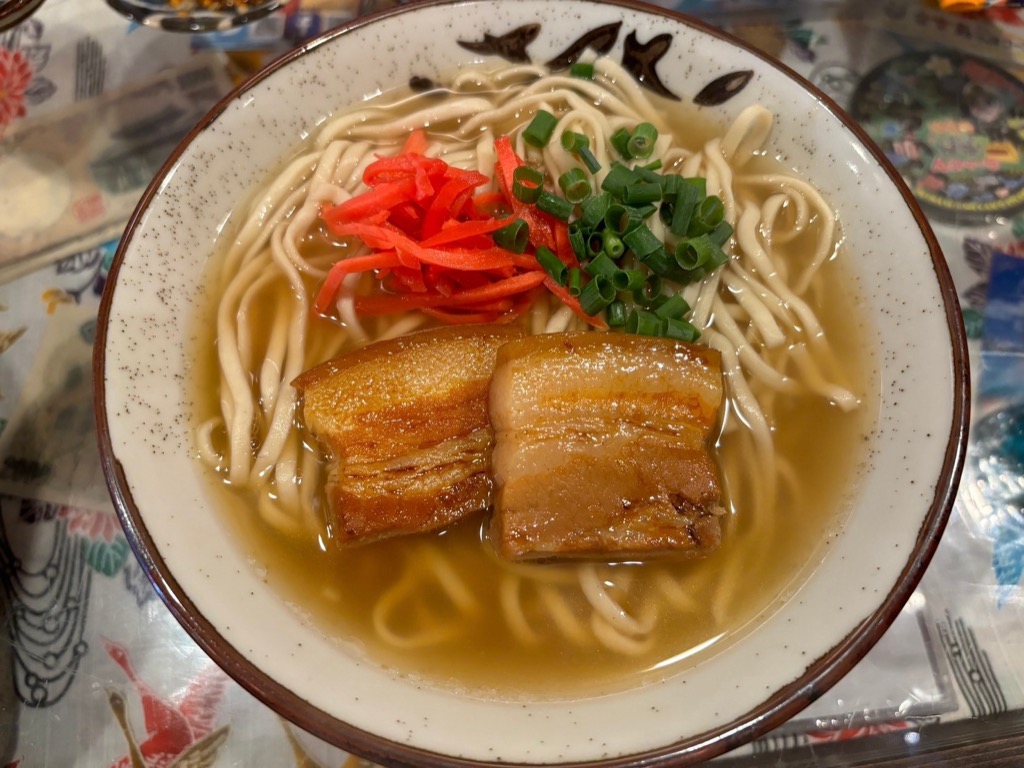
Miyako soba pairs thick noodles with a broth combining pork and seafood. Nothing flashy, but it settles the meal, and the Miyako character is distinct within the broader family of Okinawa soba.
One traditional feature worth knowing: in Miyako soba, the toppings are buried underneath the noodles. It looks like a plain bowl, and the meat and kamaboko emerge as you eat. Knowing that changes how the bowl reads.
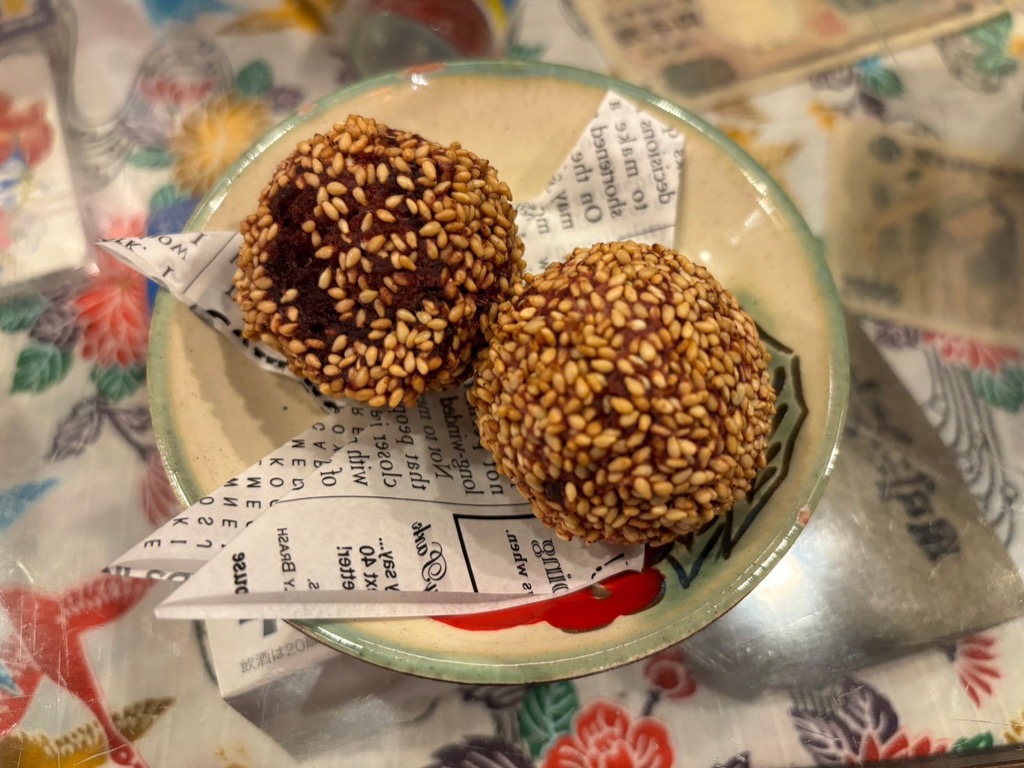
The beni-imo sesame dumplings have a chewy shell and the natural sweetness of purple sweet potato. The sweetness is restrained, so they do not sit heavily at the end of a meal.
Summary: who this is for
Saiya’s cooking brought Okinawan food back to me in sharp outline rather than as vague nostalgia. Because the menu is built on the standards, it is an easy place to work out whether Okinawan cuisine suits you.
Good fit if you
- Want to try a broad range of Okinawan dishes in one sitting
- Want goya bitterness and pork fat presented undiluted
- Want to eat and drink slowly in Fukuoka
Things to plan around
- Dinner only, 17:00–24:00. No lunch
- Closed Sundays and public holidays
- The seared Miyako beef nigiri is limited—arrive early
For Okinawa itself, I have written about Tsukemen Jinbei in Okinawa City and Ishigufu Ramen Shima. For more Fukuoka eating, there is also the charcoal oyster hut in Itoshima.