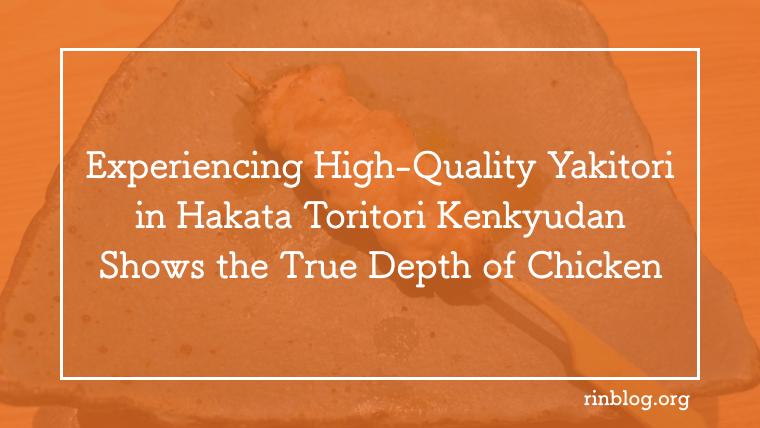
Short version: Toritori Kenkyudan is a yakitori restaurant for people who want to understand chicken cut by cut. It serves several branded Japanese chickens, including Hakata Jidori, across roughly 30 kinds of skewer. Work through the unusual cuts and the ingredient itself comes into focus.
This is not a restaurant that relies on flashy presentation or aggressive originality. Its focus is consistent: how to serve chicken in the best possible way. As the meal progressed, that became increasingly evident.
Below is everything I ordered, in the order I ordered it — seventeen items in total.
Sponsored
What kind of restaurant is it?
A yakitori restaurant near Hakata Station built on the idea of “eating the whole chicken”.
| Name | Toritori Kenkyudan |
|---|---|
| Location | 4-18-19 Hakata Ekimae, Hakata-ku, Fukuoka (Hakata Front Building) |
| Access | 8-minute walk from JR Hakata Station |
| Chicken used | Hakata Jidori, Jitokko, Amakusa Daio, Kuro Satsuma-dori and others |
| Skewer varieties | Around 30 |
| Seating | 34 |
| Typical spend | 5,000-5,999 yen for dinner |
The defining feature is that different branded chickens are matched to different cuts. Beyond skewers, the kitchen also serves ramen made from chicken bone broth, mizutaki, and torisuki.
For a Fukuoka restaurant that goes the opposite way and perfects a single item, see Kawaya Gion and its chicken skin. Kawaya masters one thing; this place lines everything up for comparison.
A structured flow that lets you experience chicken naturally

The meal began with chicken skin dressed in ponzu. Rather than leading with fat alone, the acidity of the ponzu resets the palate. Given the skewers to come, it is obvious why this dish sits at the front.

Next, sasami (tender). The heat is applied conservatively, clearly to avoid drying it out. The flavor is quiet, which is exactly why it works as an opening skewer.

Kosaka-dori tsukune holds together well, with softness leading. It does not weigh you down as the meal goes on.

Sunazuri (gizzard) has a firm, distinct snap, and the rhythm of the meal changes here. A shift in texture builds anticipation for what comes next.
Sponsored
The differences between cuts become clear as you eat

Teba (wing) balanced skin and meat well, grilled so that no excess fat remained.

Quail egg skewer was not overcooked, and the richness of the yolk stayed intact. It widens the range of flavor in a long run of skewers.

Furisode sits between tender and springy, and the fat never dominates. It comes from the base of the wing, and few restaurants offer it at all.

Maru hatsu (whole heart) carries the flavor of offal without any harshness, so it fits naturally into the sequence.

Shirako stood out for its texture. The creaminess is clearly different from everything before it, and it punctuates the flow.
The second half builds toward substance

Segimo (spleen) has the richness of offal without the fat pushing forward.

Liver was not overcooked, keeping its distinctive texture. Unless you actively dislike liver, this is an easy one to approach.

Jidori sausage changes direction once more. The shift in texture keeps the meal from becoming monotonous.

Seseri (neck) is springy, and the flavor builds as you chew.

Harami with Hakata Jidori is thick with a clear, jidori-like resistance to the bite. This was where the difference between chicken brands was easiest to taste.

Tsukune with cartilage reads completely differently from the first tsukune, and the crunch kept me eating well into the second half. Ordering both versions is worth it.
Sponsored
The meal still ends as “chicken”

Sorileth (oyster) balances fat and umami, and delivers real satisfaction. Only two come from each bird.

Yotsumi (thigh) is straightforwardly about eating chicken. Nothing flashy, but it captures what this restaurant is about.

I finished with chicken skin again. Grilled so the fat does not linger, it does not break the sequence built up to that point. Ending felt natural rather than forced — the sense of having eaten properly all the way through.
The order you choose changes the experience
With this many skewers, sequencing matters. Here is the structure that worked.
| Stage | What to order | Purpose |
|---|---|---|
| Opening | Chicken skin ponzu, sasami | Reset the palate. Do not load up on fat here |
| Early | Tsukune, gizzard | Shift texture and establish rhythm |
| Middle | Furisode, whole heart, shirako | Widen the range with unusual cuts |
| Late | Harami, sorileth, thigh | Build satisfaction with substantial cuts |
| Close | Chicken skin | A finish that does not sit heavily |
Cluster the fatty cuts early and the second half falls flat. Alternating offal with texture-forward cuts kept the meal going without fatigue.
Restaurant information
| Name | Toritori Kenkyudan |
|---|---|
| Genre | Yakitori (branded Japanese chicken, including Hakata Jidori) |
| Address | 4-18-19 Hakata Ekimae, Hakata-ku, Fukuoka (Hakata Front Building) |
| Phone | 092-292-3467 |
| Access | 8-minute walk from JR Hakata Station, south along the elevated line |
| Hours | Mon-Thu 18:00-24:00 / Fri, Sat and days before holidays 17:00-24:00 / Sun and holidays 17:30-24:00 |
| Closed | Irregular (calendar posted on Instagram) |
| Seating | 34 |
| Typical spend | 5,000-5,999 yen for dinner |
| Payment | Cards (VISA / Master / AMEX), electronic money, QR payments (PayPay, d-payment) |
Details are as of my visit. Because closures are irregular, check the restaurant’s Instagram before going.
Summary
- Toritori Kenkyudan is a yakitori restaurant near Hakata Station built on “eating the whole chicken”
- It matches several branded chickens to different cuts – Hakata Jidori, Jitokko, Amakusa Daio, Kuro Satsuma-dori
- Around 30 skewer varieties, including furisode, whole heart, and sorileth
- Order sequence changes the experience. Do not cluster the fatty cuts early
- Order both tsukune versions – plain and with cartilage – to feel the difference
- Budget around 5,000 yen; cards, e-money and QR payments all accepted
- Closures are irregular. Check Instagram first
For yakitori in Hakata, this suits anyone who wants to understand chicken through its cuts. A calm room, and consistently high-quality grilling.