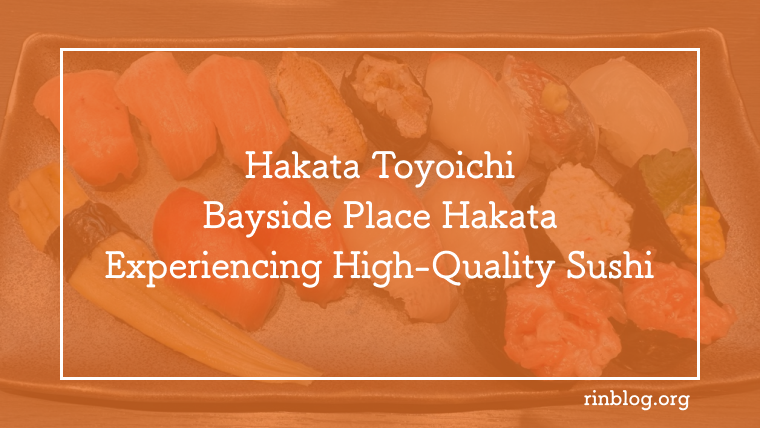
Short version: what makes Hakata Toyoichi worth the trip is that otoro, uni and ikura all sit on the counter at the same 120 yen (plus tax) per piece. Fish comes in from Nagahama port every morning, and the range runs to fifty or sixty kinds. I do not know of another place in Fukuoka that combines all of that.
One clarification first. It is described as a “sushi buffet”, but it is not all-you-can-eat. You pick what you want from the display case and pay per piece. Which means only what you want, only as much as you want.
Below is what I ate, in order.
Sponsored
The strength: expensive cuts on the same footing
The core of this place is quality of fish, range of fish, and a single price for all of it.
Where you would normally think “that one is expensive, I will skip it”, here your hand reaches for it identically. The result is a fast, unselfconscious run through whatever you actually want to eat.
That freedom to move across the whole range is the appeal. Eating akami and otoro back to back to compare them costs you nothing extra in hesitation.
| Name | Hakata Toyoichi, Bayside Place Hakata |
|---|---|
| Location | 13-6 Chikkohonmachi, Hakata-ku, Fukuoka, Bayside Place Hakata Building B, 1F |
| Sushi | 120 yen per piece (plus tax), roughly 50-60 varieties |
| Sourcing | Nagahama fishing port, every morning |
| Seating | 56, including counter |
Tuna and the fattier cuts
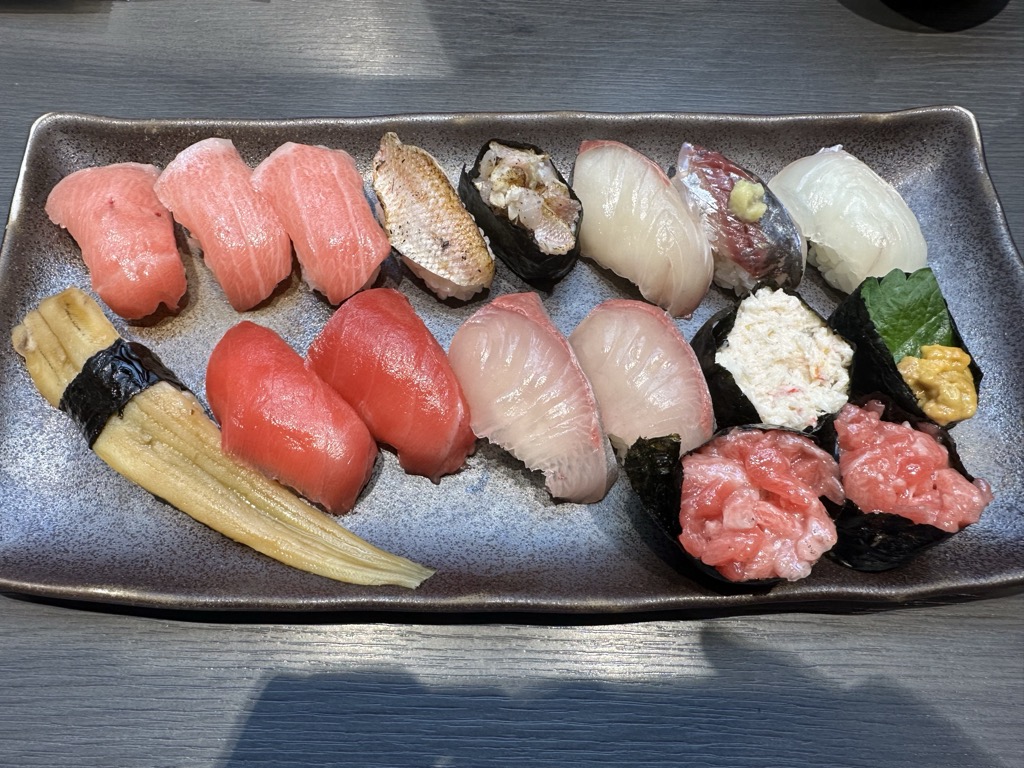
Akami (lean tuna) shows its firmness the moment you bite, leaving no excess fat behind. The flavour runs straight, which makes it a good opener for judging everything that follows.
Otoro eaten after the akami makes the difference in quantity and quality of fat obvious. The sweetness of the fat spreads slowly, but heaviness never leads, and with the rice it settles naturally.
Toro gunkan pushes the fat further forward than the nigiri does. The aroma of the nori gives the richness an outline — the same toro reads differently depending on the format.
Nodoguro carries real fat for a white fish, and the aroma on the first bite lingers. It runs in a different direction from the leaner whites, and registers as its own category.
Kanpachi is not too fatty, with a pleasant firmness. Umami builds as you chew — unshowy, but dependable.
Madai is lean without being watery. The flavour opens up as you chew, so slotting it in mid-meal settles the palate.
Anago is plump, and with the sweetness of the sauce it stays light enough to eat late. Even after a run of fatty pieces, it goes down easily.
Sponsored
Pieces where texture leads
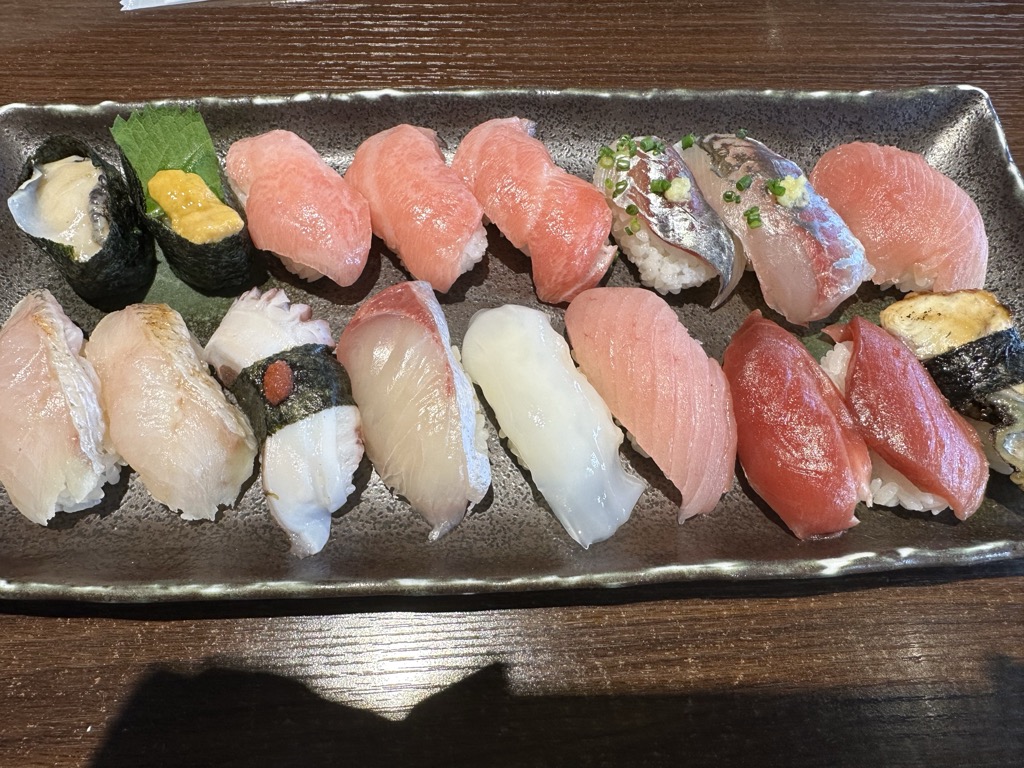
Aji is soft, with flavour spreading on every bite and a slight aftertaste that shapes the pace of the meal.
Buri has an obvious sweetness in the fat and real presence on contact. Fatty like tuna, but layered in a different direction.
Yariika cuts cleanly, and the resistance is satisfying. A restrained sweetness emerges as you chew, and the palate tidies itself up.
Tako is springy, with umami building the longer you chew. Because it demands real chewing, the texture is the point.
Uni gunkan keeps the sea-smell in check and leads with sweetness. Even in a run of fatty pieces, it registers in its own direction.
Delicacy and contrast

Hirame is where the quality of the white fish shows most plainly. Thin, and it comes apart in the mouth together with the rice. It never pushes with strong flavour, yet what remains afterwards is entirely aftertaste — genuinely delicate.
Ikura gunkan stands out even among the gunkan, and slotting it in changes the flow. The roe has real tension and bursts on the bite. Following a white fish, the contrast is sharp.
Akagai hits with a crisp resistance first, then builds umami. Different in direction from scallop, it is a piece where texture takes the lead, and it works as a break point in the sequence.
Sponsored
Shellfish from the hamayaki grill
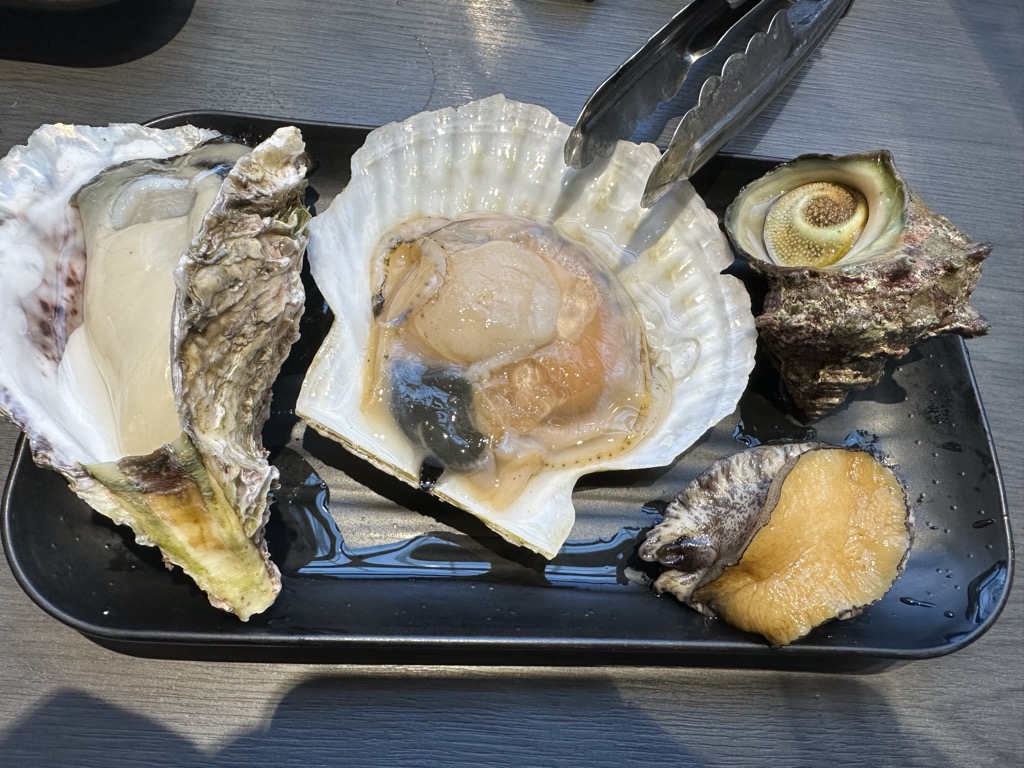
Hamayaki means grilling shellfish at your own table, and the set combined baby abalone, turban shell and scallop. Oysters appear in season. Being able to slot “cooked sea flavour” in after the sushi is part of what makes this place interesting.
Oysters did not shrink excessively on the grill and carried strong umami. Unlike oyster as a sushi topping, heat lifts the aroma and the flavour reads as more concentrated.
Scallop gains obvious sweetness from grilling, and the sweetness of the shellfish arrives all at once. The toastiness sets it apart from scallop as sushi.
Turban shell has a crisp texture and a distinctive slight bitterness that will divide opinion. For me, that bitterness tightens the finish and works well after a run of sweeter items.
Baby abalone is not tough, and the texture stays memorable.
Two things that reset the meal
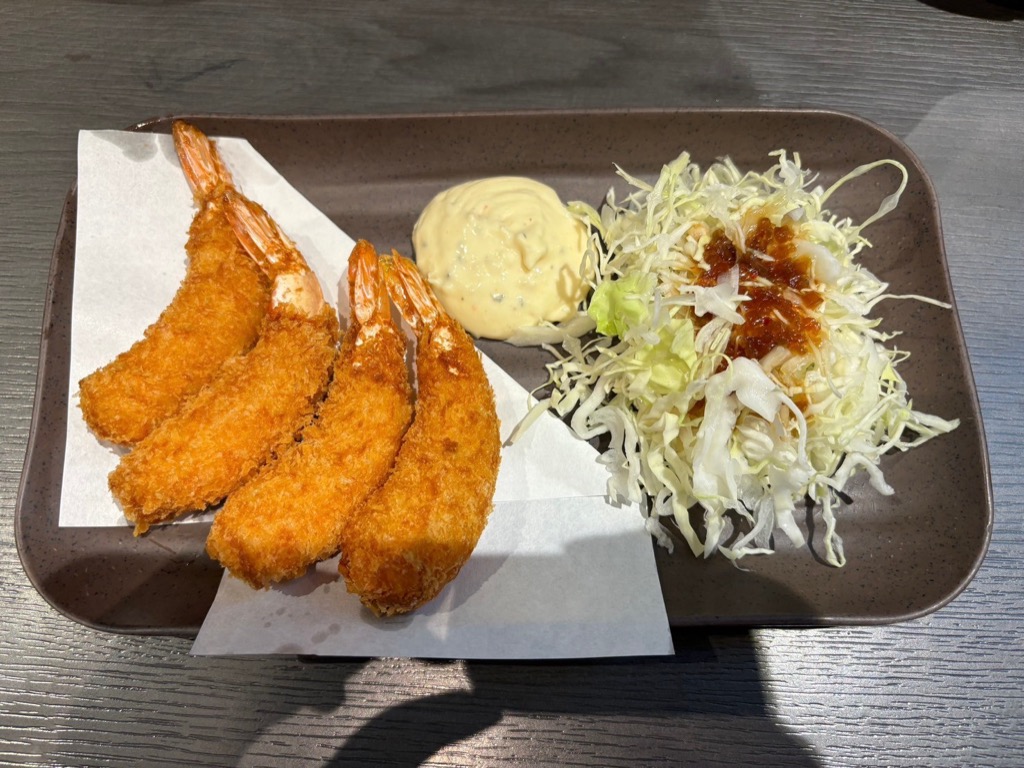
Fried prawn between sushi resets the palate. The coating is not heavy and does not sit in your stomach — fried food that somehow does not break the rhythm.
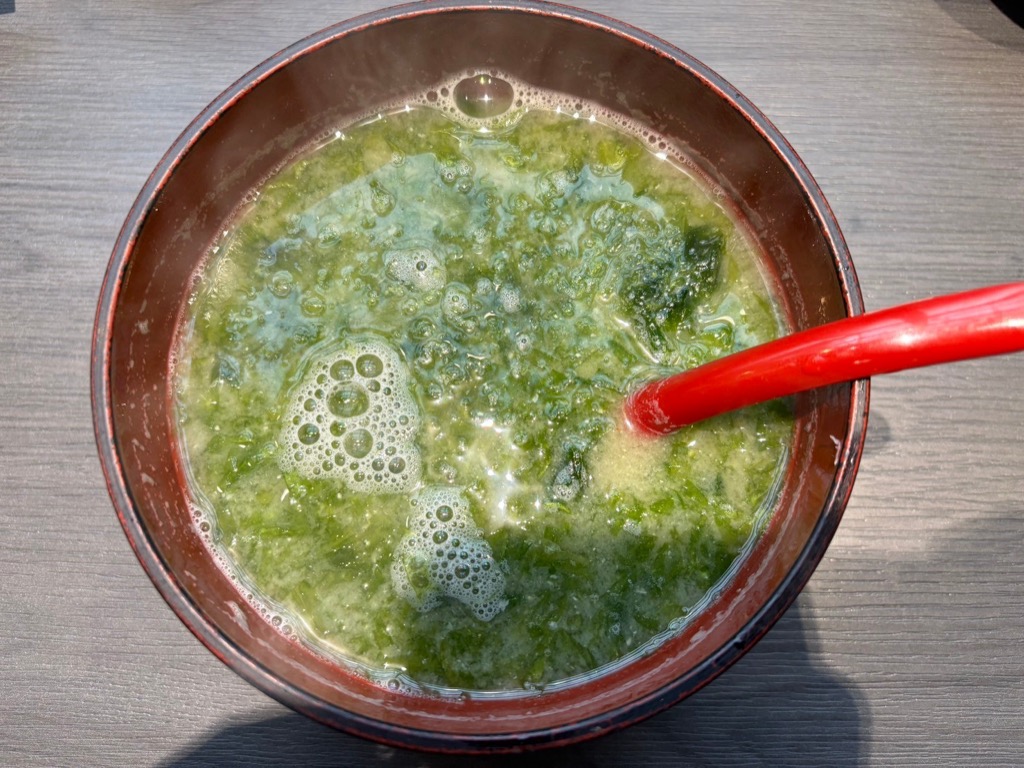
Aosa miso soup lifts a sea aroma and calms things down. It settles the mouth mid-run and works equally well as a closer.
A suggested order
Having eaten through it, the order changes how satisfying the meal is.
| Stage | Order | Purpose |
|---|---|---|
| Opening | Akami, madai, hirame | Establish a baseline. No fat yet |
| Middle | Otoro, nodoguro, buri | The contrast with akami reveals the fat |
| Reset | Yariika, tako, akagai | Texture breaks the run |
| Gunkan | Uni, ikura, toro gunkan | Nori aroma shifts the direction |
| Close | Anago, aosa miso soup | Finish without heaviness |
Front-load the fatty pieces and the white fish stops registering later on. Precisely because everything costs the same, sequencing is worth thinking about.
Take the hamayaki after working through the sushi. Grilled flavour makes a strong impression, and eating it first blunts the delicacy of the raw pieces.
Restaurant information
| Name | Hakata Toyoichi, Bayside Place Hakata |
|---|---|
| Genre | Seafood, sushi, tempura, seafood bowls |
| Address | Bayside Place Hakata Building B 1F, 13-6 Chikkohonmachi, Hakata-ku, Fukuoka |
| Phone | 092-262-2425 |
| Access | Immediately at the Nishitetsu Bus “Hakata Futo” stop |
| Hours | Mon, Tue, Thu 11:00-20:30 / Fri 11:00-21:30 / Sat 10:30-21:30 / Sun 10:30-19:30 |
| Closed | Wednesdays (shifts around public holidays) |
| Seating | 56, including counter |
| Sushi price | 120 yen per piece, plus tax |
Prices and hours are as of my visit; hours can change, so check the official site.
Summary
- At Hakata Toyoichi, otoro, uni and ikura are all 120 yen per piece (plus tax)
- Called a “sushi buffet”, but not all-you-can-eat. You choose and pay per piece
- Around 50-60 varieties, sourced each morning from Nagahama port
- A single price removes the decision to skip the expensive fish — the main appeal
- Order white fish, then fat, then texture, then gunkan, then anago
- Take the hamayaki after the sushi, or it dulls the raw pieces
- Closed Wednesdays, and Sunday closes early at 19:30
Piece by piece the differences are easy to read, and working through them in sequence was the enjoyable part. Because pricing is per piece, it works perfectly well on your own.