My Small Miracle Review: A Quiet Novel That Leaves You Unsettled in Subtle Ways
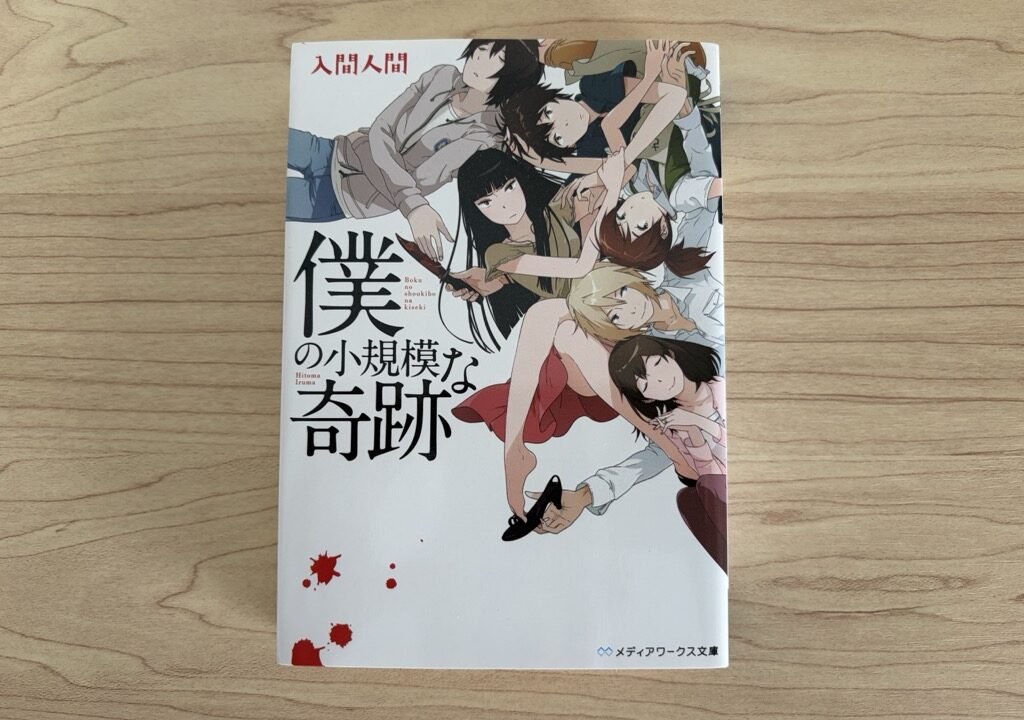
My Small Miracle Review: A Quiet Novel That Leaves You Unsettled in Subtle Ways
This article reflects my personal reading experience of My Small Miracle by Hitoma Iruma, written after finishing the novel in its entirety.
Rather than summarizing the plot, I focus on what I felt while reading and what lingered after I closed the book. If you are wondering what kind of novel this is, or whether it aligns with your reading preferences, this review is meant to help you decide.
What this article explains is not “what happens,” but how the story is told, how the characters relate to one another, and why the ending refuses to settle neatly.
This article is for readers who value emotional nuance, ambiguity, and quiet discomfort over clear resolutions or dramatic twists.
Before going further, I want to be clear about the evaluation criteria I use throughout this review:
-
Narrative voice and writing style
-
Character behavior and interpersonal distance
-
Lingering discomfort and aftertaste
All impressions below are grounded in these shared literary perspectives and my own experience as a reader.
1. Narrative Voice and Writing Style: Calm on the Surface, Uneasy Beneath
The novel is told in a restrained first-person voice. The sentences are not complex, and events unfold in an almost ordinary sequence. On a technical level, the prose feels accessible and unforced.
What unsettled me was not the language itself, but what the narration chooses not to explain. Emotional motivations are often left unstated. Characters act, react, and move on without fully articulating why. As a reader, I repeatedly paused to ask myself what emotional logic was operating beneath the surface.
There are moments when the protagonist treats a clearly unusual event as if it were trivial. The narration remains calm, but the reader senses that something important is being glossed over. This gap between tone and implication creates a persistent unease.
The novel is easy to read, yet difficult to feel at ease with—and that tension never fully dissolves.
2. Character Behavior and Relationships: Kindness or Self-Protection?
At first glance, the relationships in My Small Miracle appear gentle and conflict-free. There are no explosive confrontations or dramatic emotional breakdowns. Yet I found myself increasingly uncomfortable with the emotional distance between characters.
What stayed with me most was the ambiguity behind their actions. When a character does something “for someone else,” it is not always clear whether that choice is rooted in genuine care or in a desire to avoid facing something painful.
No one is overtly malicious. Still, relationships subtly distort over time.
As I read, I kept asking myself whether these characters were being kind—or simply afraid. The novel never forces an answer, and that refusal to categorize its characters neatly felt intentional. Their ambiguity is not a flaw; it is the point.
3. Lingering Discomfort and the Weight of the Word “Miracle”
After finishing the novel, I struggled to accept the word “miracle” in the title at face value. While the events do deviate from the ordinary, they did not register as blessings or salvation to me.
Instead, I felt as though the term “miracle” was being used to wrap something unresolved—perhaps even something avoided. The story does not offer catharsis or emotional release. If you expect a sense of uplift at the end, this novel may feel unsatisfying.
However, if you are the kind of reader who continues asking, “Was this really a good ending?” long after finishing a book, this story leaves a strong impression.
The longer I sat with the title, the heavier the word “small” began to feel.
4. Who This Novel Is For
Based on my reading experience, My Small Miracle is well suited for readers who:
-
Are comfortable with ambiguity and unresolved emotional threads
-
Enjoy interpreting character motivations rather than being told explicitly
-
Value quiet tension and psychological distance over clear moral lessons
Readers who prefer straightforward growth arcs or unmistakable emotional payoffs may find this novel frustrating rather than rewarding.
5. Conclusion: A Recommendation with Reservations
I would not describe My Small Miracle as an enjoyable or uplifting read. Still, I never felt that reading it was a mistake. The discomfort it left behind is precisely why it remains memorable.
For readers interested in subtle emotional shifts, fragile relationships, and stories that resist closure, this novel is worth trying.
It is not a universal recommendation—but it is an honest one. And in that sense, it serves as a clear entry point into the distinctive style of Hitoma Iruma.