Ginmugi Seimen in Minoshima, Hakata is a noodle shop run by a noodle factory. Chuka soba and zaru soba are 690 yen, with a choice of one, one-and-a-half or two portions of noodles. Beyond the noodles themselves, what stayed with me was the katsuobushi in the broth.
It is about ten minutes on foot from Hakata Station, and opens in the morning, so it works before setting off for the day.
Over several visits I ate the chuka soba, the zaru soba and the Okinawa soba. This is a record of all three.
Sponsored
Ginmugi Seimen: the details
| Name | Ginmugi Seimen (吟麦製麺) |
|---|---|
| Type | Noodle-factory restaurant (ramen and soba) |
| Address | 1-9-20 Minoshima, Hakata-ku, Fukuoka |
| Access | About 10 minutes on foot from Hakata Station |
| Seats | 20 |
| Ordering | Ticket machine inside the entrance |
| Budget | 500 to around 1,000 yen |
Opening hours need care. When I visited, the listing was “Mon–Thu 11:00–15:30, Sat/Sun/holidays 8:00–15:30, closed Friday”. Other sources now list 7:30–22:00 with no closing day, so the information differs by listing. The operation may have changed, so check with the restaurant before travelling.
Chuka soba (690 yen)
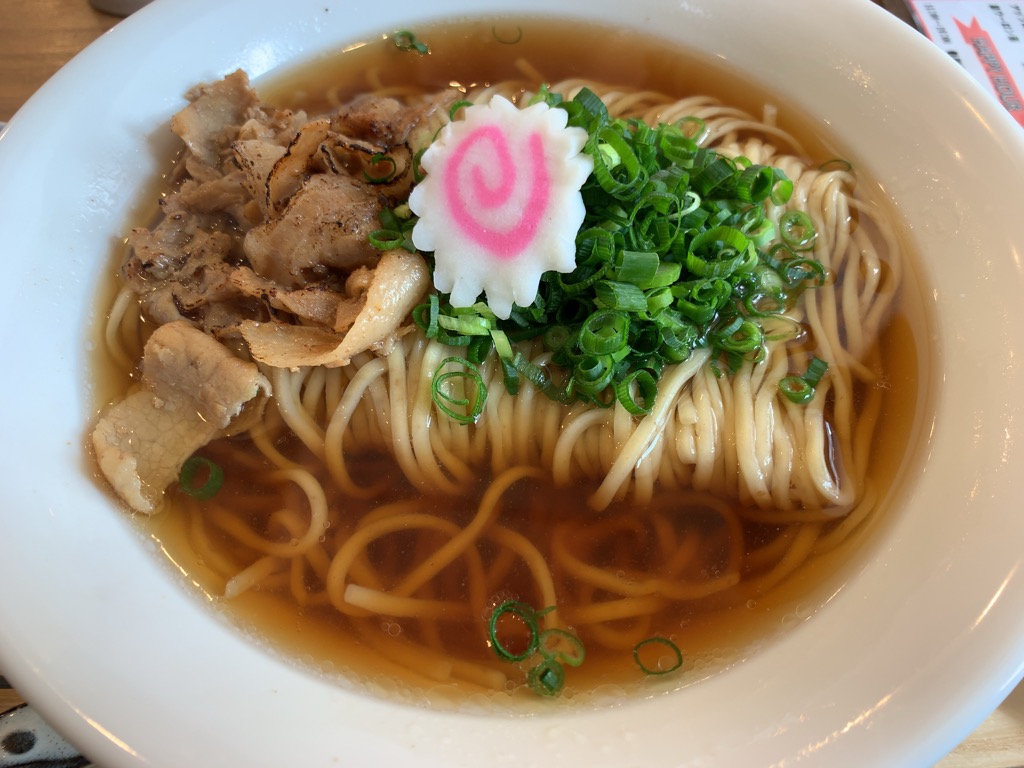
The first thing I had was the chuka soba. You buy a ticket from the machine, and I asked for the thin straight noodles.
What arrived was a clear soy-based broth—apparently built on katsuobushi and chicken bones—where the toastiness of the soy and a gentle savouriness register from the first mouthful.
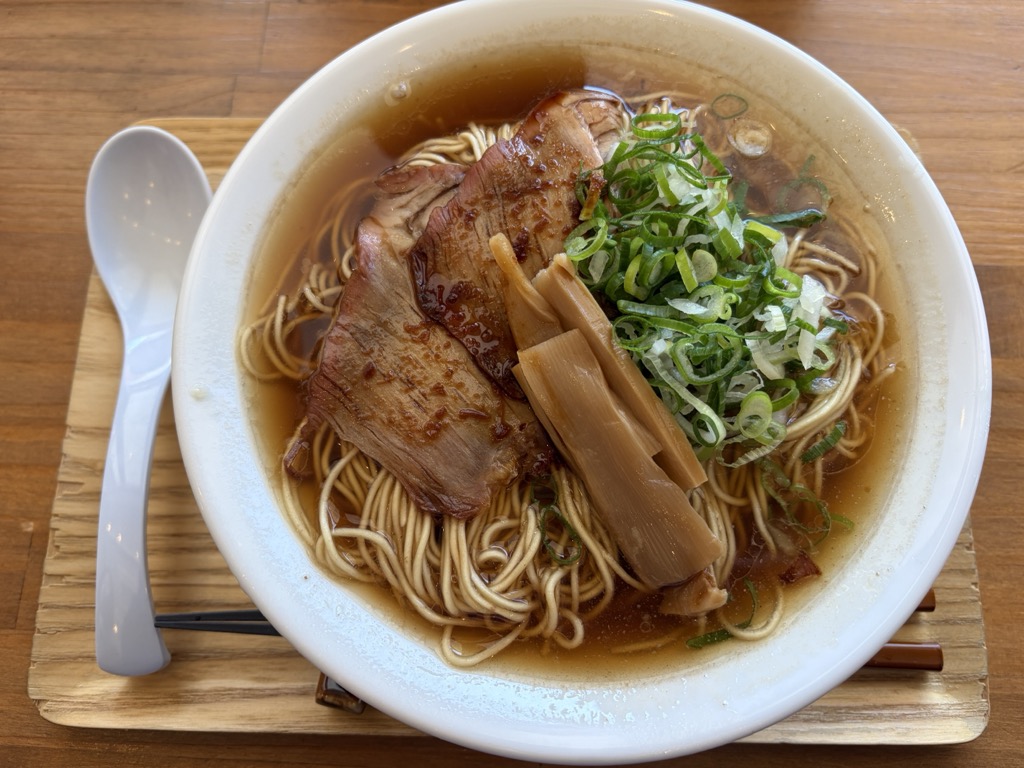
The noodles are thin with a clean swallow, and the wheat flavour stays in the mouth naturally. Being a noodle factory shows up directly in the texture and aroma.
The chashu is not fatty; chewing releases the meat flavour gradually, and it sits well with the broth. Nothing about it is heavy, so it works equally as breakfast or lunch.
Although it is a light bowl, 690 yen buys a choice of one, one-and-a-half or two portions, so quantity is not a compromise.
Sponsored
Zaru soba (690 yen)
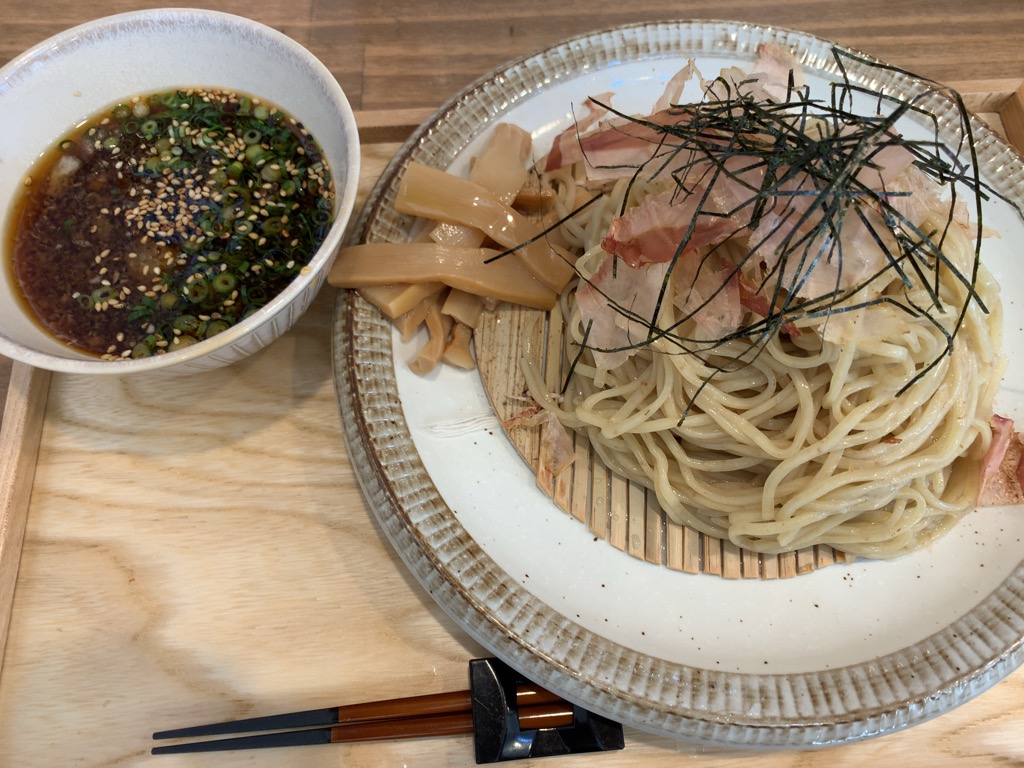
The zaru soba reads completely differently. Chilled firmly in ice water, the noodles have real spring and a notably smooth swallow.
The dipping broth is on the stronger side and clings well each time you dip. The coolness of the first mouthful against the sharpening savouriness of the broth is very pleasant.
The noodle texture is the standout, and the wheat flavour comes through directly. It is a bowl for lunch, and especially for hot weather.
Okinawa soba (590 yen, limited)
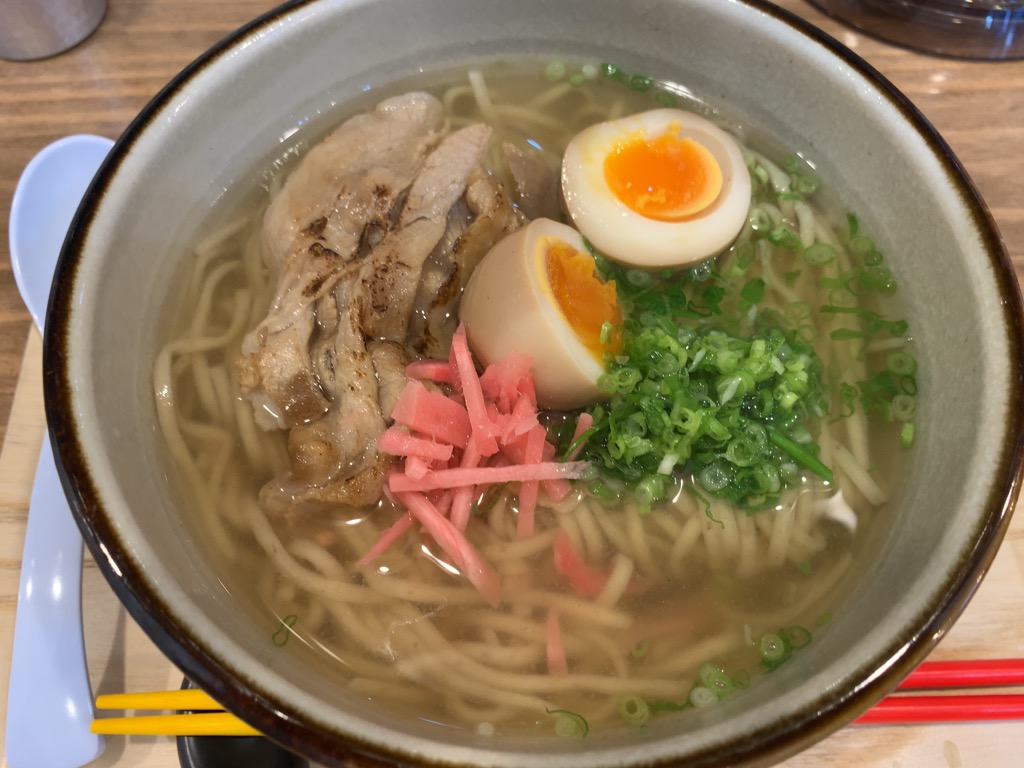
Okinawa soba is sometimes offered on weekend and holiday mornings. It was available the day I went.
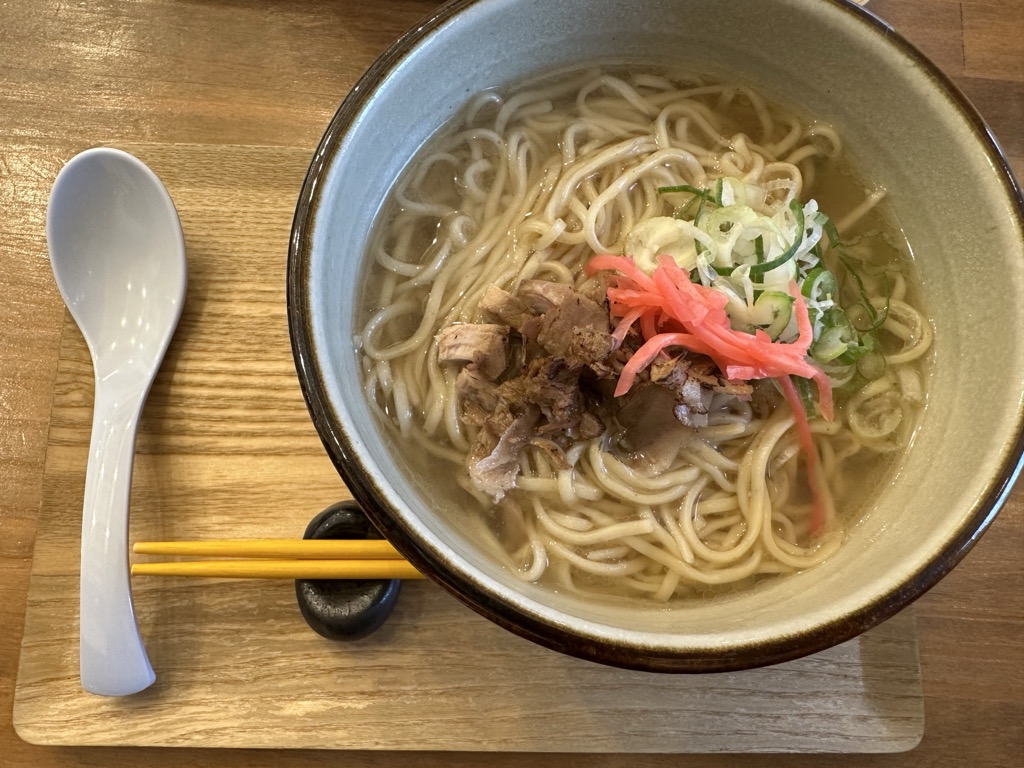
The noodles are thicker than either the chuka soba or the zaru soba, springy to the bite but smooth going down—with the characteristic chew of Okinawa soba.
The broth is gentle, driven by katsuobushi, pointing in a different direction from the soy-based chuka soba. Nothing is showy; noodles and broth sit calmly together, and it goes down easily in the morning.
Having grown up in Okinawa, it registered to me as genuine Okinawa soba. It is a shame it is only available in that limited window.
Availability varies by day. If it is the reason you are going, check first.
Summary: what to order
As you would hope from a noodle factory, all three bowls make it obvious that the noodles are the point. The broth is substantial enough that a light bowl never feels thin.
- First visit: chuka soba. It shows you what the place does. Thin noodles, one-and-a-half portions
- Hot weather: zaru soba. The clearest expression of the noodle texture
- Weekend mornings: Okinawa soba, if it is on
Before you go:
- Ten minutes from Hakata Station; only 20 seats
- Order from the ticket machine
- Opening hours differ between listings—confirm before travelling
- Okinawa soba is limited and not always available
Elsewhere in Hakata I have written about Hakata Nadai Yoshizuka Unagiya and Kawaya Gion. On Okinawan food itself, there is Saiya, a Miyakojima-style restaurant in Fukuoka.