Experiencing Everyday and Special Okinawan Cuisine at Saiya, a Miyakojima-Style Restaurant in Fukuoka

This article explains what authentic Okinawan food tastes like when it is prepared with a clear sense of tradition and balance, based on a real dining experience at a Miyakojima-style restaurant in Fukuoka.
It is written for readers who are curious about Okinawan cuisine, whether they have visited Okinawa before or are encountering its food for the first time.
I visited this restaurant because I wanted to reconnect with the Okinawan food I grew up eating. Rather than chasing nostalgia alone, I wanted to check how those flavors would feel to me now, with time and experience having reshaped my memory.
What I found was food with a very clear culinary direction. Each dish naturally reminded me, “Yes, this is what Okinawan food tastes like.” Even after some time had passed, the flavors remained distinct in my memory—clear seasoning, purposeful use of ingredients, and no vague impressions. It felt like I had properly revisited Okinawa through food.
- 1. Shiman-chu Salad, Seared Miyako Beef Nigiri, and Jimami Tofu
- 2. Mozuku Vinegar, Ninjin Shirishiri, and Soft-Simmered Pork Cartilage Soki
- 3. Mozuku Tempura, Goya Champuru, and Chili Cheese Curly Fries
- 4. Miyako Soba and Beni-imo Sesame Dumplings
- Looking Back on the Experience
- Restaurant Information
1. Shiman-chu Salad, Seared Miyako Beef Nigiri, and Jimami Tofu
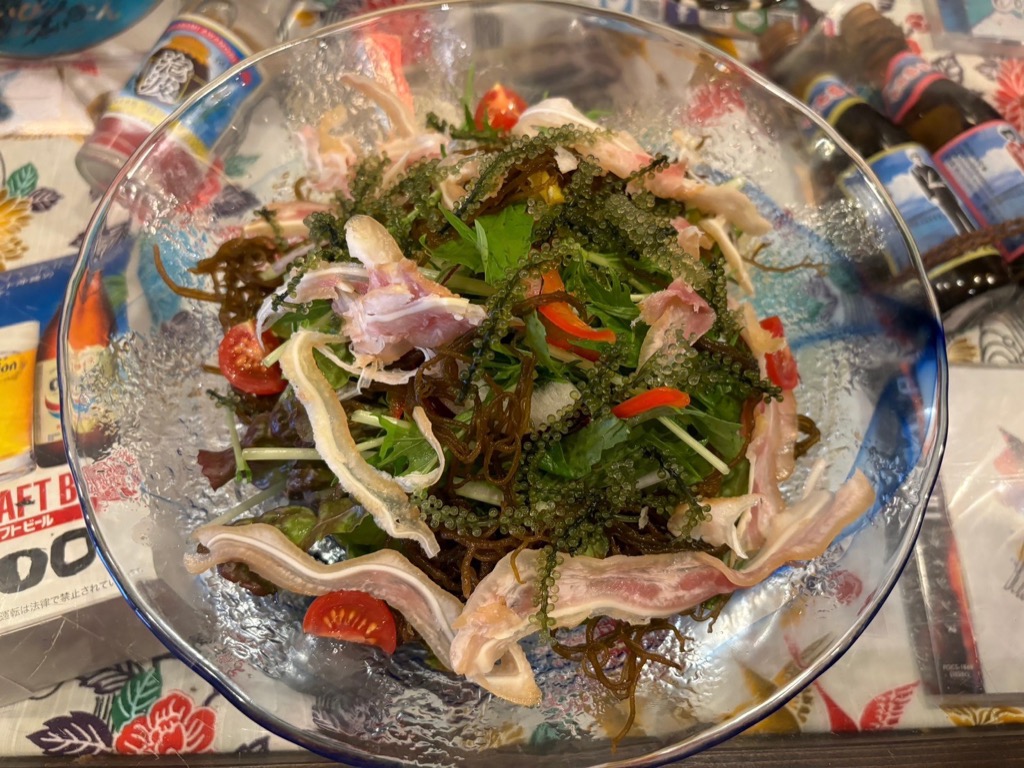
The first dish I ordered was the Shiman-chu Salad. Built around island vegetables, it stood out for its crisp texture and light but sufficient seasoning. As an Okinawan appetizer, it clearly follows a widely shared standard: refreshing without being thin or unsatisfying. It felt well-balanced as an opening dish.
Because the seasoning does not overpower the vegetables, it gently prepares your palate for what comes next. It functions exactly as a good Okinawan starter should.
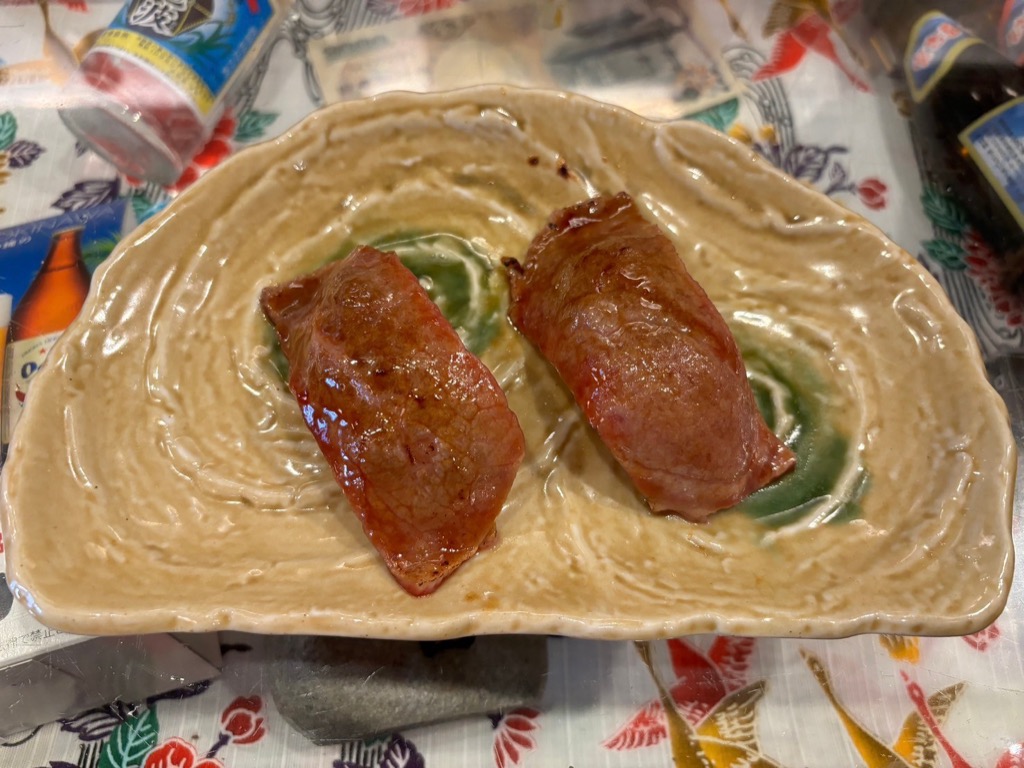
The seared Miyako beef nigiri was served lightly torched. The aroma rose immediately, and the fat melted into a sweet, savory richness that paired beautifully with the rice. Even a single piece felt complete. Since it was a limited-quantity menu item, being able to order it added to the experience.
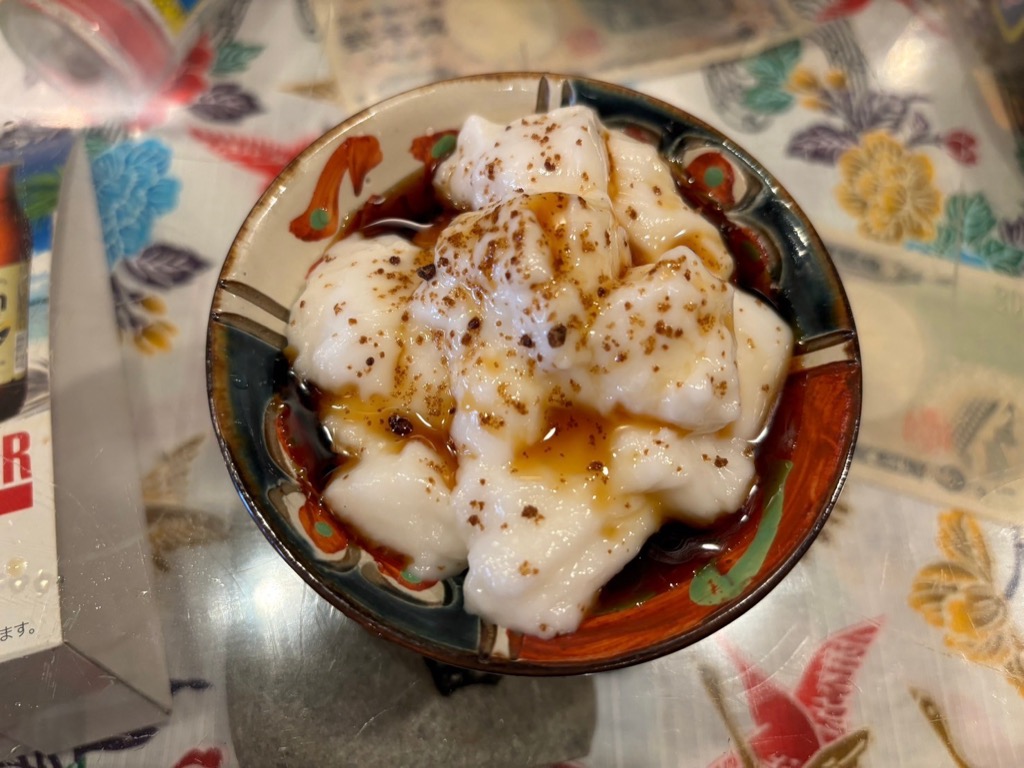
Jimami tofu delivered a dense peanut richness with a chewy, mochi-like texture. The more you chew, the more natural sweetness emerges. The texture alone leaves a strong impression.
2. Mozuku Vinegar, Ninjin Shirishiri, and Soft-Simmered Pork Cartilage Soki
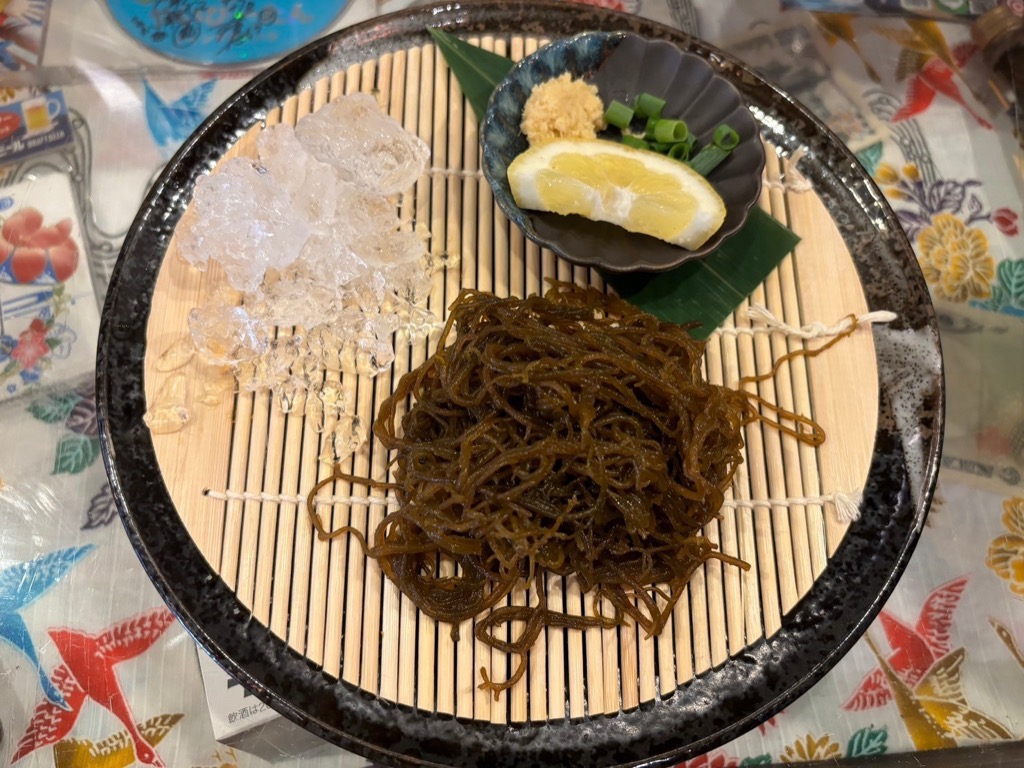
The mozuku vinegar featured thick Okinawan seaweed with a pleasant acidity and smooth texture. The vinegar was assertive but never harsh, preserving the umami of the mozuku itself. It works especially well as a reset for the palate between dishes.
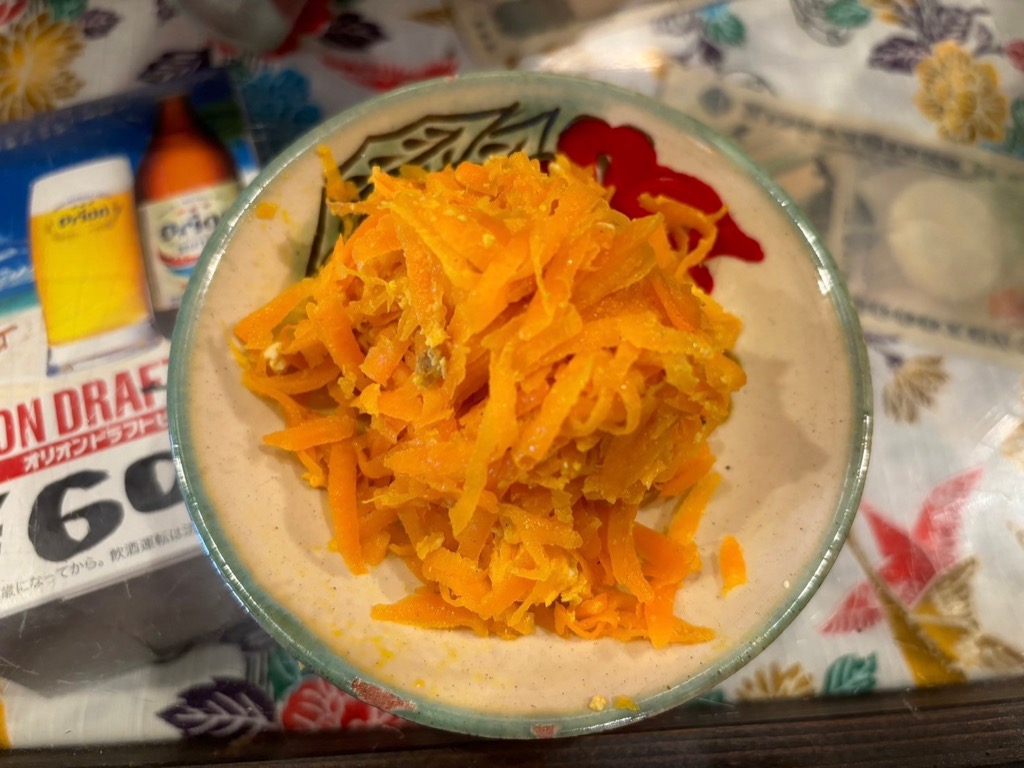
Ninjin shirishiri combined the natural sweetness of carrots with the softness of eggs, resulting in a gentle, comforting flavor. The carrots retain enough texture to release their sweetness with every bite, making it easy to understand why this dish is a long-standing Okinawan staple. It pairs equally well with alcohol or rice.
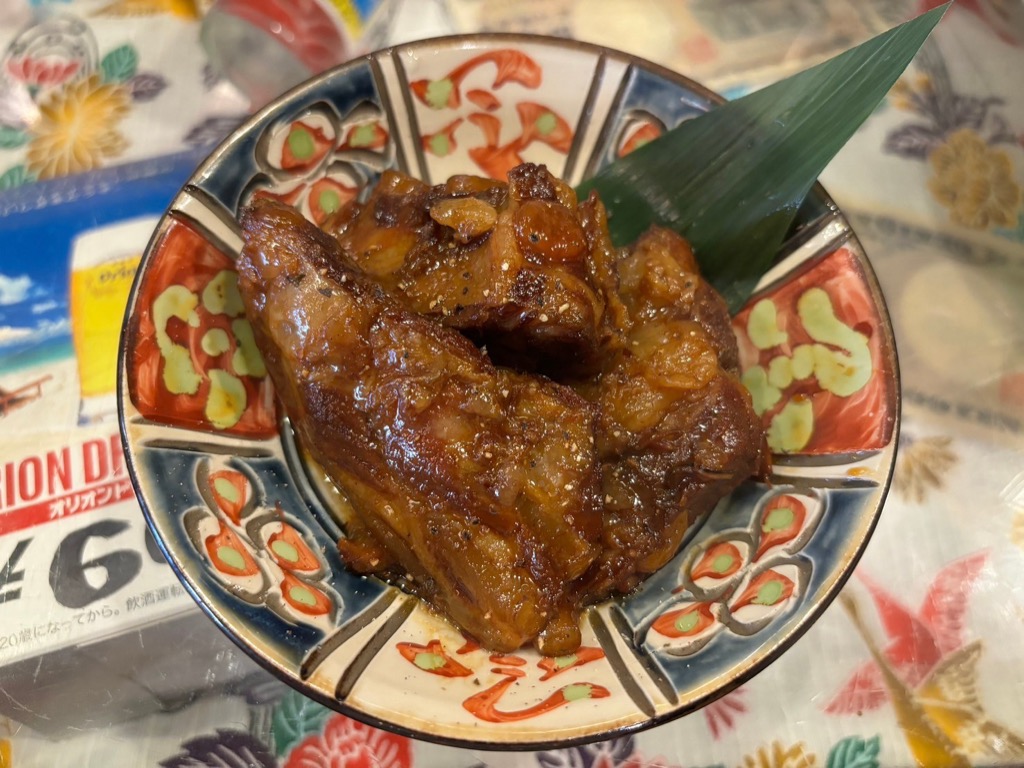
The soft-simmered pork cartilage soki lived up to its name. Tender enough to break apart with chopsticks, it alternates between melt-in-your-mouth sections and parts with more bite. The deep pork umami spreads across the palate, expressing the richness that defines Okinawan cuisine. It pairs well with any drink and remains my personal favorite Okinawan dish.
3. Mozuku Tempura, Goya Champuru, and Chili Cheese Curly Fries
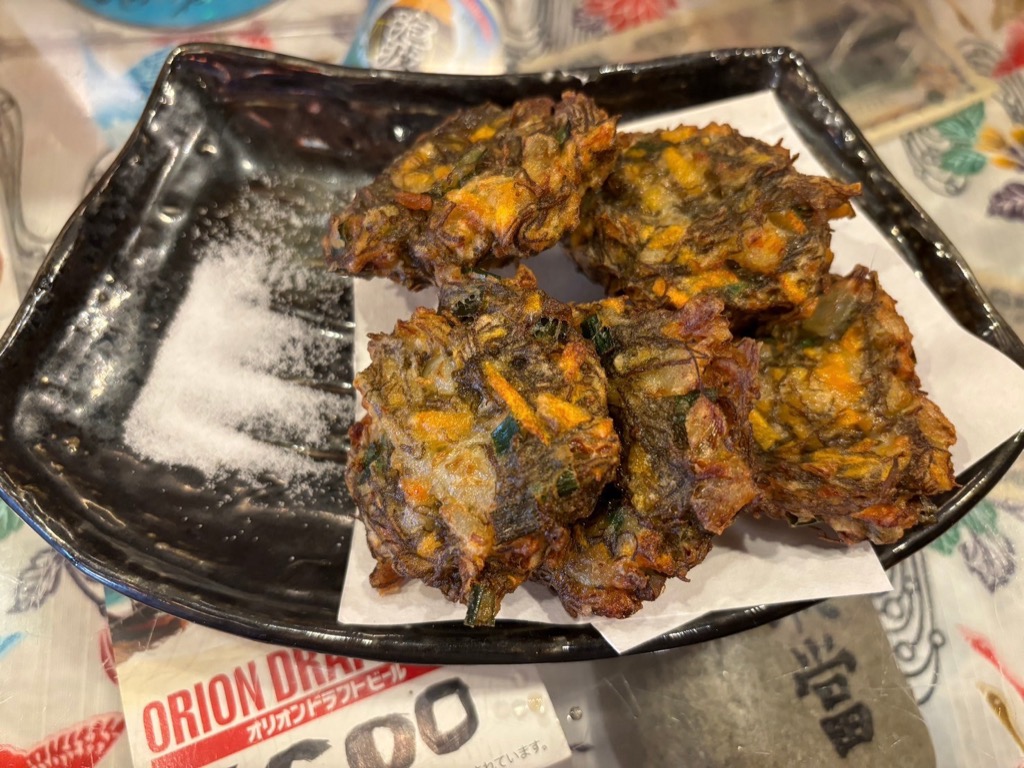
Mozuku tempura clearly separates the light, crisp batter from the distinct texture of the seaweed inside. Despite being fried, it feels easy to eat. Seasoned simply with salt, the aroma and flavor of the mozuku become even more pronounced.
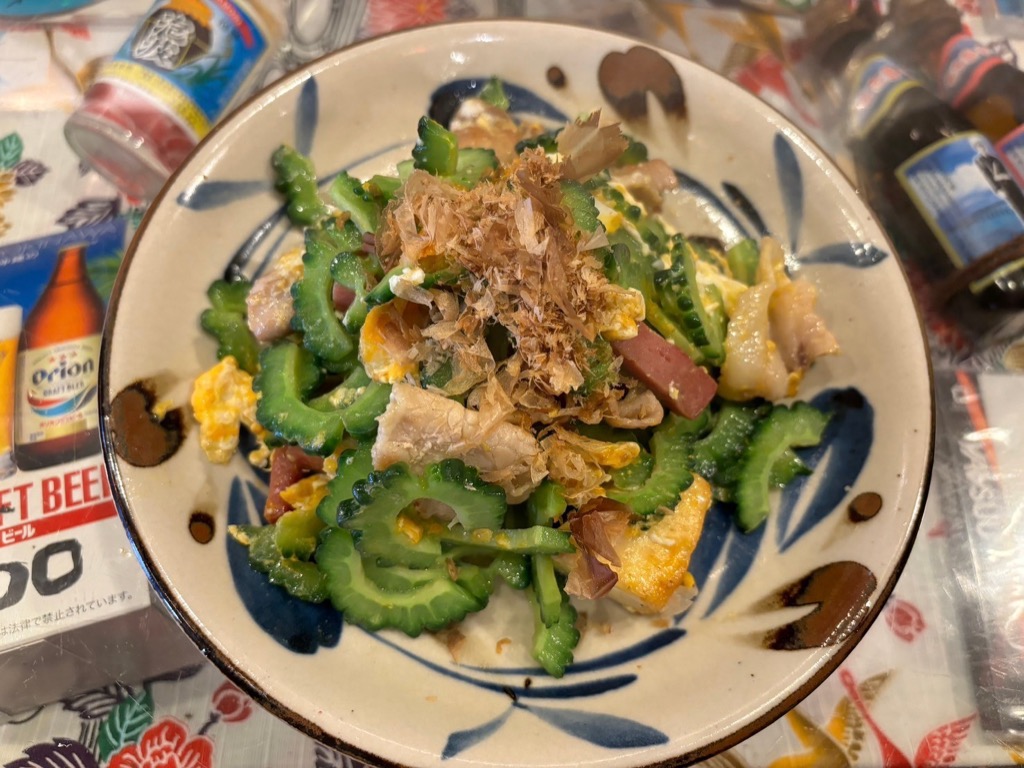
Goya champuru maintains a proper balance. The bitterness of the goya is present but not excessive, harmonizing with tofu and other ingredients. Importantly, the bitterness is not overly suppressed, which keeps the dish aligned with authentic Okinawan cooking standards.
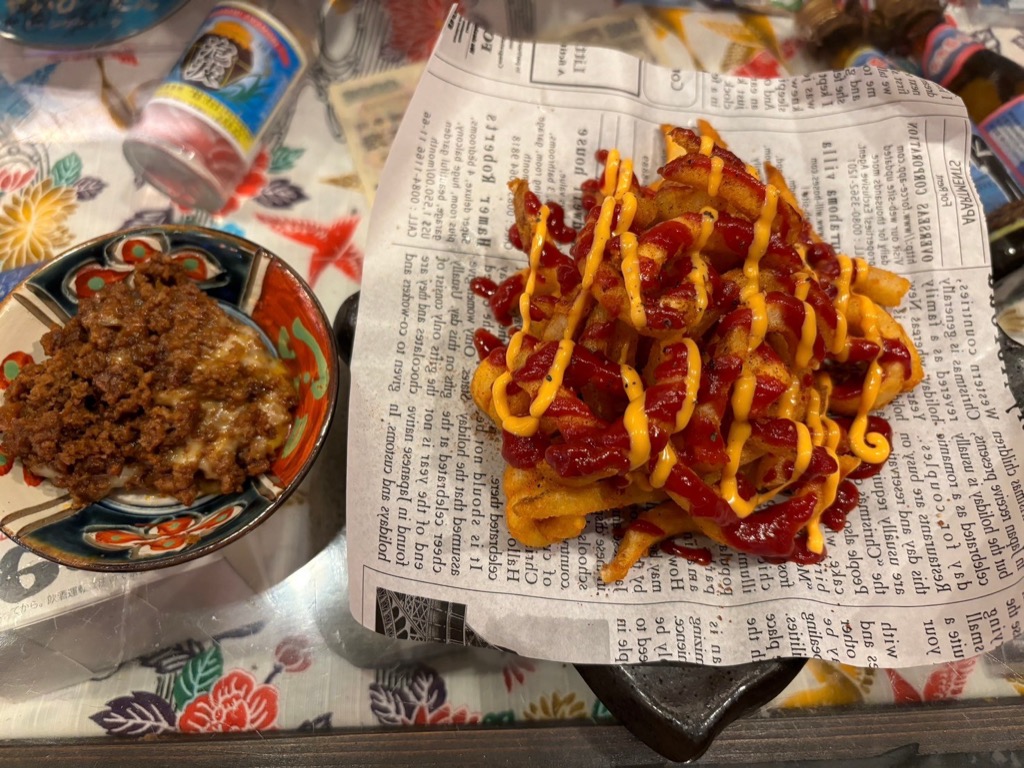
The chili cheese curly fries felt slightly adventurous on the menu, but they reminded me of A&W, commonly known in Okinawa as “Enda.” The rich cheese and spicy chili deliver enough impact to feel satisfying even as a standalone dish.
4. Miyako Soba and Beni-imo Sesame Dumplings
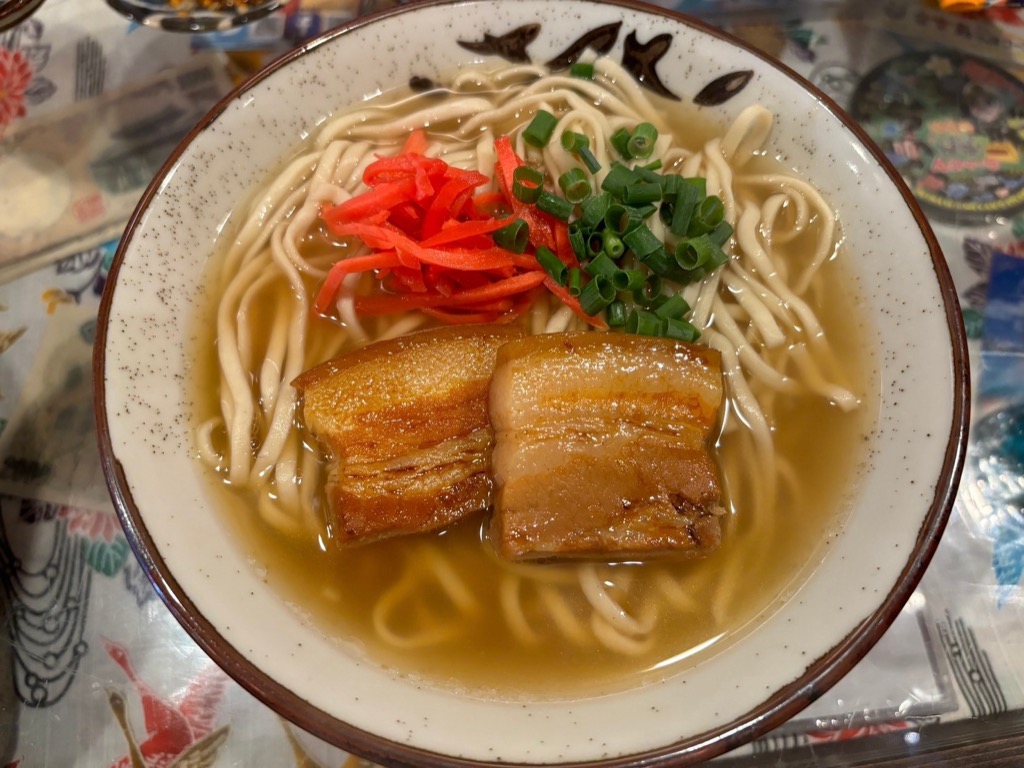
Miyako soba features thicker noodles and a broth combining pork and seafood stock. It is understated rather than flashy, making it ideal as a finishing dish. Among Okinawan soba varieties, the Miyako style is clearly expressed here.
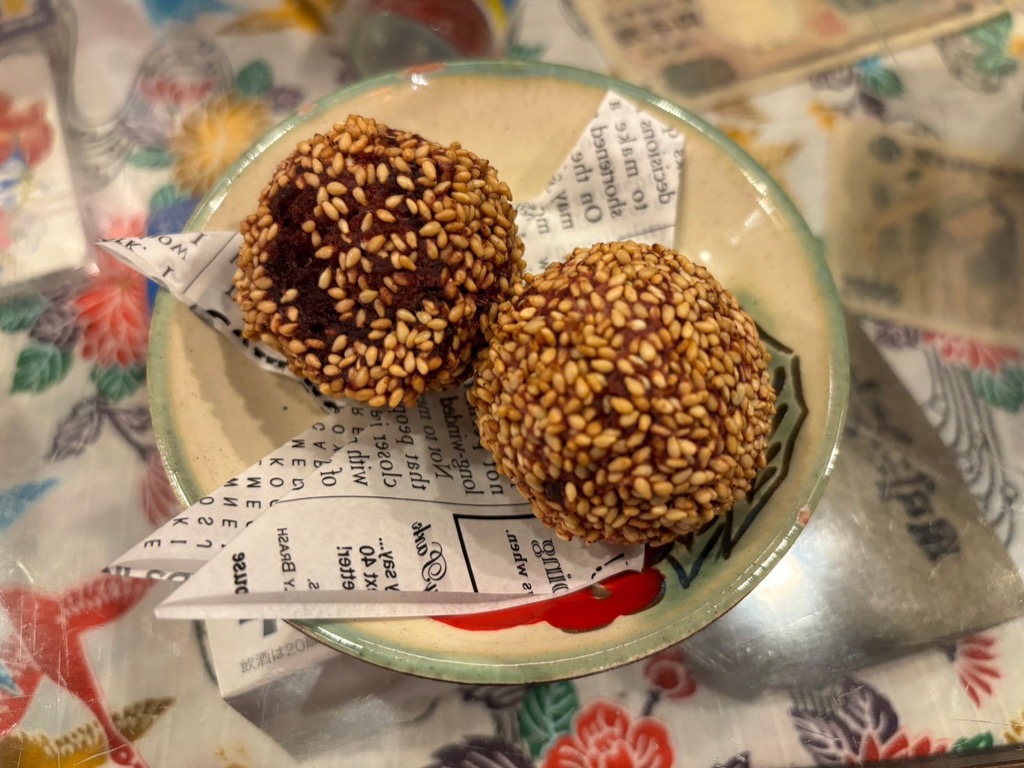
The beni-imo sesame dumplings left a strong impression with their chewy exterior and natural purple sweet potato sweetness. The sweetness is restrained, so they never feel heavy, even after a full meal.
Looking Back on the Experience
Every dish at this restaurant clearly conveyed, “This is what Okinawan food tastes like.”
Because the menu focuses on classic dishes, it makes it easy to understand whether Okinawan cuisine suits your palate without feeling forced or overwhelming.
If I find myself craving Okinawan food again, this is the restaurant I would choose.
It is a place that leaves a lasting impression not only on those who already love Okinawan cuisine, but also on those who have never been to Okinawa before.
Restaurant Information
Name: Okinawa Miyakojima Shokudo Saiya
Cuisine: Okinawan cuisine / Izakaya
Address: 2-23-2 Takasago, Chuo-ku, Fukuoka, Japan
Access: Within walking distance from Yakuin Station
Hours: 5:00 PM – 12:00 AM (Last order 11:30 PM)
Closed: Sundays
Price Range: Dinner up to approximately ¥4,000 per person