If you want kamaage udon near Nagai Station in Osaka, the answer is Kamaage Udon Isshin, and the thing to order is the large portion of thick noodles. Two things make it worth the trip: the dense chew of the thick noodles, and the fact that they hand you a whole ginger root and a grater so you can adjust the flavour yourself.
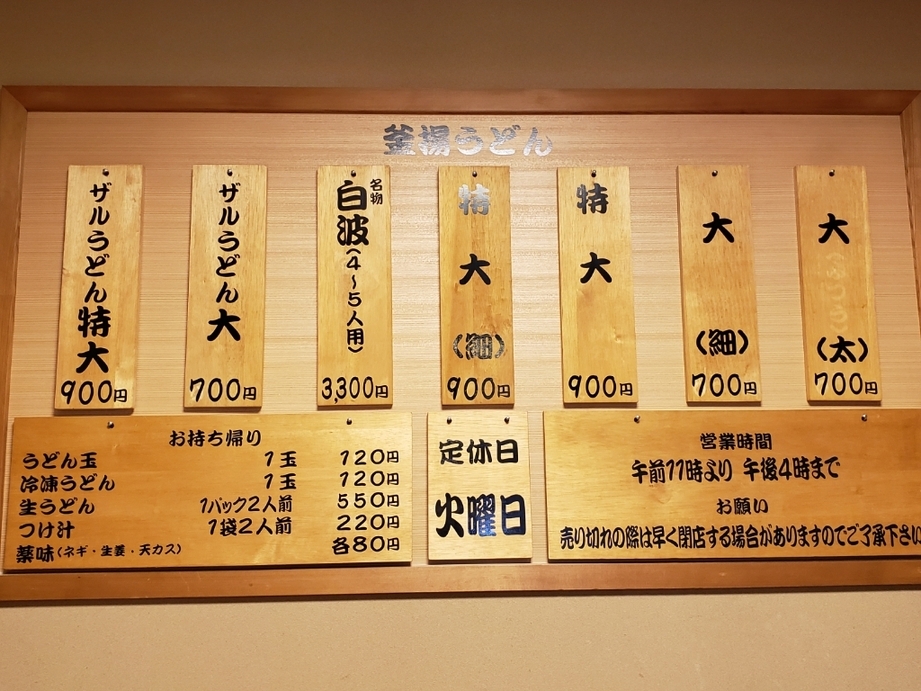
It is open 11:00–14:30 and closed on Tuesdays, about two minutes on foot from exit 4 of Nagai Station on the Osaka Metro Midosuji Line. Lunch only, and they close when the noodles run out, so arriving right at opening is the safe play.
This article is a reflection on what I actually ate, written to help you decide what kind of udon this is and whether it suits your taste.
Sponsored
Kamaage Udon Isshin: location, hours, and access
| Name | Kamaage Udon Isshin (釜揚うどん 一心) |
|---|---|
| Address | 3-4-21 Nagai Higashi, Sumiyoshi-ku, Osaka 558-0004 (Emerald Nagai 1F) |
| Phone | 06-6697-9141 |
| Hours | 11:00–14:30 (closes early when the noodles run out) |
| Closed | Tuesdays |
| Access | 2 minutes from Exit 4, Nagai Station (Osaka Metro Midosuji Line) |
| Menu | Kamaage udon and zaru udon; choose thick or thin noodles, regular or large |
Note that this is a lunch-only restaurant. There is no evening service. It draws a queue, so getting there in the 11 o’clock hour is the most reliable approach.
What I was judging it on
Before the details, here are the criteria I used:
- Texture and structure of the udon noodles themselves
- How well the noodles work with the dipping broth
- Portion size and overall satisfaction with the large, thick noodles
- Whether I felt like coming back after finishing
Rather than judging it as a connoisseur’s destination, I looked at it as whether an ordinary udon eater can enjoy it without effort. That framing should also tell you whether it is wrong for you—if you want something light and quick, or you prefer soft noodles.
Sponsored
What I ordered: kamaage udon, large, thick noodles
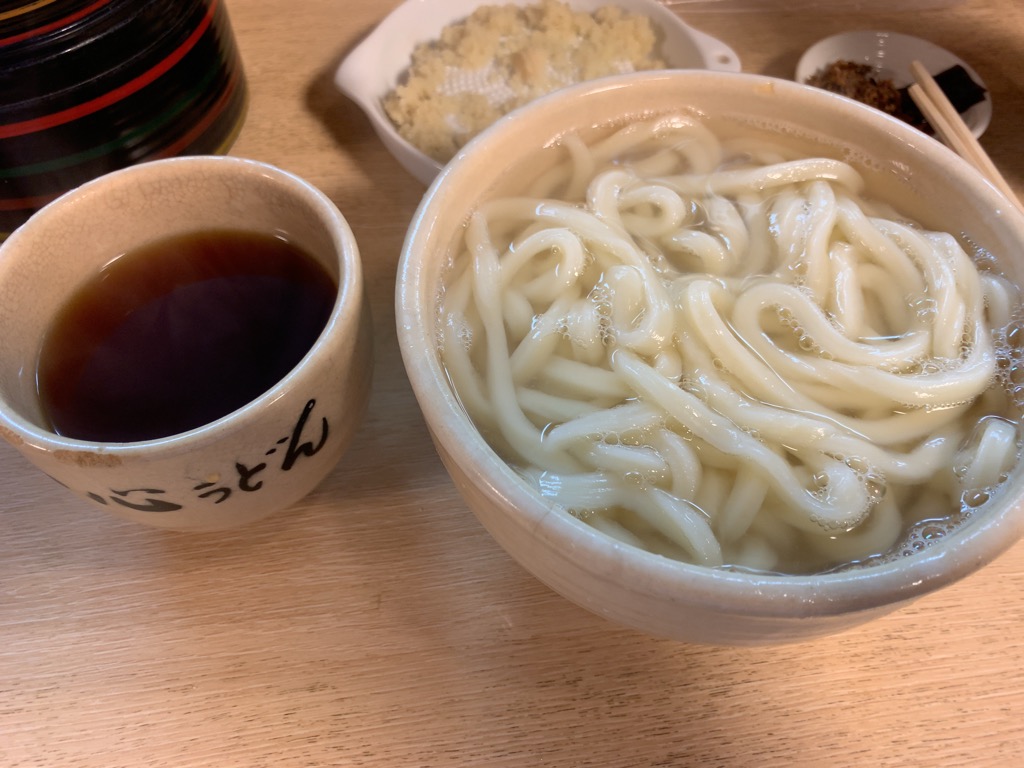
I ordered the large portion of thick kamaage udon. It was my first visit and I hesitated, but I went with what looked like the dish the shop is built around.
First impression of the noodles
The bowl arrived with real presence. Being thick noodles, each strand is clearly defined, and the smell of wheat rises with the steam.
What struck me was a slight heaviness when I lifted them with chopsticks.
Texture and flavour
The first mouthful was less about springiness and more about a dense, substantial chew. Not hard in a stubborn way—there is firm elasticity inside once you bite.
The wheat flavour does not assert itself, but it is clearly there. Nothing showy, just the honest sense of eating noodles as noodles, which is what kamaage udon should be.
How the noodles work with the dipping broth
With kamaage udon, the broth pairing is the thing that decides it.
Isshin’s dipping broth is neither too concentrated nor thin—it reads as built to carry thick noodles. Even when the noodles are fully submerged, the broth does not get overpowered.
Personally, adding a little more spring onion and ginger as I went kept it interesting to the end.
Sponsored
The condiments are the real differentiator
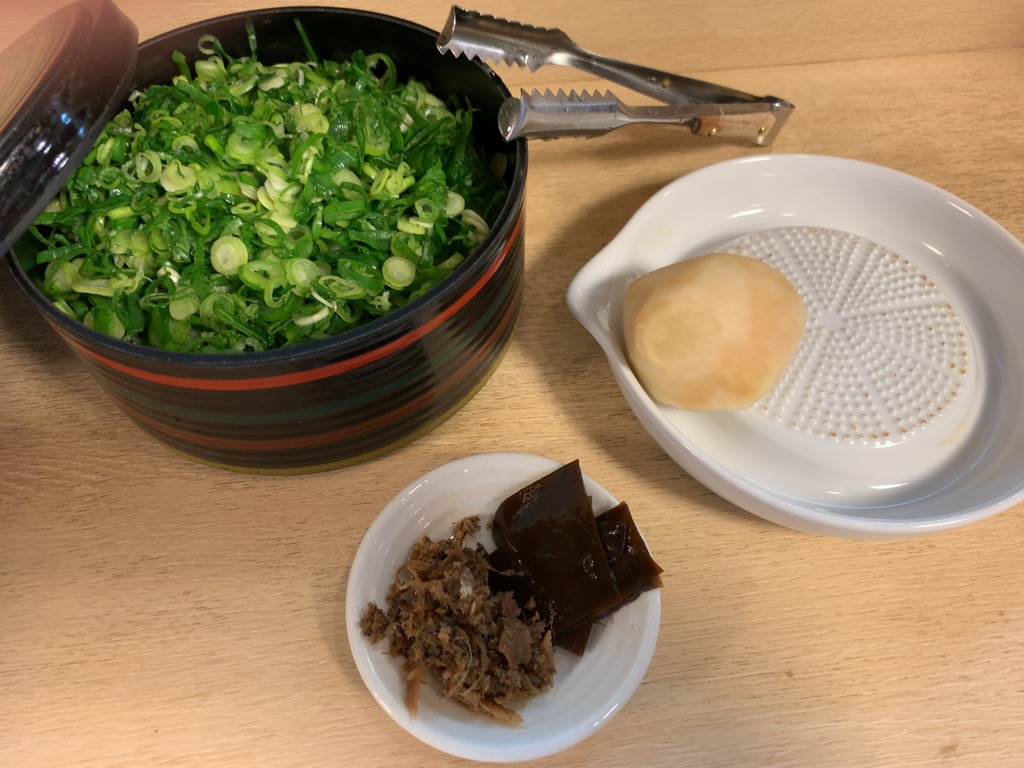
The quietly excellent part of this restaurant is how the condiments are handled. This is the single best reason to pick Isshin.
First, the spring onion. This is purely personal taste, but I like a lot of it, and being able to use it freely was welcome. I started with a small amount to taste the noodles themselves, then added more as I went.
Then the ginger. It does not arrive grated. A whole peeled ginger root is brought out with a grater so you do it yourself.
My first thought was that this seemed like a chore. In practice, the aroma is on a completely different level. Being able to control the amount—a hint here, a strong hit there—suits kamaage udon particularly well.
With thick noodles and a generous portion, being able to shift the flavour mid-meal is a large part of why it stays enjoyable to the last bite.
How big is the large portion?
It is a genuinely large serving. I finished with a clear sense of having eaten properly.
It was not heavy to the point of discomfort, though. It landed as “today was a day for making udon the main event, and this was right.”
If you eat lightly, or you want a quick lunch, it may be too much. When in doubt, the regular size is plenty. If you like noodles, the large is satisfying rather than punishing.
Atmosphere
The room is calm, and most people were eating in silence. Not noisy, not awkwardly quiet—easy to walk into alone.
That environment makes it easy to concentrate on the udon, which was part of what made the visit good.
Summary: who this is for
My honest take: if you want to taste kamaage udon properly, this is an easy recommendation.
Good fit if you
- Like thick noodles with real chew
- Care about the balance between noodles and broth
- Want to adjust condiments yourself as you eat
- Want a calm meal near Nagai
Possibly not for you if you
- Prefer soft udon
- Want something light and fast (in which case: regular size, thin noodles)
- Want dinner—this place is lunch only
The four things to remember: 11:00–14:30, closed Tuesdays, two minutes from Nagai Station Exit 4, and arrive at opening if you would rather not queue.
I would like to try the zaru udon next time. For another Osaka restaurant with unusual hours, I have also written about Kanae Sushi, which opens at 4:30 in the morning.