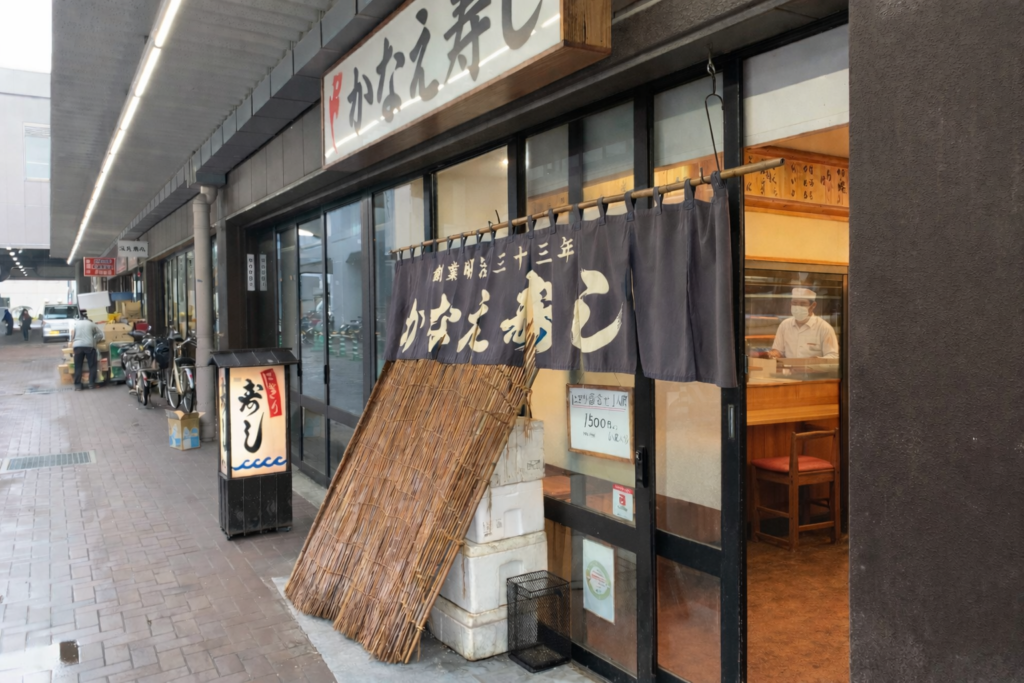
If you want sushi in Osaka before the city wakes up, go to Kanae Sushi inside the Kizu Wholesale Market. It opens at 4:30 in the morning, and you can sit at the counter and eat slowly before the crowds exist.
It is in Naniwa-ku, inside the market, three minutes on foot from Exit 1 of Daikokucho Station on the Osaka Metro Midosuji and Yotsubashi lines. The market closes on Sundays and public holidays, so the restaurant does too.
This article walks through the thirteen or so pieces I ate on an early-morning visit. The ashiaka shrimp, the seared milt gunkan, the akagai, and the otoro are the ones that stayed with me. It should tell you what a sushi counter inside a working market is actually like.
Sponsored
Kanae Sushi: location, hours, and access
| Name | Kanae Sushi (かなえ寿司) |
|---|---|
| Address | 2-2-8 Shikitsu Higashi, Naniwa-ku, Osaka 556-0012 (inside Osaka Kizu Wholesale Market) |
| Phone | 06-6649-1308 |
| Hours | Around 4:30–13:00 (subject to change) |
| Closed | Sundays, public holidays, and some Wednesdays (following the market calendar) |
| Access | 3 minutes from Exit 1, Daikokucho Station (Midosuji / Yotsubashi lines) 5 minutes from Imamiyaebisu Station (Nankai Koya Line) |
| Parking | Yes (Kizu Wholesale Market parking) |
One thing to plan for: the market itself closes on Sundays, public holidays, and irregular Wednesdays. The Wednesday closures vary by month, so check the market calendar before travelling. Most of the market also starts shutting down around 11:00.
Why go at 4:30 in the morning
I went before anyone was moving. Kanae Sushi opens around half past four, and I had heard you could eat unhurried before it fills up, so that is the time I aimed for. Outside it was still quiet—more like the far end of the night than morning.
Sitting at the counter, there was very little extraneous noise, and my attention settled naturally on what was in front of me. Not fully awake, not vague either—somewhere between the two, just waiting for sushi to appear.
That quiet is itself the reason to come early. The same sushi eaten quickly in a crowded room is a different experience.
Sponsored
Ashiaka shrimp, sazae, and sazae liver in ponzu
The first piece was ashiaka shrimp, and it settled the question immediately: this was going to be a good morning.
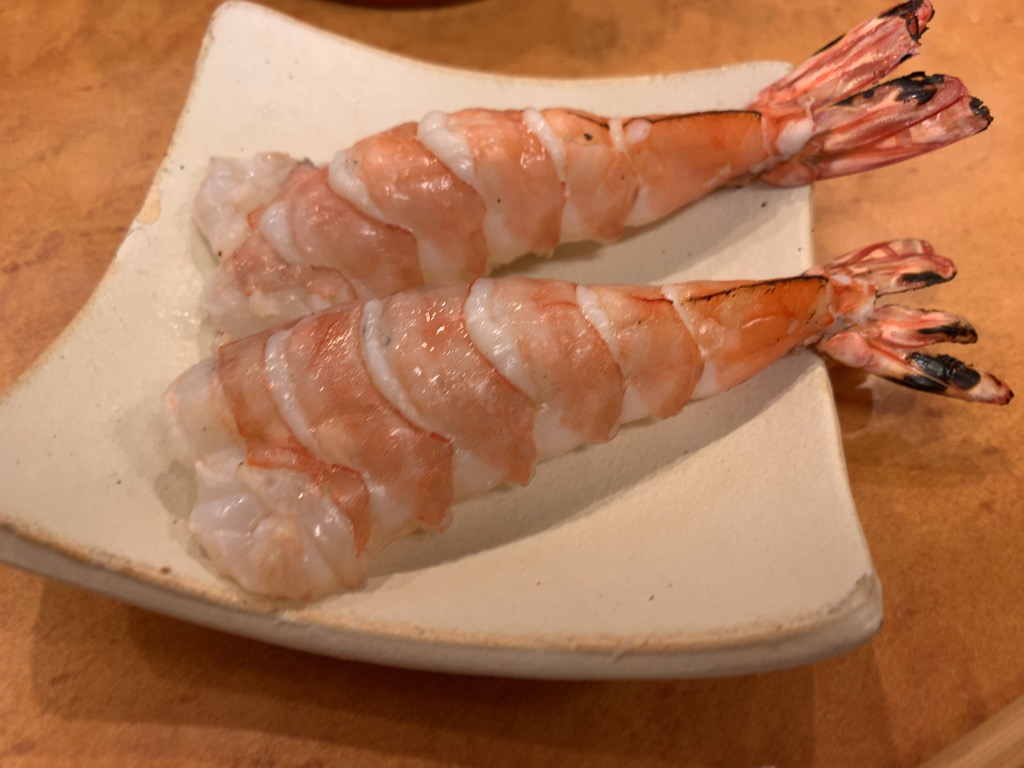
In one bite the sweetness spread through the whole mouth. Strong, but refined—not just on the tongue. The flesh was springier than seems possible for a sushi topping, and too large to fit in a single bite comfortably.
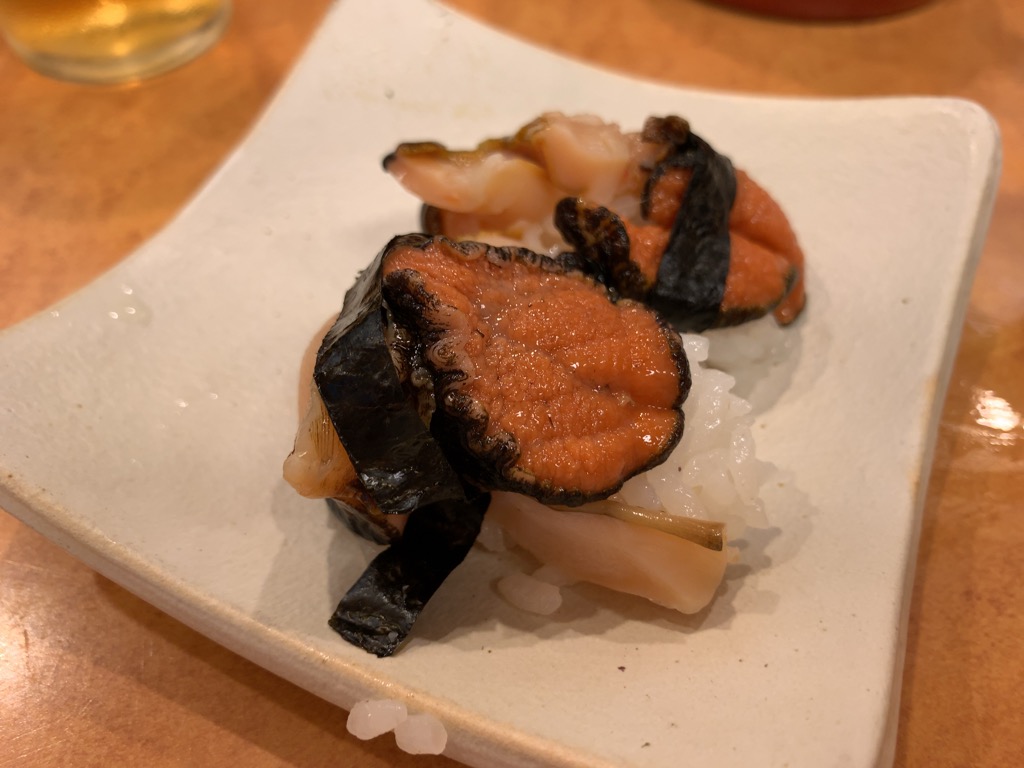
Next was sazae (turban shell). Firm texture without being hard to chew, and the savouriness builds with each bite. The characteristic sazae funk stayed in the background; as sushi it was cleanly resolved.
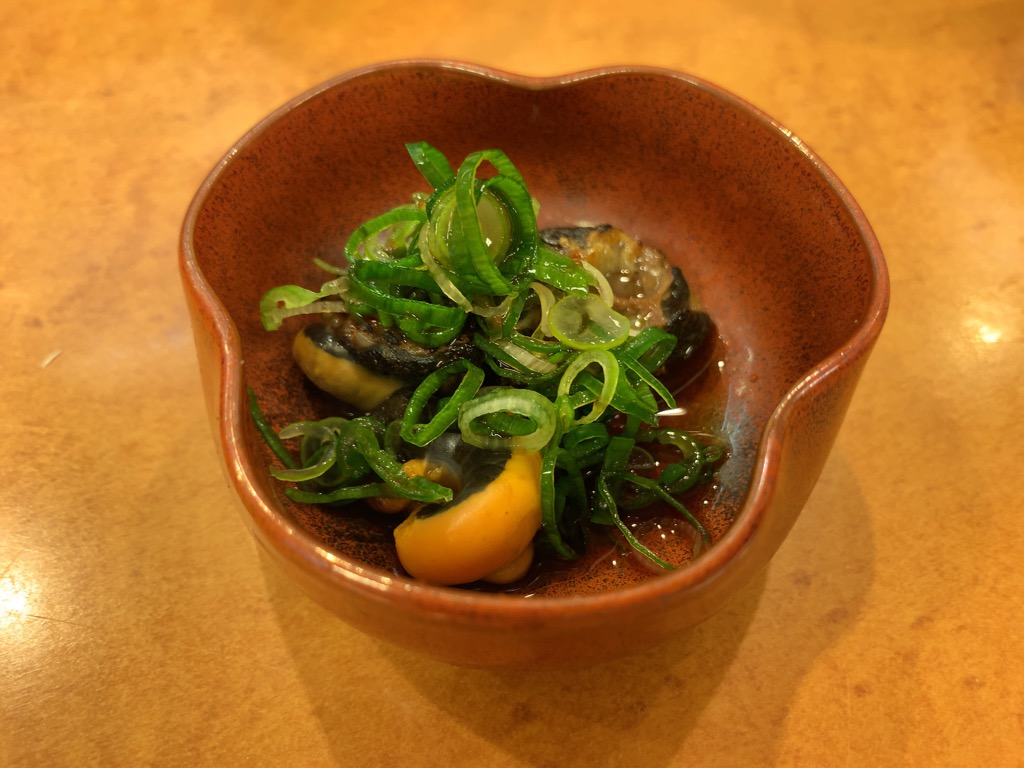
Then the sazae liver in ponzu. The bitterness is properly present but does not linger, and the ponzu gives it a clear outline. At that point I started looking forward to whatever came next.
Milt gunkan and sea urchin gunkan
The seared milt gunkan was the piece that made me think even people who dislike shirako could eat this.
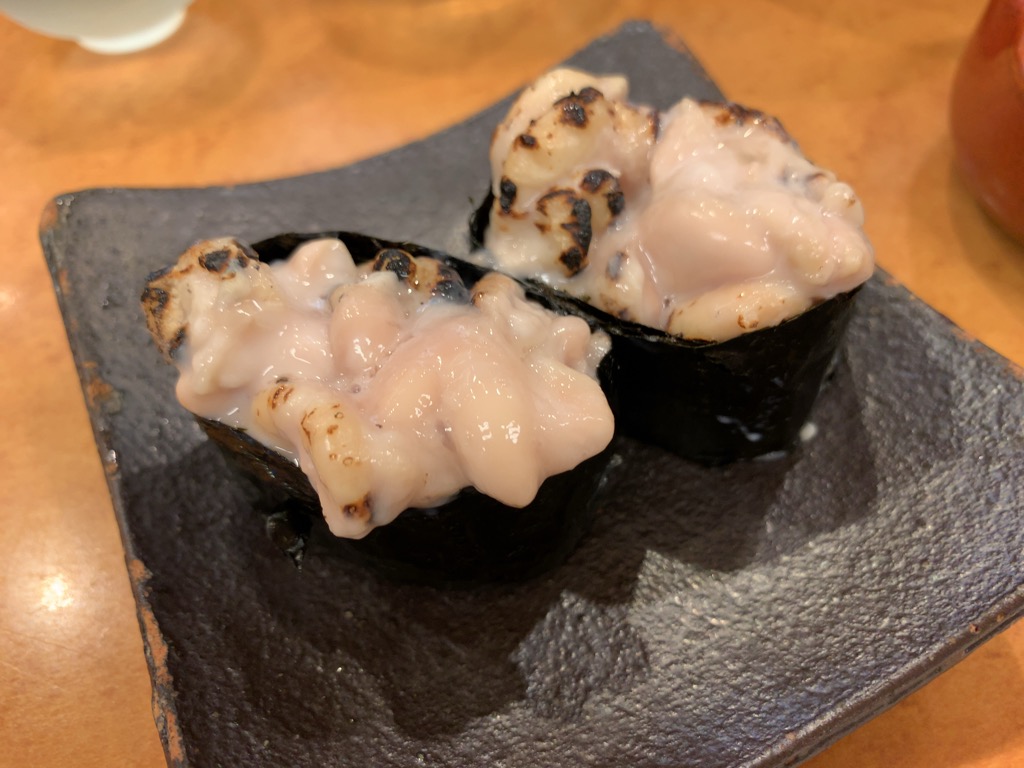
It dissolved on contact, spreading a refined sweetness as it went. Searing makes it easier to eat than raw and sharpens the outline of the flavour.
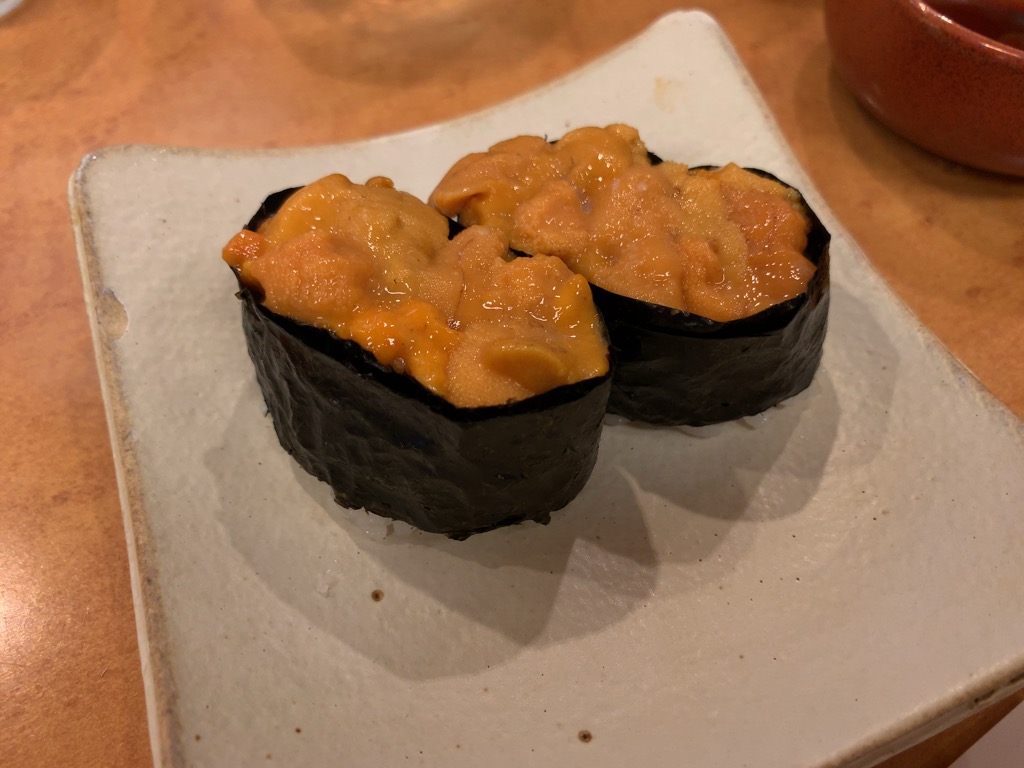
The uni gunkan was sweet and rich. The urchin registers from the first bite—not thin, not overwhelming, exactly the right density.
Around here I switched to sake. I had come intending to drink in the morning, but it felt less like a decision and more like something the quality of the sushi made obvious.
Sponsored
Aji, akagai, and raw conger eel
These three were where freshness showed up directly as texture. The akagai in particular was the best I have had.
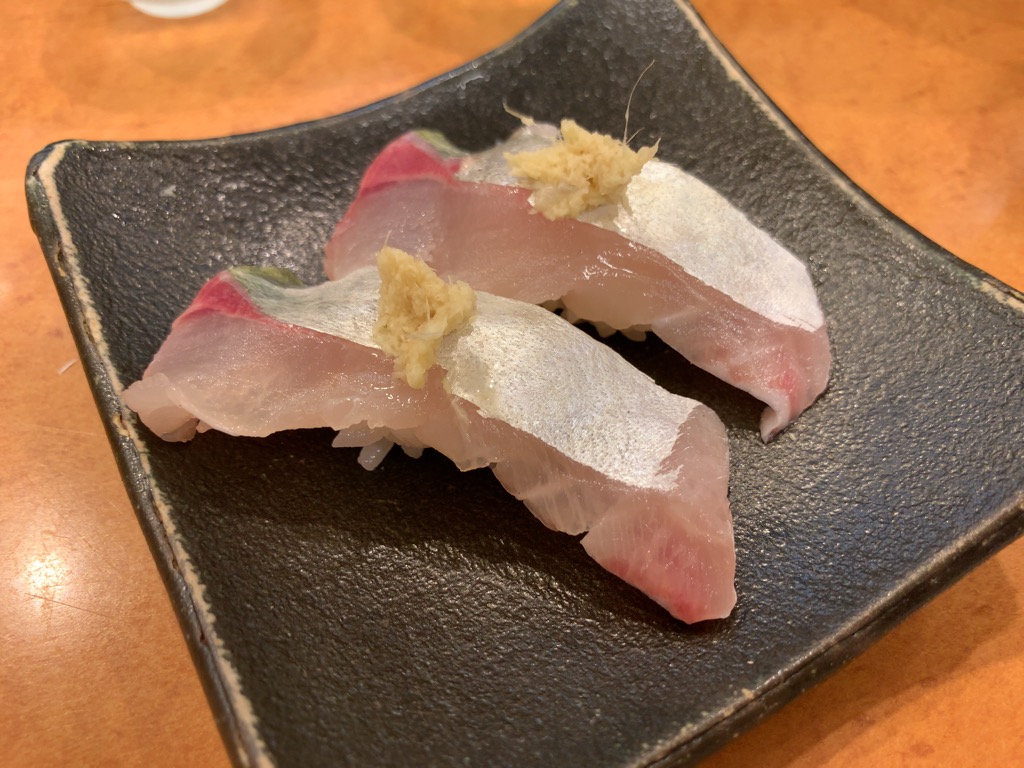
The aji was so crisp that the freshness was obvious on contact. No off notes at all—just the taste of aji itself. I do not remember many that were this straightforwardly good.
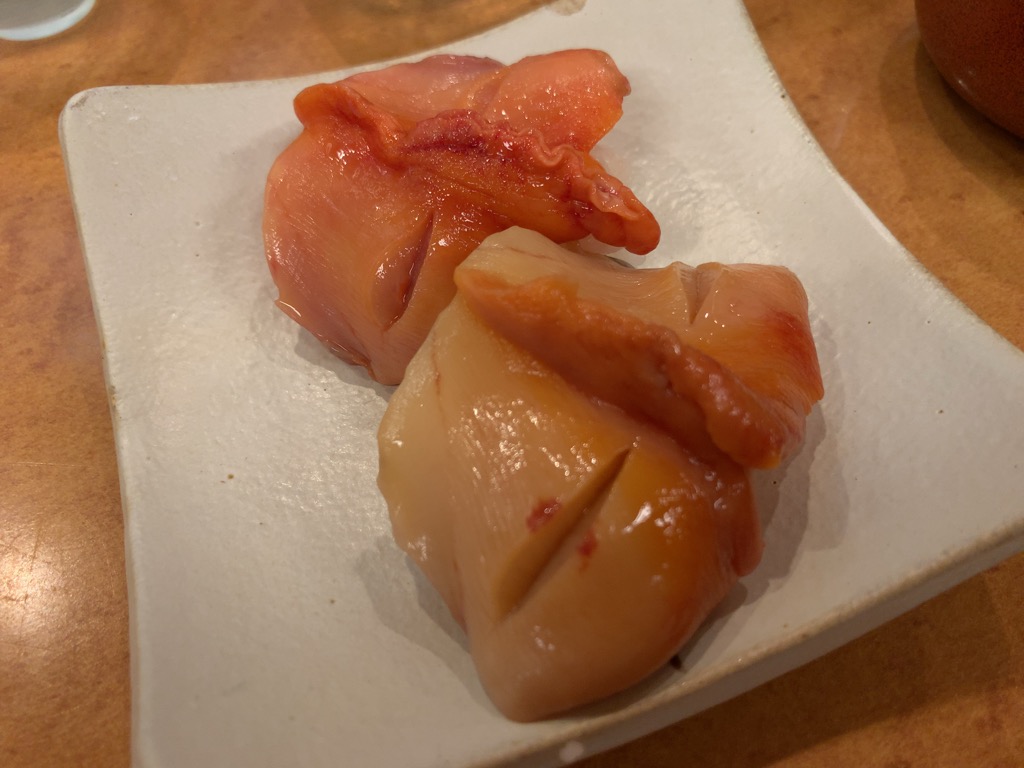
The akagai had a firm snap from the first bite—the freshest akagai I have eaten. Sweetness emerges as you chew, and following both the texture and the flavour, I had finished it without noticing.

Raw conger eel was new to me. Fresh, good texture, and completely different from the usual seared anago. Lean without being insufficient—a quietly memorable piece. Being able to serve anago raw at all is proof of where the restaurant is.
Nodoguro, otoro, and kanpachi
Three fatty pieces, and what they shared was that none of them left a heavy finish.
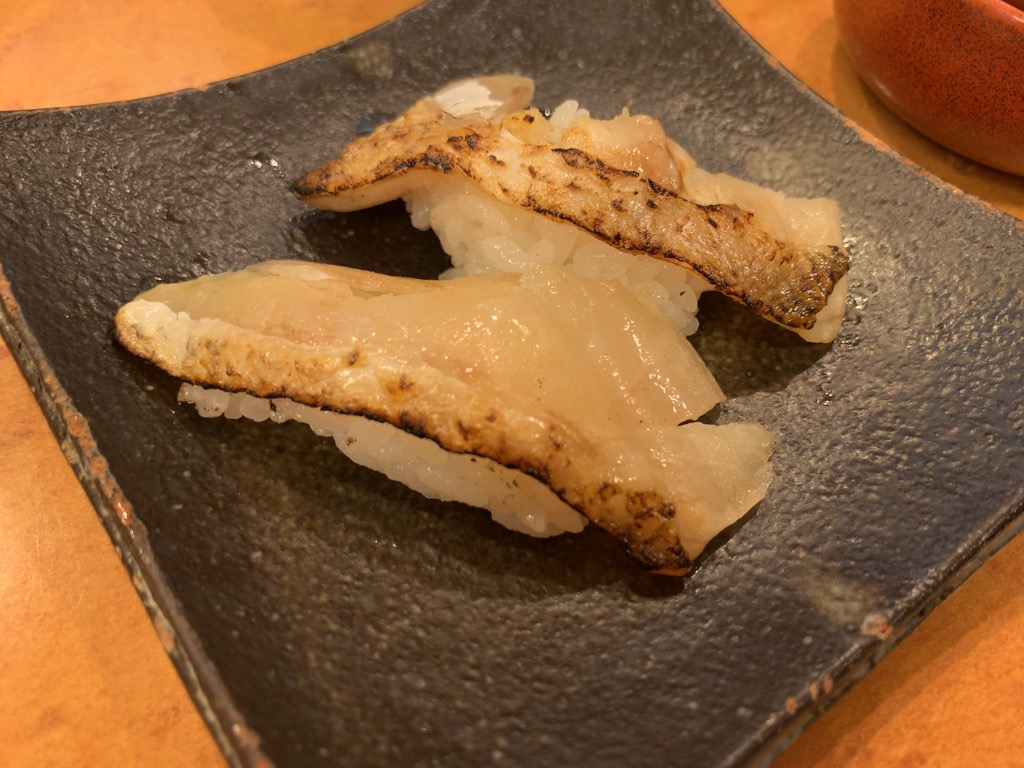
Nodoguro carries fat without weight; it opened up in the mouth and disappeared. Clean finish, and it went very well with sake.

The otoro released refined fat all at once and then dissolved immediately. Good enough that I caught myself thinking I could eat any number of them, which is not usually how otoro works.
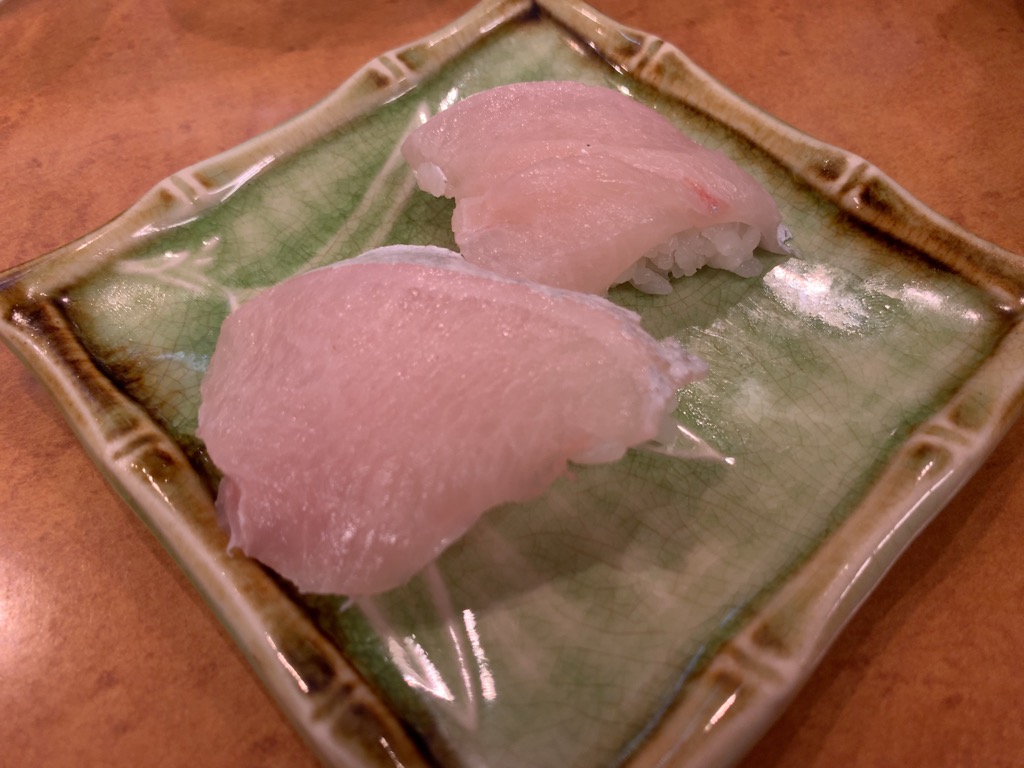
The kanpachi was fresh with the same crisp texture. No off notes, refined, just the fish itself coming through straight.
Seared pieces and eel
Towards the end came the seared items and unagi. The longest aftertaste belonged to the eel.
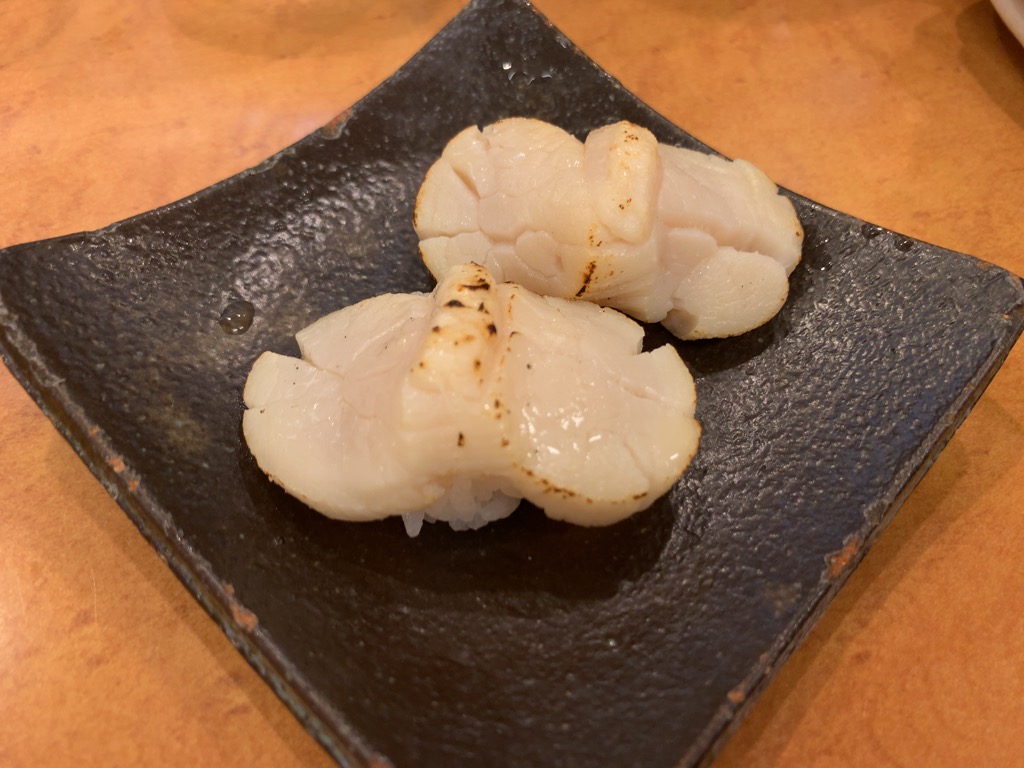
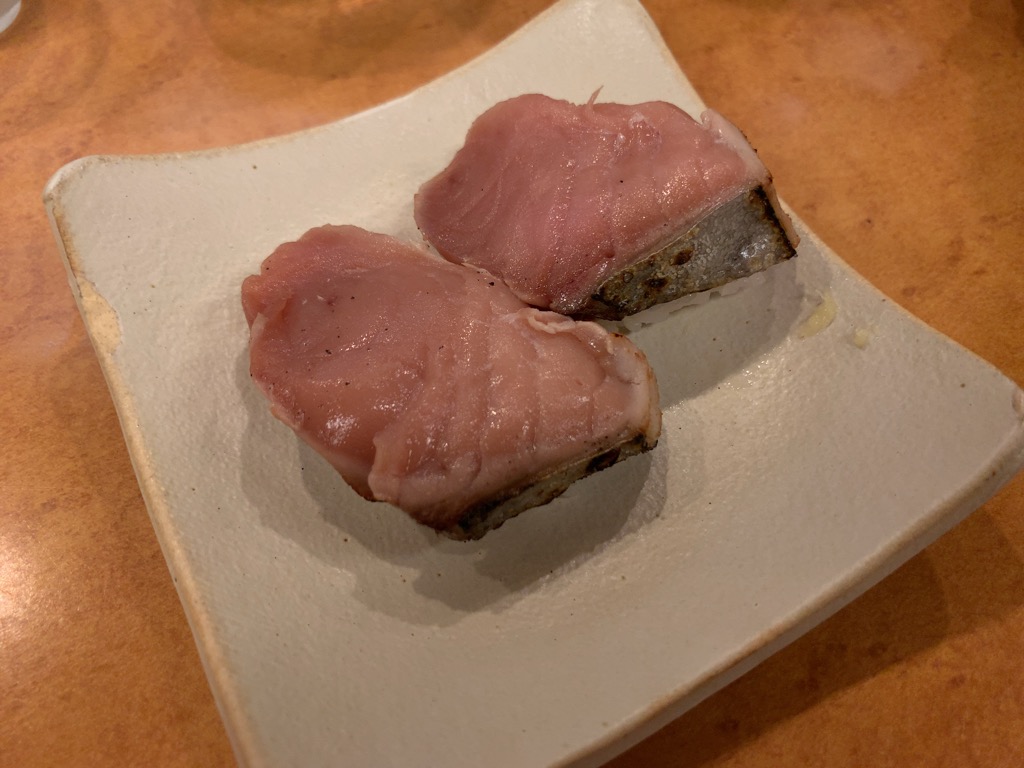
Seared scallop and seared bonito both smelled excellent before they reached the mouth, and both cleared the expectation. Searing had drawn the savouriness out. Not “strong because it is seared,” just purely good.
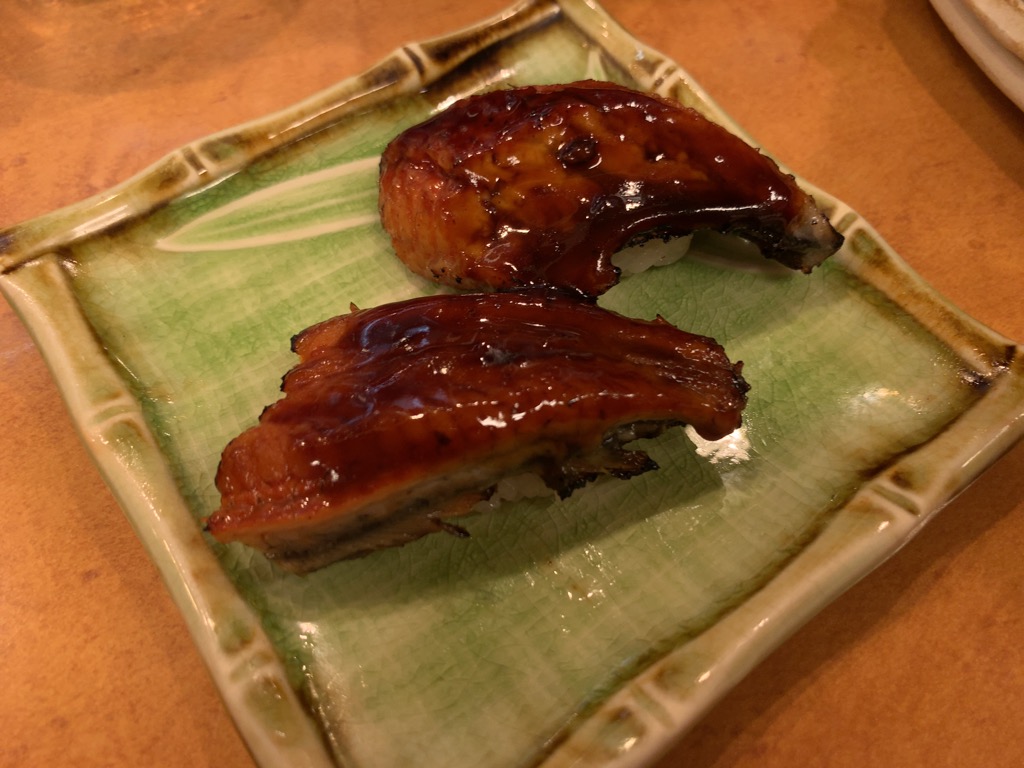
The eel left the longest impression after the fact. Less in the moment than after swallowing, when the thought arrives that it was genuinely very good. A strong close.
Summary: is Kanae Sushi worth it?
Standing up to leave, I felt properly satisfied rather than merely full. Every piece was well made, and the sense of eating sushi shaped one at a time by a craftsman never dropped away.
Would I recommend it? Without hesitation. If I want good sushi, I want to go back—and I would pick the same near-empty early morning again.
What to know before you go:
- Open roughly 4:30–13:00. No evening service
- Closed Sundays, public holidays, and irregular Wednesdays (market calendar)
- Three minutes from Daikokucho Station Exit 1, inside the market
- The market starts closing around 11:00; earlier is better
- Counter seating, so it is easy to go alone
Elsewhere in Osaka, I have written about Kamaage Udon Isshin, another lunch-only shop. For market sushi in Fukuoka, there is Hakata Toyoichi at Bayside Place Hakata.