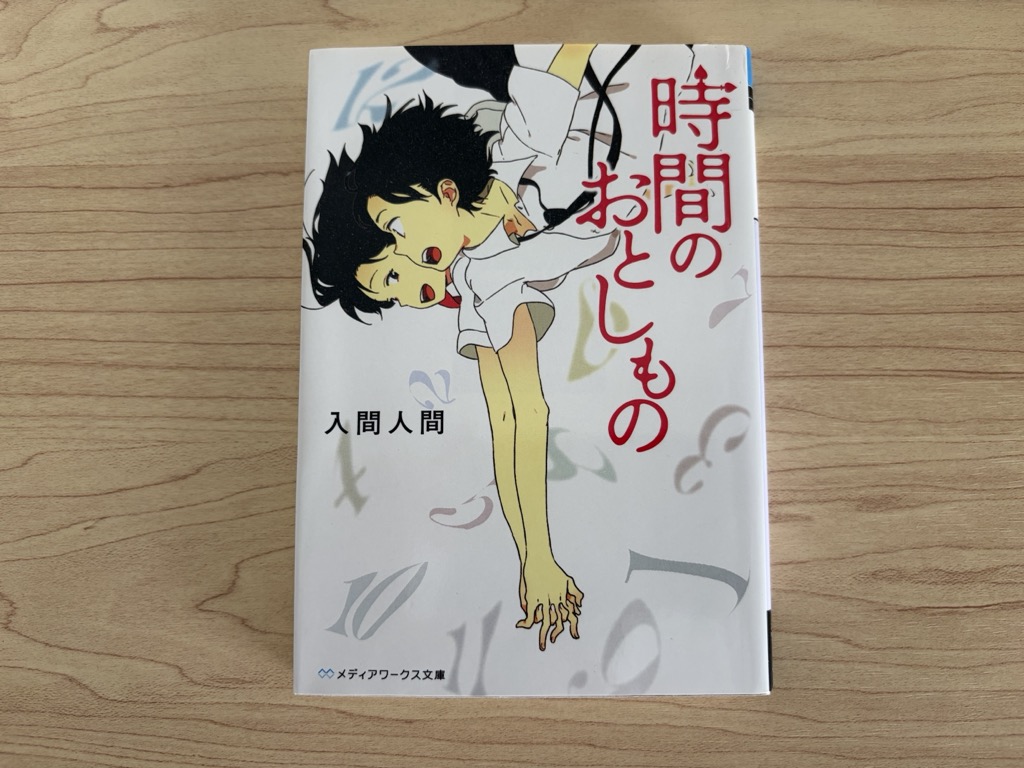
Time’s Lost Property (時間のおとしもの) is a short story collection by Iruma Hitoma (入間人間), published by Media Works Bunko on 25 January 2012. It has not been officially translated into English, so the title here is a working translation. The stories share one premise: time can be dropped, and it can be picked up.
The short answer: this is worth reading if you like quiet fiction, and not if you want a clear resolution. The book does not hand you an answer at the end. What it leaves behind is a snag you cannot quite name.
This article reflects on my experience of reading Time’s Lost Property by Iruma Hitoma from start to finish.
Rather than summarizing the plot, I focus on what I felt while reading and after finishing the novel, and where the story deliberately left me unsettled.
If you are trying to decide what kind of novel this is and whether it suits your taste, this review is written to help you make that judgment clearly.
This book tends to resonate with readers who enjoy quiet narratives and personal themes such as time and memory, while those seeking a clear emotional payoff or a decisive ending may find it challenging.
Sponsored
1. Evaluation Criteria Used in This Review
To keep this review grounded, I evaluate the novel based on three widely shared literary criteria:
-
Narrative structure
-
Treatment of theme
-
Lingering discomfort and aftertaste
All observations and conclusions below are written consistently through these lenses.
2. Narrative Distance Created by the “Picking Up Time” Structure
The core premise of Time’s Lost Property is simple: time can be found lying around, and people are able to pick it up.
This rule is repeated clearly by the middle of the novel, allowing readers to understand early on how the story operates.
What struck me most was how understated this act of “picking up time” is portrayed.
There are no dramatic turning points, no sudden transformations of the world. The characters simply accept this ability and continue living as if it were a modest extension of everyday life.
Because of this structure, I felt consistently positioned at a slight distance from the story.
Rather than being pulled fully inside the characters’ emotions, I found myself observing their choices from the side.
For some readers, this emotional distance may feel calm or even reassuring.
For me, while I recognized it as a defining trait of the novel, it also made emotional immersion difficult at times.
Sponsored
3. When the Theme of Time Presses Against Personal Emotion
In this novel, time is never treated as a convenient tool.
Even when characters acquire more time, it rarely leads to clear improvement. Again and again, the story reinforces the idea that having time does not automatically restore what has been lost.
One recurring pattern left a strong impression on me: scenes where gaining time makes certain actions possible, yet fails to repair broken relationships or close emotional gaps.
Without revealing the ending, the novel calmly presents situations where time exists, but reconciliation does not.
As a reader, this repeatedly overturned the easy expectation that “more time solves everything.”
I found myself recalling personal decisions and moments that cannot be undone, which made the reading experience quietly uncomfortable.
The handling of this theme felt neither kind nor cruel—just unyielding.
At no point did I feel the novel was trying to reassure the reader.
4. The Unresolved Feeling That Remains After Finishing
After finishing the book, I could not immediately say, “That was enjoyable” or “That was satisfying.”
Although the narrative reaches a formal conclusion, the emotional experience feels unfinished.
This is not because of unresolved plot threads.
Instead, the story feels complete on the surface while deliberately leaving the reader without a clear emotional landing point.
This ambiguity may be an intentional blank space.
Personally, however, I experienced it less as something beautiful and more as a sense of being quietly left behind.
Readers who want clear answers or emotional relief at the end may experience this as mild frustration rather than fulfillment.
Sponsored
5. Who This Novel Is — and Is Not — For
Based on my experience, Time’s Lost Property is well suited for readers who:
-
Prefer restrained narratives over dramatic twists
-
Like reflecting on time, memory, and irreversible choices through personal experience
-
Are comfortable with novels that refuse to provide explicit answers
On the other hand, it may not suit readers who:
-
Expect a decisive ending or emotional catharsis
-
Want strong emotional identification with characters
6. Final Verdict: Would I Recommend It?
I would describe this novel as quietly selective—it will not appeal to everyone, but it stays with the readers it reaches.
Rather than strongly recommending it to all readers, I believe this is a book best approached with awareness of what kind of story it tells.
Despite being a story about acquiring time, what remains after reading is a sense of what cannot be fixed.
Whether that feeling feels honest or simply uncomfortable will largely determine how you evaluate this novel.
For me, it was a book I found myself returning to in memory, even after closing the final page.
7. If This Book Worked for You
Iruma Hitoma writes in a consistent register: the surface stays calm while the ground quietly gives way. If the aftertaste of Time’s Lost Property suited you, the same distance shows up in his other collections.
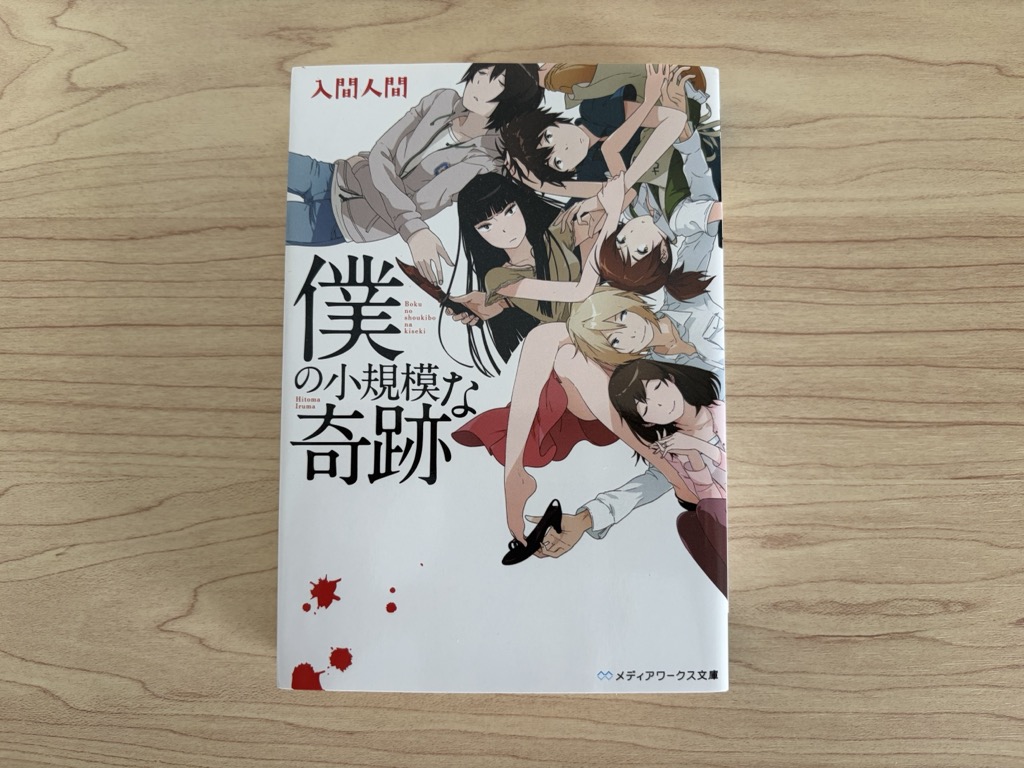
The closest match is my review of My Small Miracle, another Iruma Hitoma collection. The unease sitting under ordinary days is the same effect I described in section 4 of this article.
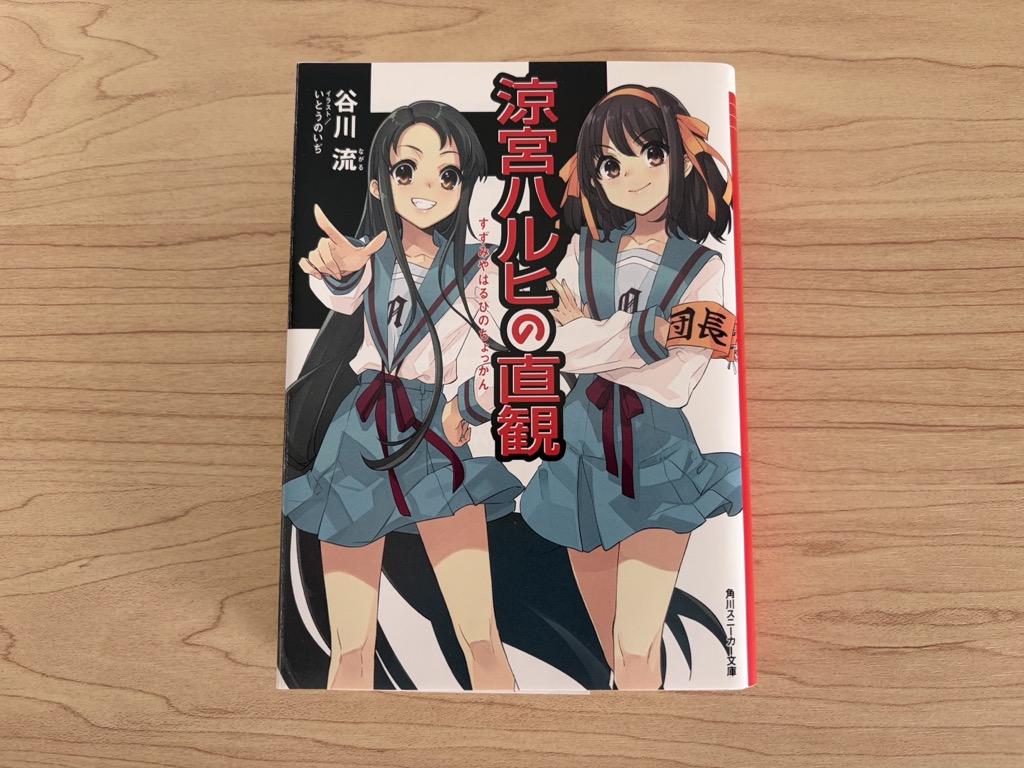
For a different take on the same structural idea — everyday life with something wrong underneath it — The Surprise of Haruhi Suzumiya approaches it from the opposite direction, with noise instead of silence.