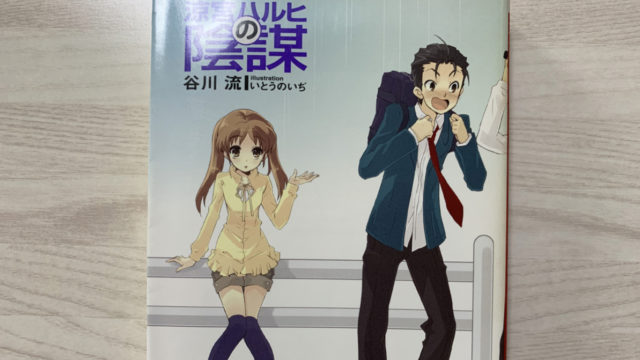
The Melancholy of Haruhi Suzumiya: Split Review – When the Story Divides and the SF Returns
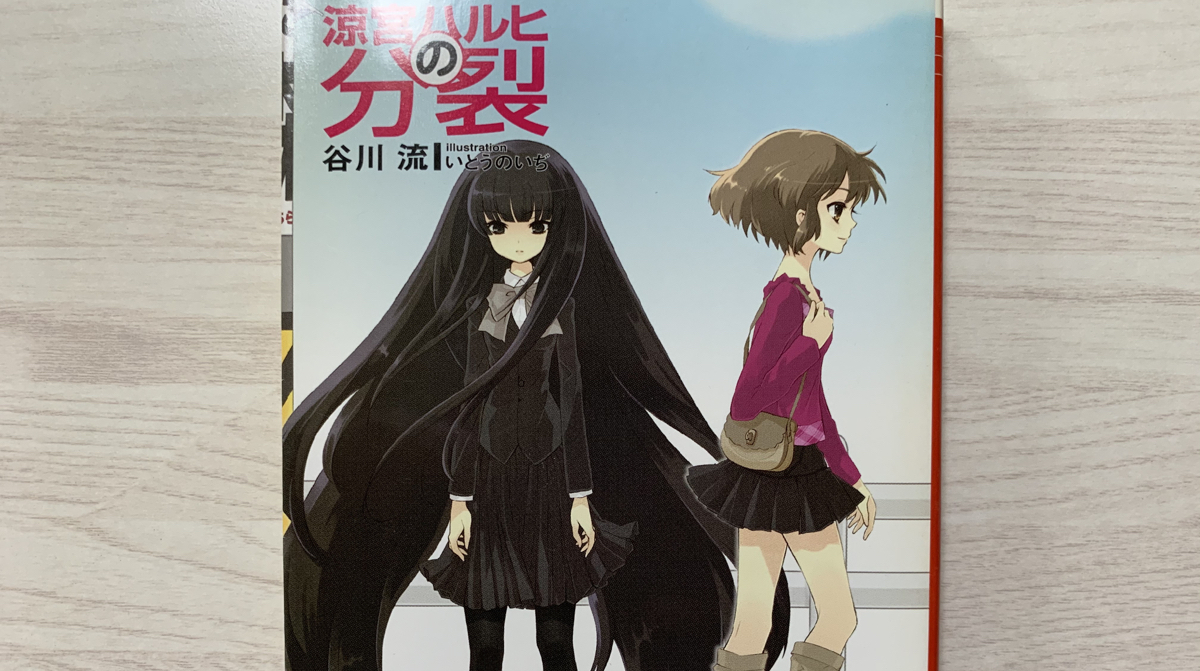
I have read The Melancholy of Haruhi Suzumiya: Split, the ninth volume in the Haruhi Suzumiya light novel series.
As the title suggests, this volume is literally about division. The story splits into two distinct timelines, and reading it requires active effort. My honest first impression after finishing the book was simple: this is a novel that takes time to process.
The two diverging worlds differ in subtle but important ways. Both are filled with unanswered questions, and I often had to pause and mentally reorganize what I had just read. At the same time, that very confusion reminded me of the series’ early volumes, when science-fiction concepts and uncertainty were at the core of the reading experience.
In this article, I focus on three points that left the strongest impression on me:
the branching narrative structure, the full emergence of opposing forces, and the deliberate choice to end the story without resolution.
1. What This Article Explains and Who It Is For
This article explains:
-
What kind of structure and tone Haruhi Suzumiya: Split has
-
Why many readers feel it is difficult and mentally demanding
-
Why the novel still makes you want to continue the series
-
Whether this volume is likely to suit your reading preferences
This book is well suited for readers who enjoy the science-fiction side of the Haruhi series and who do not mind thinking carefully about shifting timelines and alternate possibilities.
On the other hand, readers who expect a light, daily-life-focused story may find this volume harder to enjoy.
2. The Phone Call That Divides the Story
The story splits at a very ordinary moment:
a phone call Kyon receives on a Saturday night while taking a bath.
That mundane setting stood out to me. A trivial moment in everyday life becomes the point where the world diverges. To me, this perfectly represents the instability that defines this volume.
From that point onward, the two timelines develop in very different directions. In one, a mysterious underclassman appears. In the other, Kyon becomes deeply involved with a group centered around Sasaki. The same characters exist in both worlds, yet their circumstances and relationships shift noticeably.
I frequently had to stop and confirm which timeline I was reading. It was mentally taxing, but I also felt that this confusion was intentional—and essential to the experience.
3. Sasaki and the Collapse of Assumptions
One idea that stayed with me was the question of whether closed spaces and world-altering phenomena truly belong to Haruhi alone.
Through the character of Sasaki, assumptions that felt firmly established earlier in the series begin to quietly break down. Why does Sasaki occupy a position so similar to Haruhi’s? Why does the world seem capable of centering itself around more than one individual?
This volume does not provide clear answers. Instead, the lack of explanation becomes a force that pulls the reader forward. The feeling of “not knowing” is not a flaw here—it is the engine that drives interest.
4. A Clear Shift Toward Conflict and SF
While opposing factions had been hinted at in previous volumes, Split is where they fully step into the foreground. New characters are introduced rapidly, and the structure of conflict becomes much clearer.
Up to volume eight, the series leaned heavily toward character introspection and the everyday activities of the SOS Brigade. In contrast, this volume returns its focus to science-fiction concepts and larger power structures.
I personally felt that the story had finally started moving on a much larger scale. At the same time, I sensed that this was not a story that would be resolved quickly or neatly.
5. An Unfinished Ending and Its Aftertaste
This volume ends without resolving the split timelines. It becomes clear relatively early that the story will not conclude here.
However, rather than frustration, what I felt afterward was a sense of preparation—as if this book exists primarily to set the stage for what follows. The unresolved structure leaves a strong aftertaste and creates genuine anticipation for the continuation of the story.
Knowing that the follow-up volume, The Melancholy of Haruhi Suzumiya: The Surprise, is structured as a two-part conclusion reinforces that impression.
6. Final Thoughts and Recommendation
The Melancholy of Haruhi Suzumiya: Split may not be ideal for readers who want a clean, self-contained story or who dislike actively organizing complex narratives while reading.
However, for readers who enjoy the series’ science-fiction elements and appreciate stories where the world is destabilized and rebuilt, this volume is highly memorable.
I found myself confused, but deeply curious to continue. In that sense, Split feels like a crucial turning point in the later half of the series.