The Yakitori Restaurant in Fukuoka Where Chicken Skin Is the Main Event — An Honest Meal at Kawaya Gion
This article explains what it’s actually like to eat at Kawaya Gion, a yakitori restaurant known for its chicken skin skewers, based on a real visit and a full meal.
It’s written for readers who care less about hype and more about how a restaurant’s food works as a complete experience — pacing, balance, and how each dish supports the next.
I made a reservation before going. This place often has a line, and walk-ins are not always accepted. I already knew Kawaya was famous for its chicken skin, but eating it in person felt very different from what I had experienced elsewhere. Rather than a skewer that overwhelms you in one bite, it’s designed so that you almost forget how many you’ve eaten. That quality stayed with me, and it’s why I decided to write this piece by retracing the meal from start to finish, with the chicken skin as the anchor.
- 1. First Impressions After Sitting Down and How Ordering Works
- 2. After the First Chicken Skin, the Restaurant’s Direction Became Clear
- 3. Resetting the Palate With Gizzard, Cartilage, and Chicken Meat
- 4. Adding Texture Contrast With Heart and Sagari
- 5. Impressions of Sasami Shigi-yaki and Fukuru
- 6. Changing Perspective With Sausage and Shiitake
- 7. Non-Skewer Dishes That Define the Meal’s Shape
- 8. How the Onigiri Closed the Meal
- Restaurant Information
1. First Impressions After Sitting Down and How Ordering Works
Kawaya is fundamentally a skewer-focused restaurant, and the Gion location follows the same structure. Once seated, the first decision is not what to order, but how to assemble the flow of skewers. The chicken skin is non-negotiable, but how you place other cuts around it changes the rhythm of the meal significantly.
Each skewer can be ordered individually, and they arrive as soon as they’re grilled. The pace is deliberate — not rushed, not slow — which makes it easy to eat while talking without feeling interrupted.
2. After the First Chicken Skin, the Restaurant’s Direction Became Clear
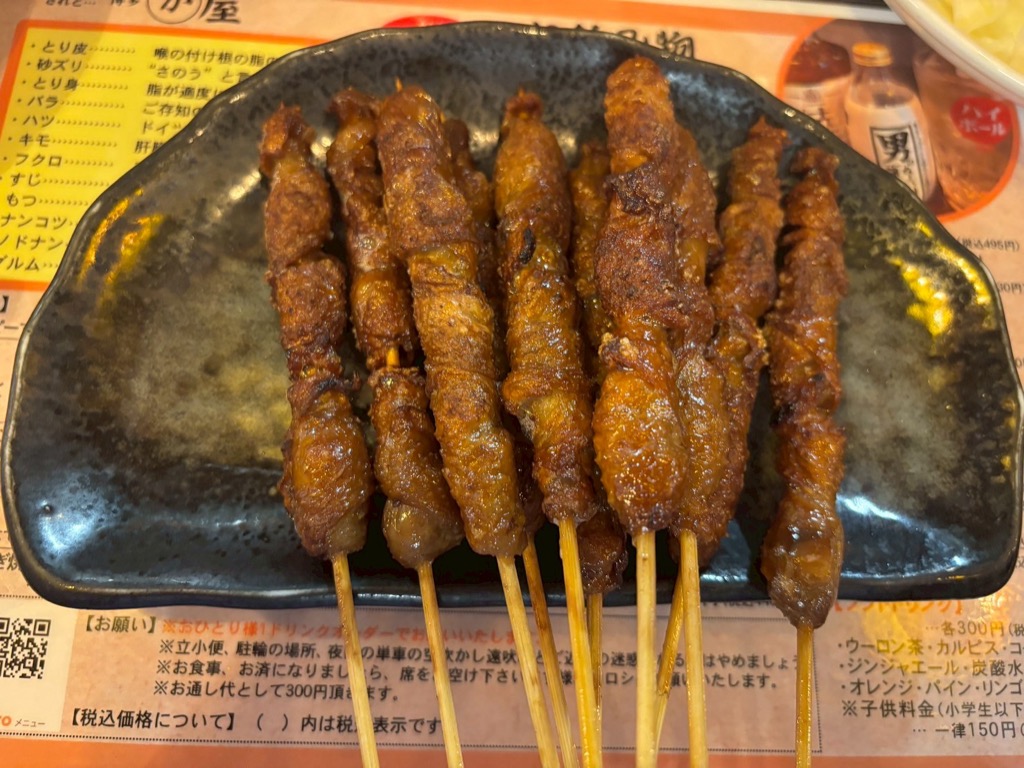
The chicken skin skewer defines this restaurant. It’s grilled repeatedly, rendering out excess fat, so the bite feels lighter than expected. The surface is well-caramelized, and the sauce coats evenly rather than pooling.
If you expect something greasy, this may surprise you. I found that even after several skewers in a row, my appetite didn’t stall. That restraint is intentional, and it sets the tone for the rest of the meal.
3. Resetting the Palate With Gizzard, Cartilage, and Chicken Meat
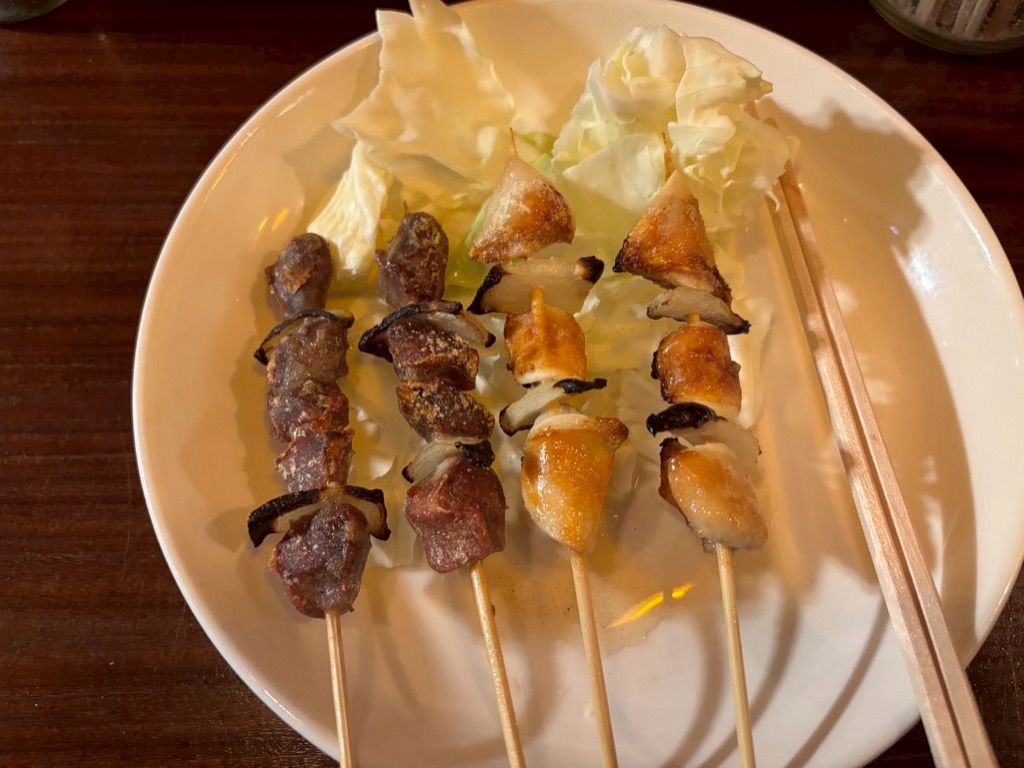
The gizzard was clean and crisp, with minimal seasoning. Its role was clear: to reset the mouth.
The cartilage had a pronounced crunch, breaking up the monotony that can come with a long skewer sequence.
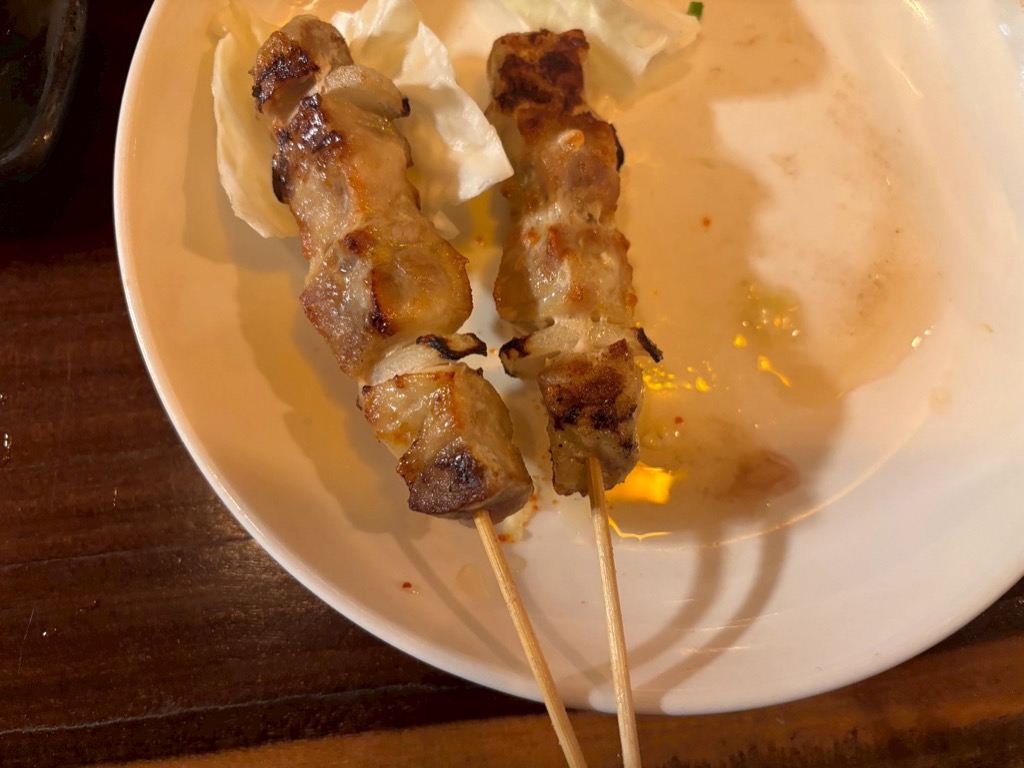
The standard chicken meat skewer was understated, but reliable. Its straightforward flavor made it a comfortable bridge between more distinctive cuts.
4. Adding Texture Contrast With Heart and Sagari
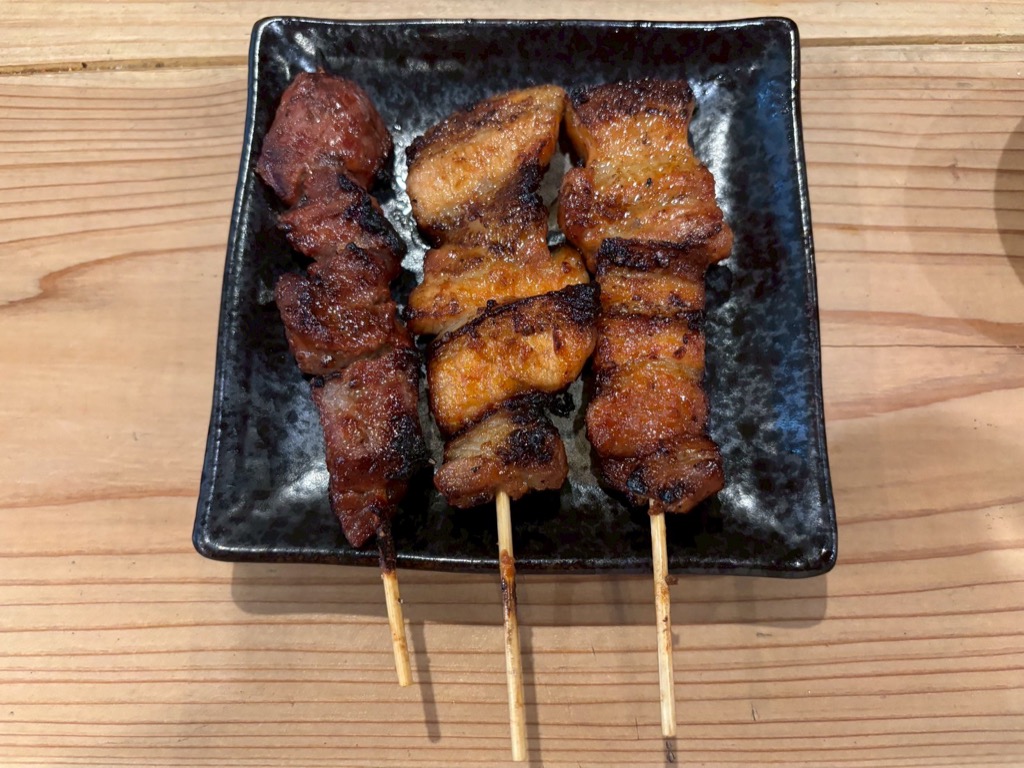
The chicken heart was gently cooked and avoided becoming tough, which left a strong impression.
Sagari leaned toward lean meat, with very little fat. Eating it after the chicken skin shifted the center of gravity of the meal and helped restore balance.
5. Impressions of Sasami Shigi-yaki and Fukuru
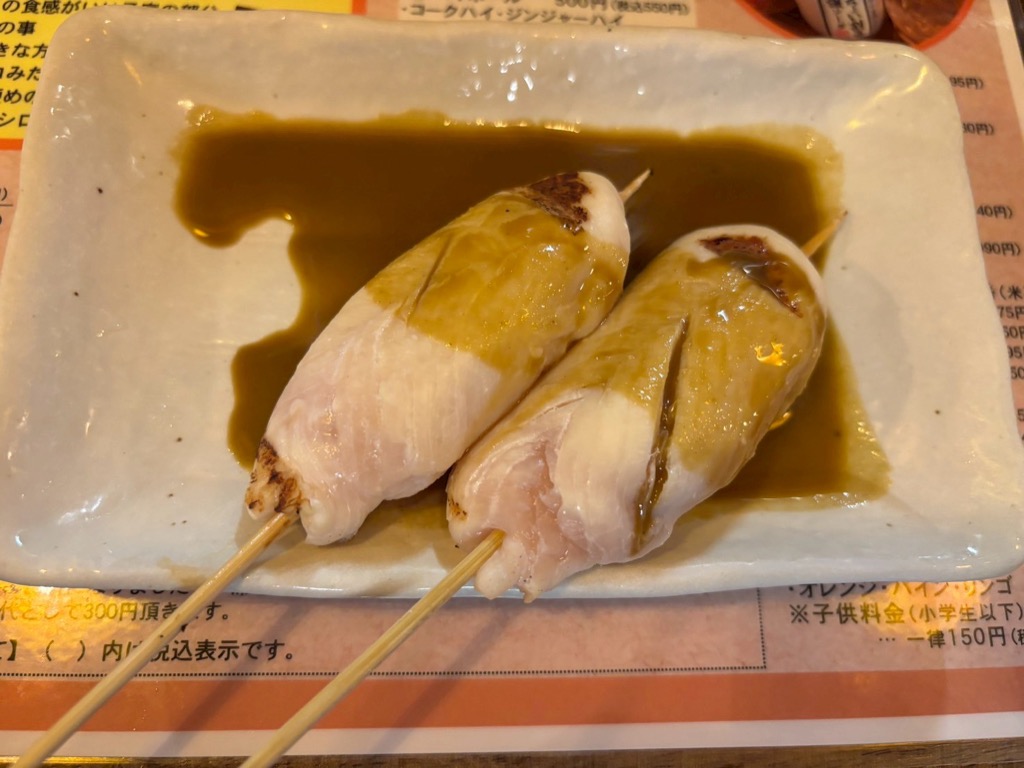
The sasami shigi-yaki was lightly cooked, preserving the clean, subtle nature of the meat. The seasoning was restrained, making it a calming presence mid-meal.
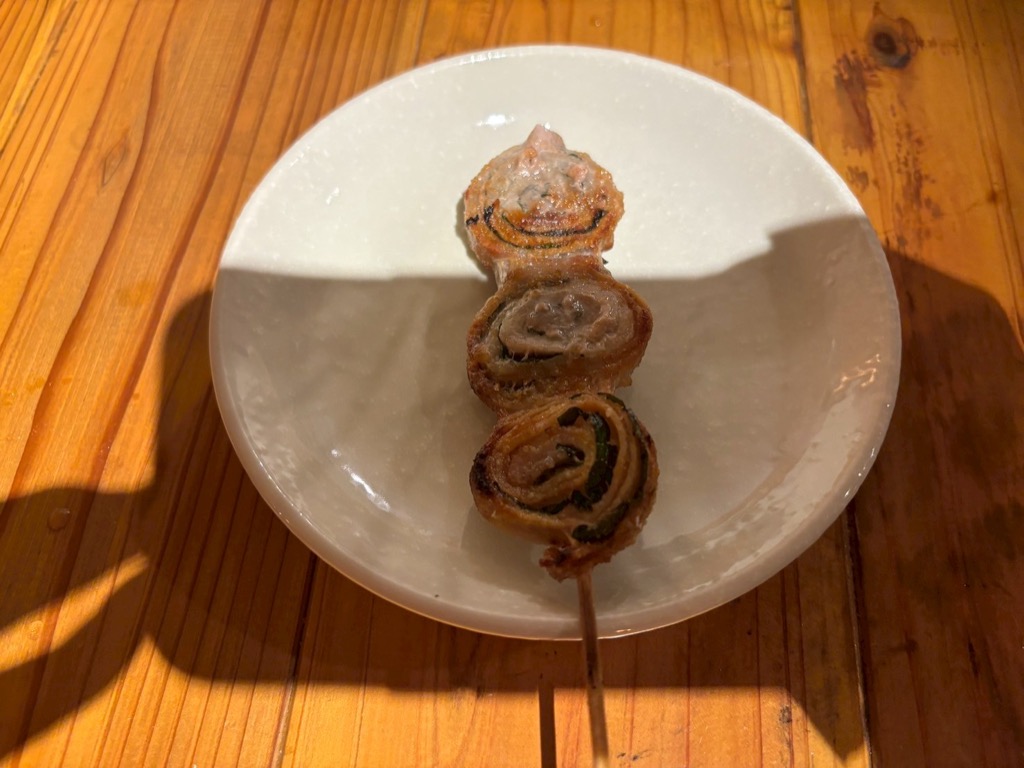
Fukuru had a distinctive texture but no noticeable odor. It’s a skewer that will divide opinions, but as part of the lineup, it adds memorability.
6. Changing Perspective With Sausage and Shiitake
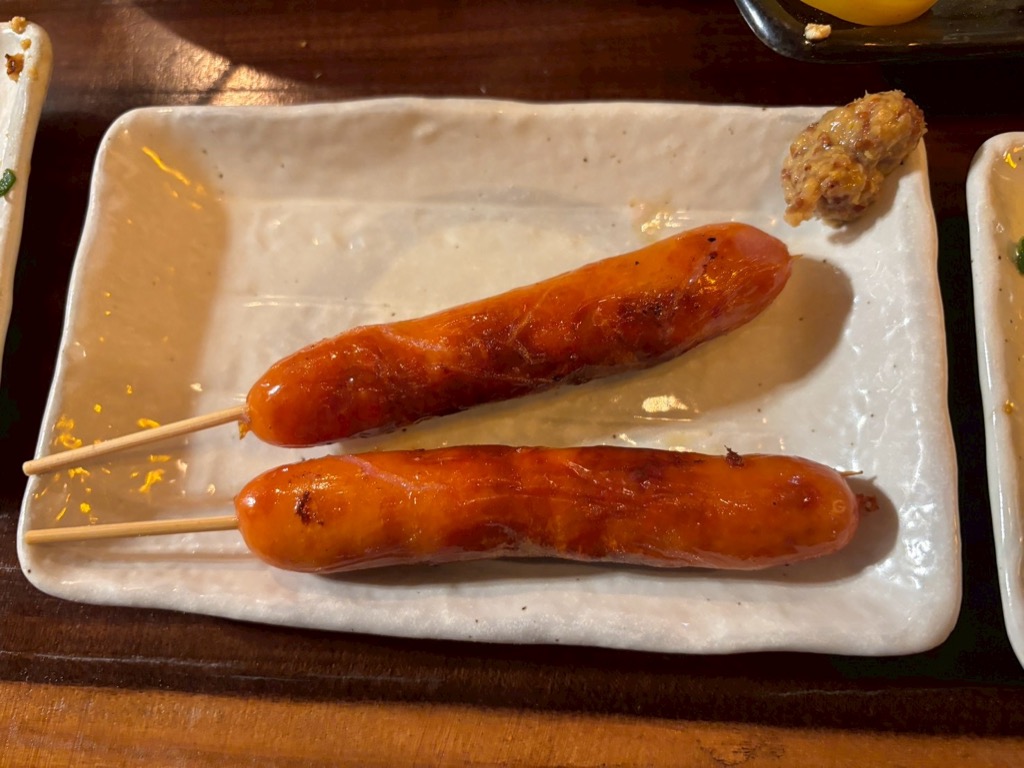
The sausage acted as a mental break — something easy to eat without thinking.
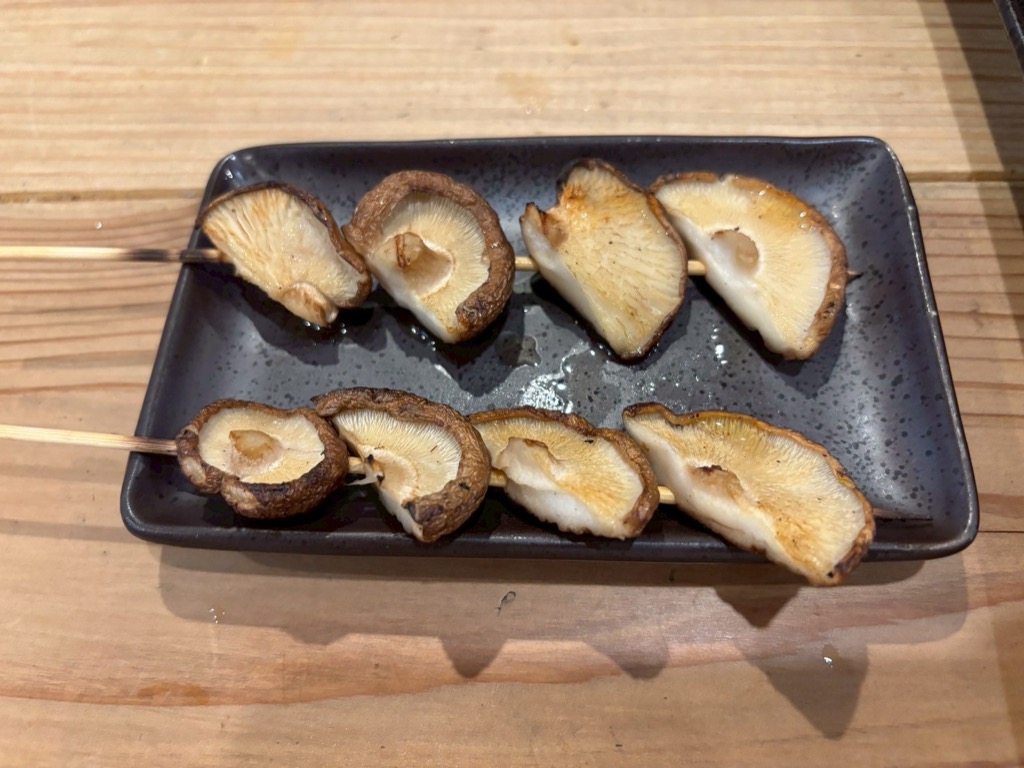
The shiitake mushroom, high in moisture, stood apart from the grilled meats. It reset the mouth in a different way and worked well between skewers.
7. Non-Skewer Dishes That Define the Meal’s Shape
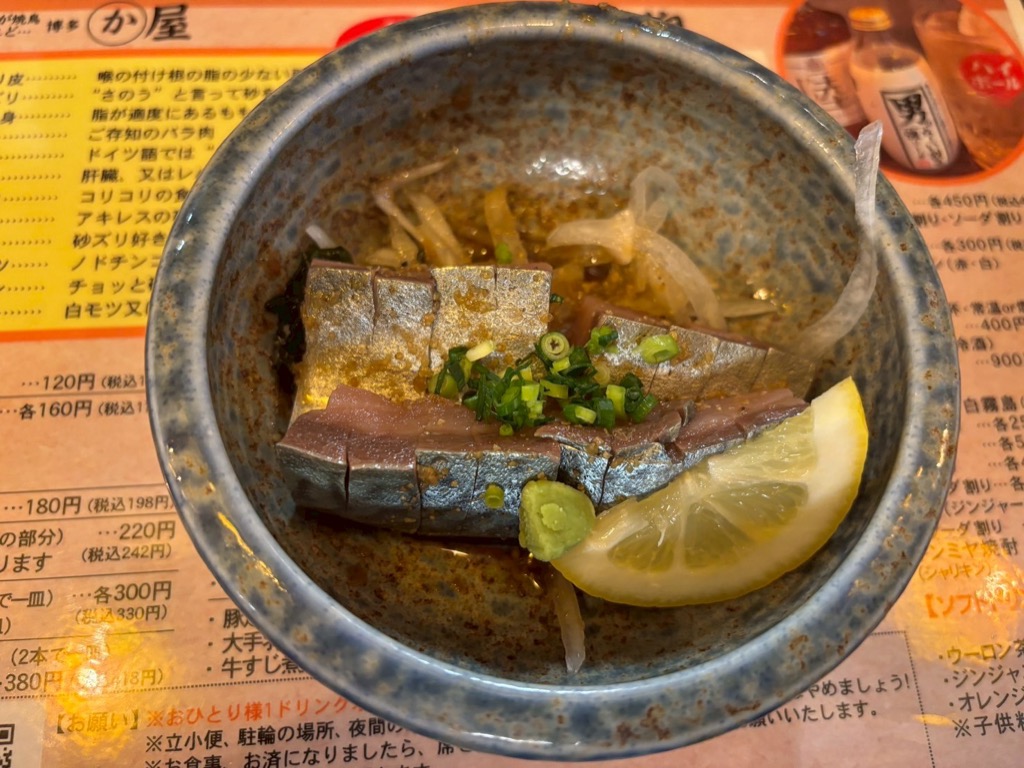
The fresh mackerel with sesame stood out clearly among the skewer-heavy lineup. Its richness and nutty aroma delivered satisfaction on a completely different axis.
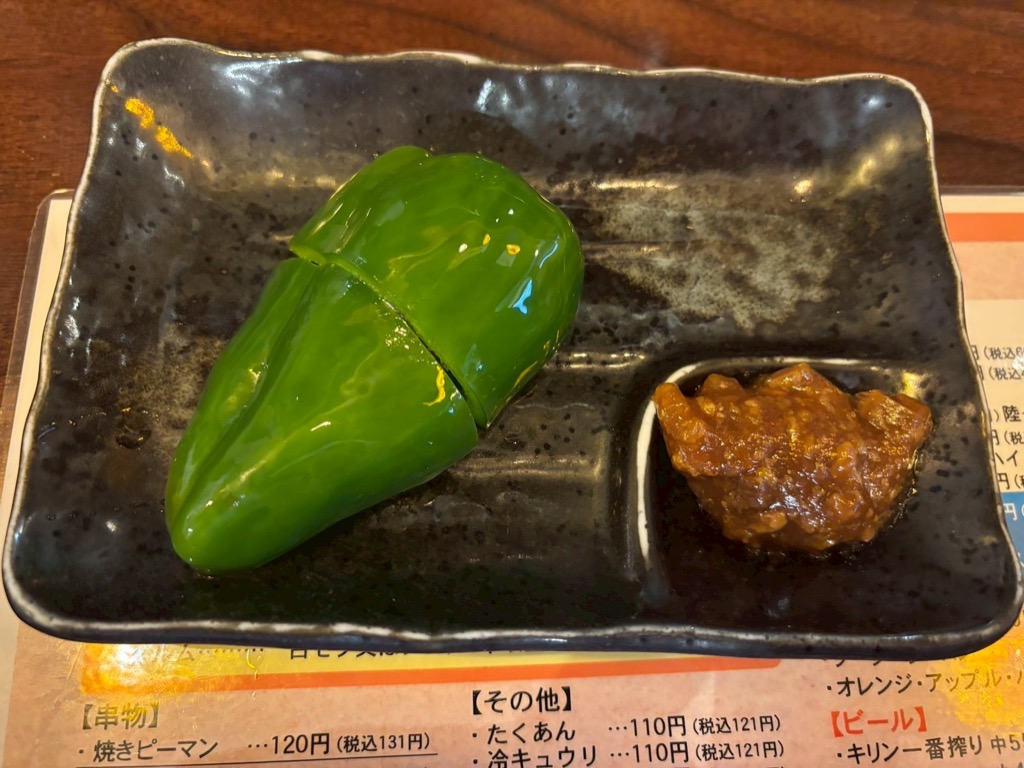
The crispy green peppers with meat miso were light and easy to pick up, naturally fitting into conversation gaps. The chilled cucumber did exactly what it promised: cooling and calming the palate.
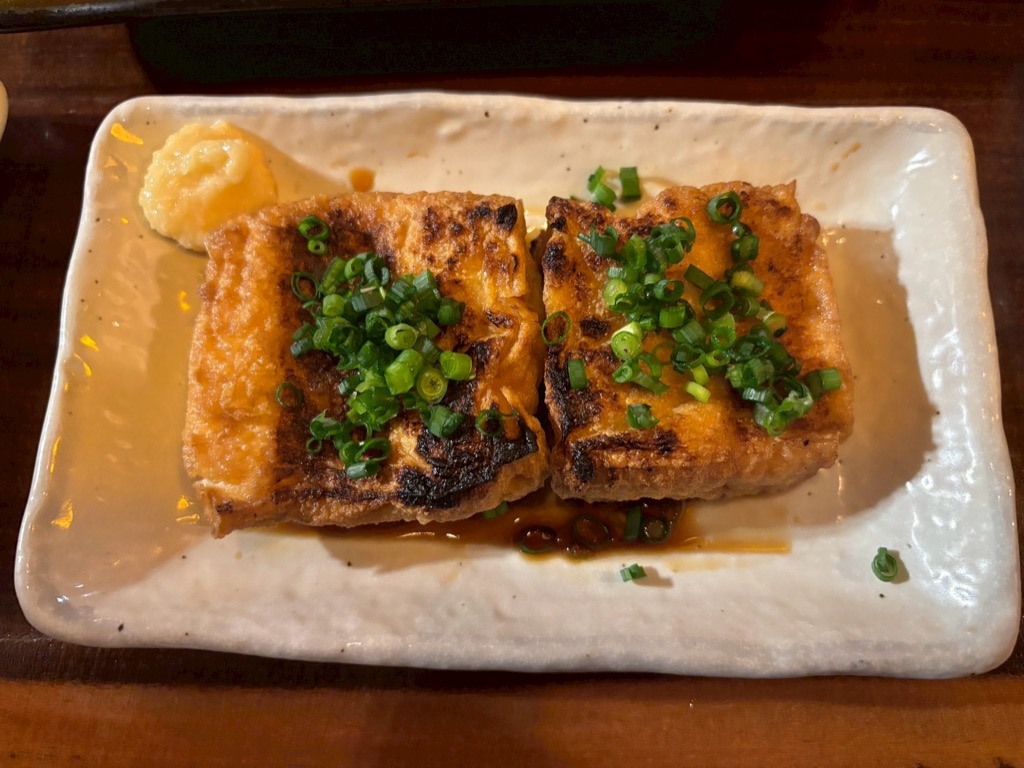
The fried tofu was crisp outside and soft inside, offering substance without overlapping with the skewers.
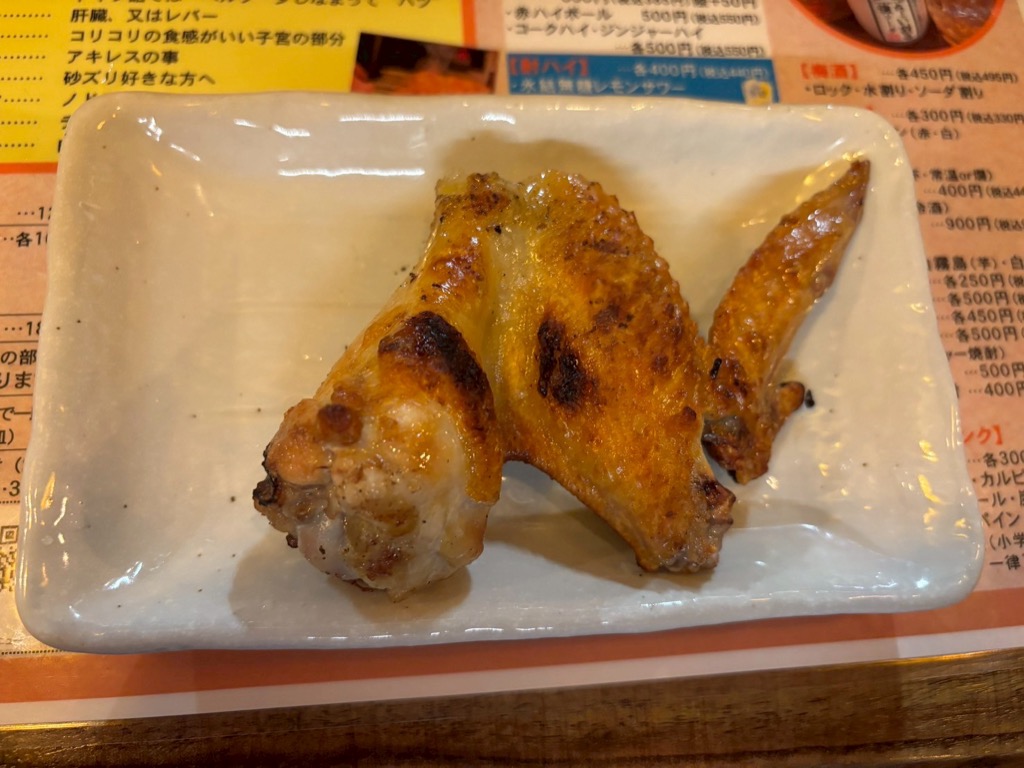
The large chicken wing was substantial. At this point, the meal shifted from tasting to feeling fed.
8. How the Onigiri Closed the Meal
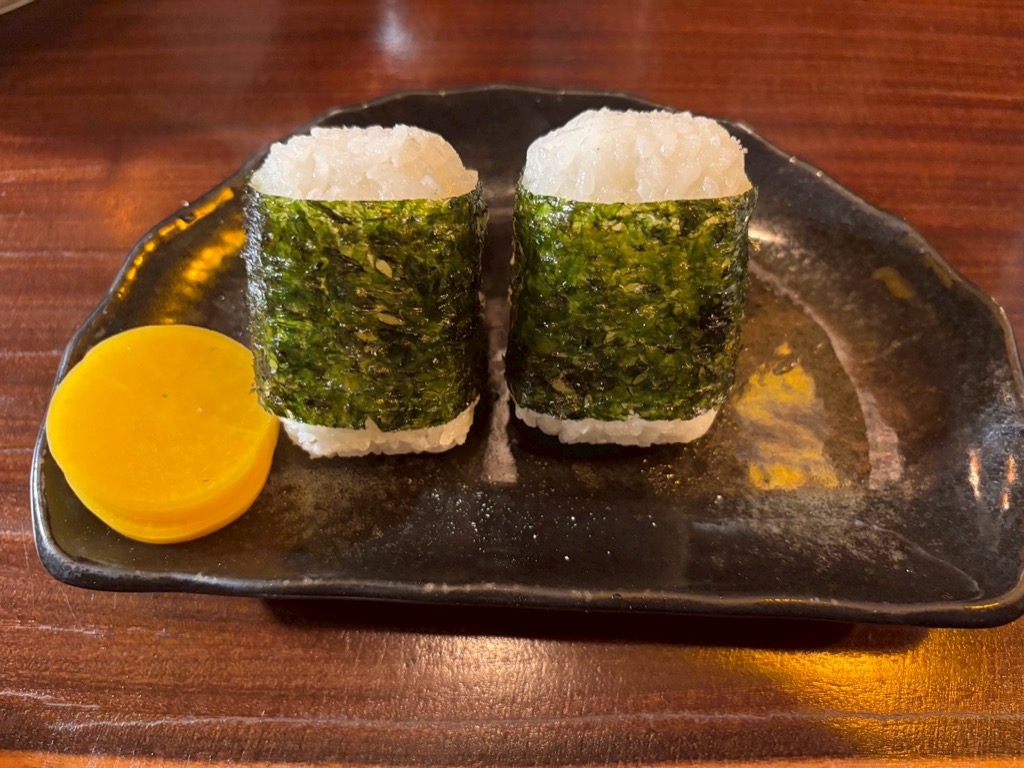
The rice ball wasn’t flashy, but it quietly brought everything together. After working through skewers and side dishes, it gave the meal a clear sense of closure.
Restaurant Information
-
Name: Kawaya Gion
-
Category: Yakitori / Izakaya
-
Area: Gion district, Fukuoka City, Japan
-
Access: Within walking distance of Gion Station (Fukuoka City Subway)
-
Hours: Evening to night
-
Closed: Irregular
-
Price Range: A few thousand yen per person