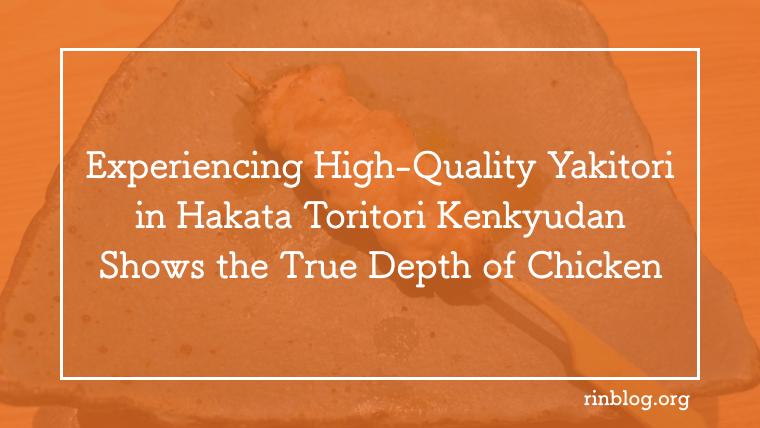
Experiencing High-Quality Yakitori in Hakata: How Toritori Kenkyudan Shows the True Depth of Chicken
This article explains what sets a truly high-quality yakitori restaurant apart, based on an actual dining experience in Hakata, Fukuoka.
It is written for readers who want to understand yakitori beyond popularity or presentation, and who value technique, balance, and respect for ingredients.
I visited this restaurant some time ago, but whenever yakitori in Hakata comes up in conversation, this place is the first that comes to mind. I went in with a clear understanding of the type of chicken used, the overall approach to the food, and the price range. Even with those expectations, the experience left me feeling more satisfied than I had anticipated.
This is not a restaurant that relies on flashy presentation or aggressive originality. Its focus is clear and consistent: how to serve chicken in the best possible way. As the meal progressed, that philosophy became increasingly evident.
A Thoughtfully Structured Flow That Lets You Experience Chicken Naturally

The meal began with chicken skin dressed in ponzu sauce.
Rather than emphasizing richness alone, the acidity of the ponzu cleansed the palate and brought everything into balance. As an opening dish, it made perfect sense—it prepared the mouth for the skewers that would follow.

Next came the chicken tenderloin. The gentle cooking prevented dryness, and the flavor was intentionally restrained. As the first skewer, it felt effortless to eat, easing the diner into the progression.

The tsukune made with Kousaka chicken had a cohesive texture and noticeable softness. Even as the meal continued, it never felt heavy.

Then came the gizzard. Its crisp, firm bite clearly shifted the rhythm of the meal. That change in texture naturally reset the palate and built anticipation for what was next.
Understanding Each Cut Through Progression, Not Explanation

The chicken wing was grilled to achieve a clean balance between skin and meat, with no excess fat left behind.

The quail egg skewer retained a rich yolk without becoming overcooked. Among the steady flow of skewers, it subtly expanded the range of flavors.

Furisode offered a texture somewhere between tenderness and elasticity, with fat that never overwhelmed. Its restraint left a strong impression.

Maruhatsu carried the distinct character of offal, yet avoided harshness. It fit naturally into the sequence rather than standing out in an aggressive way.

At this point, shirako was ordered. Its creamy texture was clearly different from anything that had come before, adding a deliberate accent and briefly breaking the established flow.
Increasing Substance as the Meal Moves Toward the Finish

Segimo delivered deep, organ-like richness without pushing fat to the forefront.

The liver was cooked just enough to maintain its unique mouthfeel without becoming firm. Even for those who are cautious about liver, it was approachable.

The jidori sausage marked a clear shift in direction. By changing texture rather than flavor alone, it prevented the meal from becoming monotonous.

Seseri offered elasticity and growing umami with each bite.

The harami, made from Hakata jidori, was thick and distinctly chewy, showcasing the character of free-range chicken.

The final tsukune, mixed with cartilage, felt entirely different from the earlier version. The added crunch kept the momentum going even late in the meal.
A Cohesive Ending That Leaves a Clear Impression of Chicken

Sori-les-pins struck an excellent balance between fat and flavor, delivering a strong sense of satisfaction.

Yotsumi was simple and straightforward. There was nothing flashy about it, but it clearly embodied the restaurant’s philosophy—letting chicken speak for itself.

The final order was chicken skin once again. Grilled so that the fat never lingered, it respected everything that came before it. As a closing dish, it allowed the meal to end cleanly, with a genuine sense of completion.
If you want to eat yakitori in Hakata and truly understand chicken through its different cuts, this restaurant is an excellent choice. It is a calm, refined place where high-quality yakitori can be enjoyed without distraction.
Restaurant Information
Name: Toritori Kenkyudan
Cuisine: Yakitori (Japanese grilled chicken)
Address: Hakata Station area, Hakata Ward, Fukuoka City, Fukuoka, Japan
Nearest Station / Access: Within walking distance of Hakata Station
Hours: Evening to night
Closed: Irregular holidays
Price Range (approx.): A few thousand yen per person