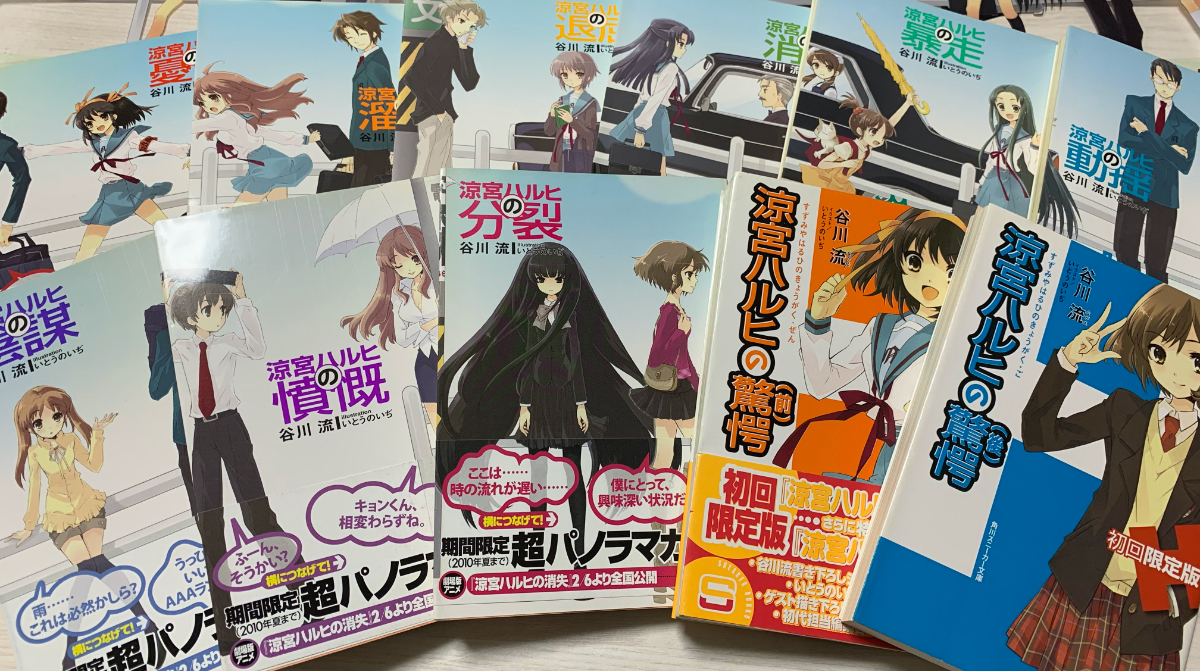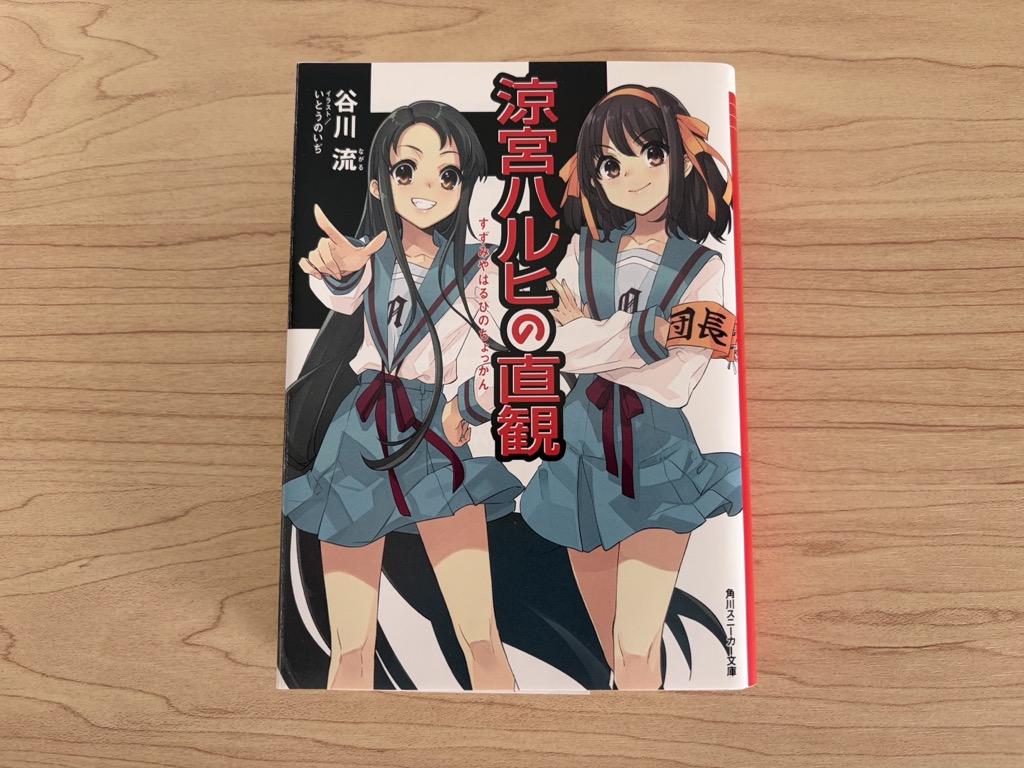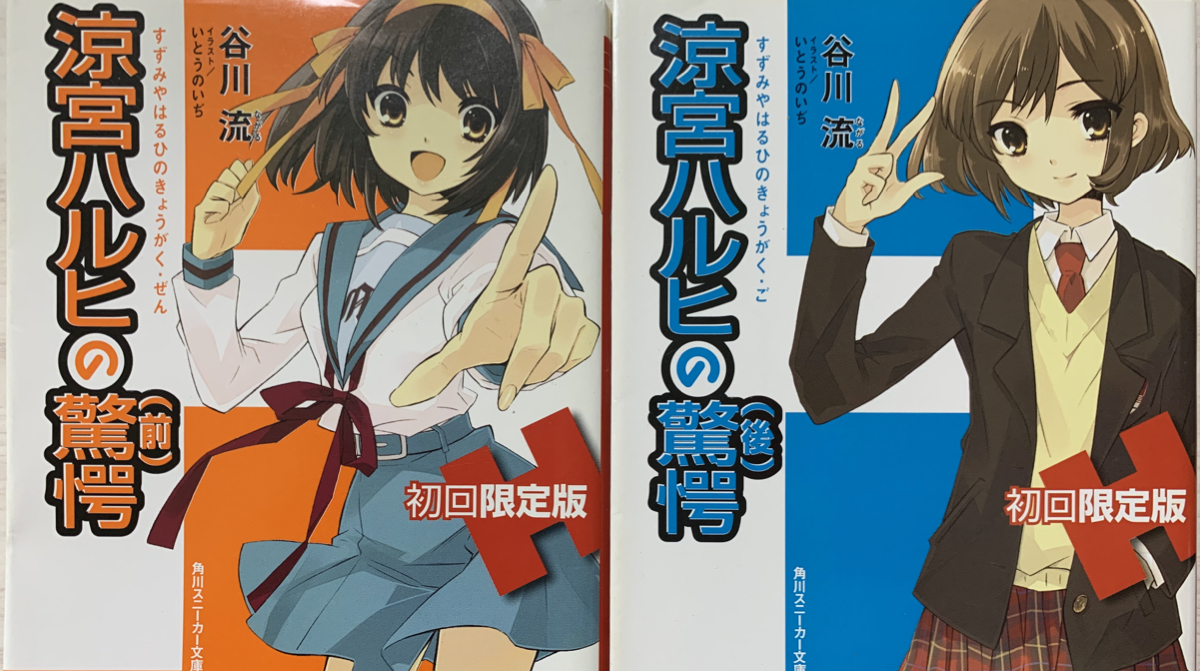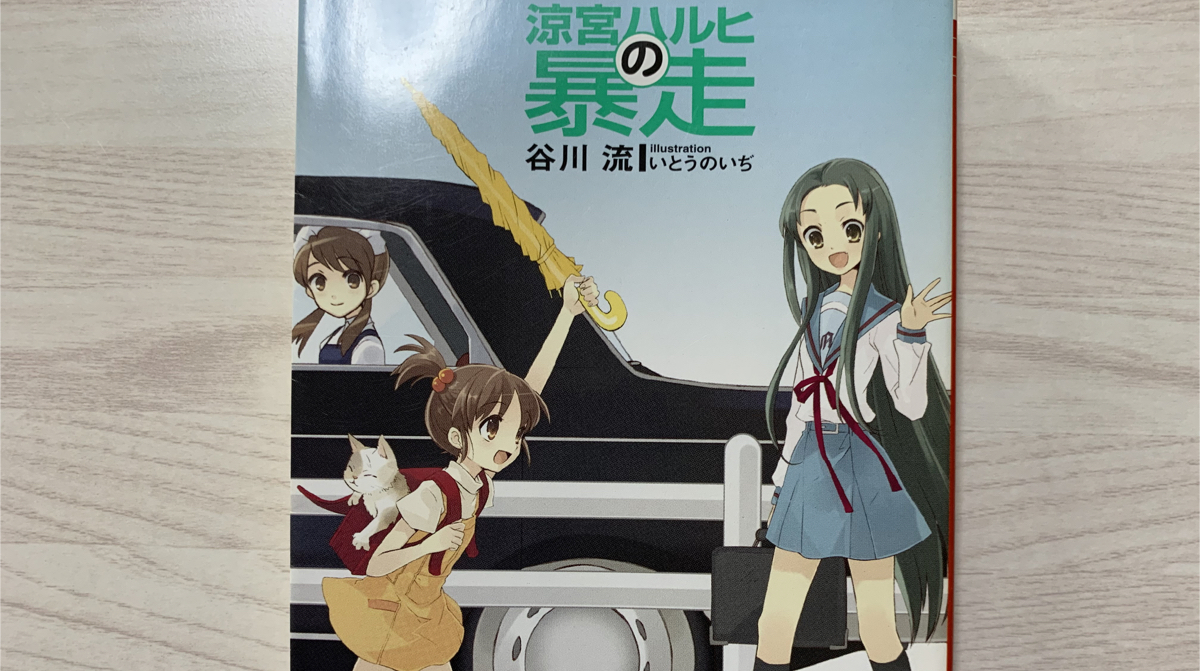
After finishing The Rampage of Haruhi Suzumiya (涼宮ハルヒの暴走), what stayed with me was not the science fiction concepts or the absurdity of the situations. It was a quieter question: who endured this stretch of time, how long they endured it, and what that felt like.
The short answer: this is a short story collection that quietly and decisively reshapes the emotional landscape of the series. It brings into focus Yuki Nagato, a character who has stood at the centre of events while revealing almost nothing of herself.
This article covers what kind of collection it is and which readers it suits. Major twists are avoided.
Sponsored
1. What kind of book is The Rampage of Haruhi Suzumiya?
The short answer: it is the fifth volume of the series, a short story collection published on 30 September 2004 with three stories.
| Item | Detail |
|---|---|
| Author | Nagaru Tanigawa (谷川流) |
| Illustrator | Noizi Ito (いとうのいぢ) |
| Imprint | Kadokawa Sneaker Bunko (角川スニーカー文庫) |
| Japanese release | 30 September 2004 |
| Position | Volume 5 (short story collection) |
| Contents | Endless Eight / The Day of Sagittarius / Snowy Mountain Syndrome |
Each episode differs in genre and tone. Some lean toward everyday comedy, others push firmly into science fiction. Despite that variety the book never feels fragmented.
Reading it straight after the fourth volume, The Disappearance of Haruhi Suzumiya, changes how it lands. Everything looks normal on the surface while something unseen keeps building underneath.
2. What I paid attention to while reading
The short answer: I read the three stories as one connected emotional sequence rather than judging each in isolation.
Four things stood out.
- How emotional weight accumulates across separate short stories
- The psychological burden carried by Yuki Nagato
- Subtle shifts in perspective from Kyon and Haruhi Suzumiya
- The quiet aftertaste the book leaves once it ends
Sponsored
3. Endless Eight: the weight of repetition
The short answer: on paper the premise sounds almost playful, and reading it is anything but light.
Rather than “an endless summer,” I read this as a question of who possesses the will to bring something to an end. The contrast between those who remain unaware and the one who cannot forget creates a persistent strain.
Imagining the experience of retaining every memory while time resets again and again left me with real mental fatigue. Even without graphic description, the implication of that endurance carries enormous weight.
4. The Day of Sagittarius: the first clear act of personal will
The short answer: a faster, more entertaining story in which a character who had only ever acted according to an assigned role finally states a personal desire.
The pace is quick, the exchanges are witty, and the computer-game structure feels quintessentially SOS Brigade. What stayed with me was that brief moment of self-expression.
It makes clear that earlier events have not passed without consequence. Even in a short format, the story communicates that emotional change is underway and cannot be undone.
Sponsored
5. Snowy Mountain Syndrome: relationships revealed when support fails
The short answer: the group loses access to the presence it normally relies on most, and the story turns to how everyone else responds.
This episode felt less like a survival scenario and more like a reassessment of relationships. From Kyon’s perspective, concern and restraint surface more clearly than before.
Equally striking is Haruhi Suzumiya’s awareness of those subtle changes, which reveals a perceptiveness that usually goes unnoticed beneath her forceful personality.
6. What does “Rampage” mean in this volume?
The short answer: a rampage does not have to look like explosive action.
Taken together, the three stories suggest that emotional suppression, unbroken obligation and silent endurance can be just as destructive.
The book works as a prelude to later developments and still stands on its own. The next collection, The Wavering of Haruhi Suzumiya, spreads that same instability across the rest of the cast.
7. Who is this book for?
The short answer: it suits readers who want internal change, and underwhelms readers who want spectacle.
| Likely to enjoy it | Likely to struggle with it |
|---|---|
| Readers exploring the characters beyond surface-level antics | Readers looking for fast-paced action |
| Readers who prefer internal change and lingering atmosphere | Readers who want immediate emotional payoff |
| Readers especially interested in Yuki Nagato | Readers who want each story to resolve cleanly |
8. Is it worth reading?
The short answer: yes, as one of the more quietly impactful entries in the series.
Despite being a short story collection, it leaves lasting changes in its characters and in how you understand them.
If you are drawn to stories that examine what a seemingly emotionless character carries beneath the surface, this book is worth your time. It is not loud, and it resonates.