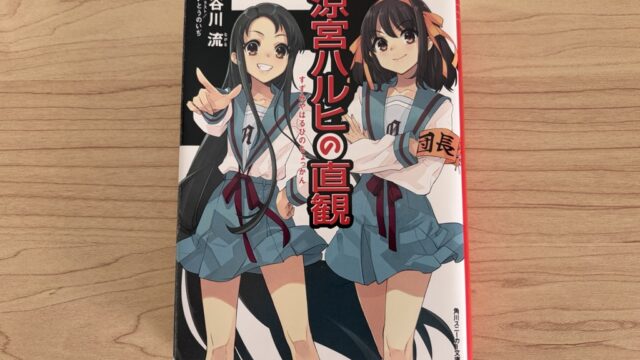
The Disappearance of Haruhi Suzumiya Review A Light Novel About Nagato Yuki’s Quiet Emotional Limit
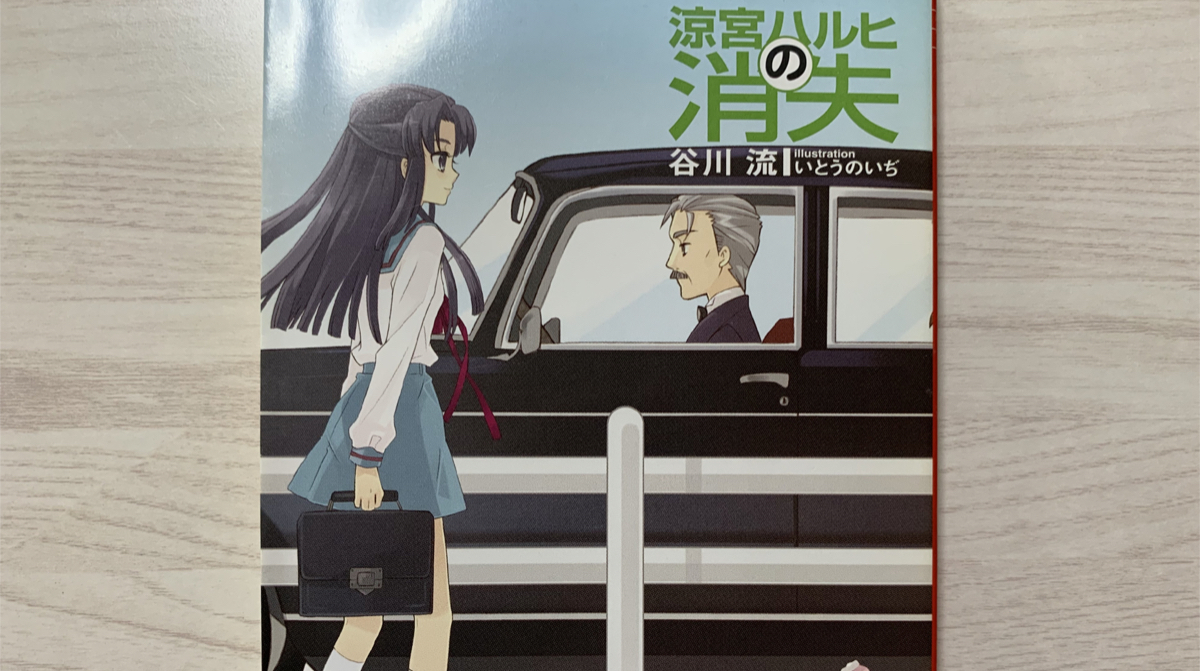
I could not organize my thoughts immediately after finishing this volume.
Despite its large-scale science fiction premise and its reputation as a turning point in the series, what stayed with me was something far smaller and more personal: a quiet emotional weight that refused to fade.
What affected me most was not the incident itself, but the inner state of Yuki Nagato.
This article focuses on that perspective—what kind of story The Disappearance is when read through her emotional presence, and who this novel is likely to resonate with.
- 1. What This Article Explains and Who It Is For
- 2. Evaluation Framework How the Story Confronts Nagato Yuki’s Emotional State
- 3. The Unease and Sadness of the Altered World
- 4. Why This Story Read to Me as Nagato Yuki’s Quiet Rejection
- 5. The Lingering Aftermath Upon Returning to the Original World
- 6. Why This Volume Resonates More Strongly Within the Series
- 7. Final Verdict Is This Light Novel Worth Recommending?
1. What This Article Explains and Who It Is For
This review does not aim to summarize the plot in detail. Instead, it focuses on:
-
Where emotional reactions emerge while reading
-
Why this volume feels fundamentally different from earlier entries
-
What kind of aftertaste this light novel leaves behind
This article is especially useful for readers who:
-
Enjoy interpreting a character’s inner life rather than explicit explanations
-
Are drawn to stories where emotions are implied rather than stated
-
Look for light novels that leave a lingering sense of melancholy
2. Evaluation Framework How the Story Confronts Nagato Yuki’s Emotional State
My core evaluation axis is clear:
this novel depicts what happens after Nagato Yuki can no longer remain an emotionless observer.
Throughout the earlier volumes, Nagato functions as a silent problem-solver—neutral, efficient, and indispensable. She responds to anomalies without complaint or visible strain.
In this volume, however, she is portrayed as someone who has reached her emotional limit.
To me, this story is not primarily about world alteration as science fiction.
It is about the exhaustion of a character who has endured too much without being seen.
3. The Unease and Sadness of the Altered World
Partway through the novel, readers encounter a version of daily life that appears calm and ordinary. On the surface, it is peaceful—no imminent danger, no cosmic urgency.
Yet what I felt was not comfort, but intention.
This world feels deliberately selected rather than naturally occurring.
One detail in particular stood out: a small memory that only Nagato retains.
If everything were truly meant to be erased, that connection could have disappeared as well.
The fact that it remains led me to feel that Nagato could not fully let go of her relationship with Kyon.
Whether this emotion should be called love is uncertain.
But it clearly represents something she was unwilling—or unable—to abandon.
4. Why This Story Read to Me as Nagato Yuki’s Quiet Rejection
As I continued reading, one interpretation became impossible to ignore.
To me, this novel can be read as a story of unreciprocated feeling.
The altered world represents the possibility of Nagato existing as an ordinary girl.
And yet, the outcome ultimately chosen feels like the least rewarding result for her.
There is a moment of exchange that struck me not as a mutual decision, but as a gentle refusal.
It is understated, almost polite—but emotionally devastating in its restraint.
This is, of course, my personal reading.
But the fact that the novel allows for such an interpretation speaks to how much emotional space it leaves for the reader.
5. The Lingering Aftermath Upon Returning to the Original World
Near the end, when everything returns to its original state, there is no dramatic confrontation.
Instead, there is a quiet conversation.
Within it, I sensed apology, resignation, sadness, and an unspoken kindness in response.
A single short phrase felt like a clear boundary being drawn.
That subtle finality is what deepened the novel’s emotional impact for me.
6. Why This Volume Resonates More Strongly Within the Series
This novel’s power is amplified by what comes before it.
The everyday interactions established in earlier volumes—The Melancholy, The Sigh, and The Boredom—give emotional weight to the changes depicted here.
While the science fiction structure is carefully constructed, what stood out to me most was how openly character emotion takes center stage for the first time.
7. Final Verdict Is This Light Novel Worth Recommending?
Yes—especially for readers who enjoy reflecting on a character’s internal world.
If you primarily seek fast-paced action or straightforward moral clarity, this volume may feel heavy.
But if you value stories that leave you thinking about a character long after you finish reading, this novel is unforgettable.
For me, The Disappearance is the kind of story that quietly follows you afterward—
not because of what happens, but because of what is left unresolved.