Naname no Yugure Review: A Quiet, Uncomfortable Essay About Not Quite Belonging
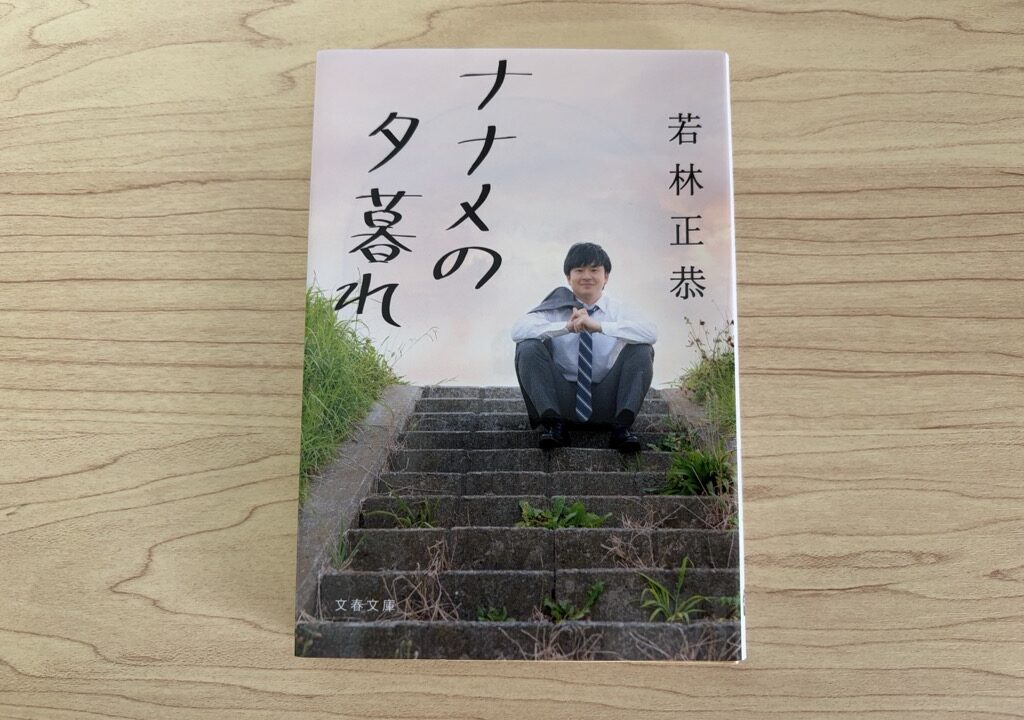
This article is a personal review of Naname no Yugure, written from the perspective of a reader who finished the book and reflected on what lingered during and after reading.
Rather than summarizing funny anecdotes or extracting inspirational quotes, this review focuses on one practical question: Is this book likely to resonate with you?
In short, this essay strongly resonates with readers who have struggled with social distance, group dynamics, or a persistent sense of not fitting in. On the other hand, readers looking for upbeat self-help lessons or light humor may find it unsatisfying.
What this article explains
-
How the book’s writing style shapes the reading experience
-
How it treats the theme of being “slightly out of sync” with society
-
What kind of emotional response it leaves behind
Who this article is for
-
Readers interested in reflective essays rather than motivational books
-
People who value thought processes over clear-cut conclusions
-
Those who want to know how a book feels to read, not just what it says
This review is structured around three evaluation criteria commonly used in literary and essay criticism: narrative voice and style, treatment of theme, and emotional aftertaste. All opinions below are grounded in these criteria.
1. Narrative Voice and Style: Refusing to Rush Toward Answers
What stood out to me most while reading Naname no Yugure was how deliberately it avoids reaching tidy conclusions.
Although it is an essay collection, the book rarely offers statements like “this way of thinking makes life easier” or “this is how you should move forward.”
Instead, when describing social interactions or group behavior, the author lingers on unresolved thoughts:
-
Why certain moments felt awkward or misaligned
-
How trying to correct that discomfort often led to greater exhaustion
-
Why it still felt dishonest to label those feelings as simply “wrong”
These half-formed reflections are presented without reinterpretation or emotional cleanup.
To me, this writing felt uncompromising. The author does not reframe discomfort into positivity or shape it into a neat takeaway. The uncertainty is left intact.
While the prose is accessible and easy to follow, it does not provide the kind of emotional relief that many readers expect after finishing a book. Instead, it quietly invites the reader to recognize similar patterns in their own thinking.
2. Treatment of Theme: Neither Celebrating Nor Rejecting Being “Off-Center”
Throughout the book, a recurring theme emerges: standing slightly off-center from mainstream expectations.
However, this position is never praised as a virtue or reframed as a unique talent.
What remains memorable are scenes where:
-
Trying to blend in only intensifies discomfort
-
Knowing what behavior is socially “correct” does not make it feel right
-
The effort to appear normal slowly drains emotional energy
These episodes are presented without judgment, stacked side by side without explanation.
I did not feel that the book was saying “being different is wonderful.” Instead, it seemed to say, “being different often comes with inconvenience and loneliness—and that reality should not be simplified.”
Yet what remains after finishing the book is not despair. It is a subtle possibility:
Perhaps life does not require standing squarely at the center.
This ambiguity may feel gentle to some readers and frustratingly incomplete to others.
3. Emotional Aftertaste: Less Empathy, More Recognition
While reading, I rarely thought, “I feel exactly the same way.”
Instead, I repeatedly found myself thinking, I remember moments like this.
The book does not rely on dramatic emotional peaks. Rather, it surfaces:
-
Discomfort that once went unnamed
-
Feelings that were dismissed because they were hard to explain
-
Sensations that only make sense in hindsight
These elements rise naturally through the calm, restrained tone.
Readers expecting strong emotional immersion or catharsis may feel underwhelmed. The book maintains emotional distance throughout.
For me, that distance created a sense of shared reflection rather than emotional manipulation. I never felt pushed toward a reaction; I felt invited to think alongside the author.
4. Who This Book Is (and Isn’t) For
Likely to resonate with
-
Readers who often feel slightly out of place in group settings
-
Those who prefer observing thought processes over receiving advice
-
People who do not want their discomfort validated or dismissed
Less likely to resonate with
-
Readers seeking clear conclusions or life lessons
-
Those expecting humor-driven essays or success narratives
-
Anyone prioritizing emotional uplift after finishing a book
5. Conclusion: A Book That Quietly Stays With the Right Reader
Nanime no Yugure is not a universally recommendable book.
However, for adults who carry unresolved memories of not fully fitting in, it may linger long after reading.
This book does not tell you that you are right, nor does it guide you toward a better way of living.
What it offered me instead was permission to leave certain emotions uncorrected.
Whether this resonates will depend heavily on the reader.
But if the title or theme gives you pause, I believe it is worth reading to find out.