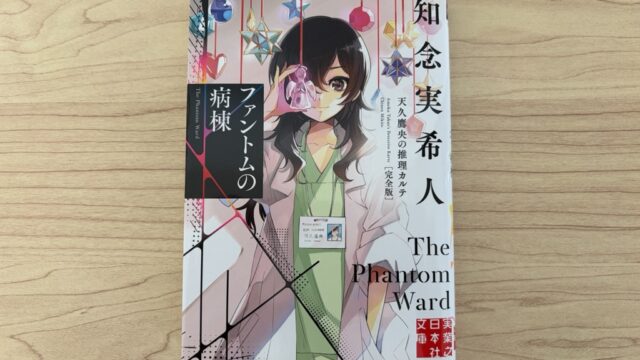
The Uneasy Aftertaste of a Medical Mystery: Reading 『Ameku Takao’s Detective Karte』
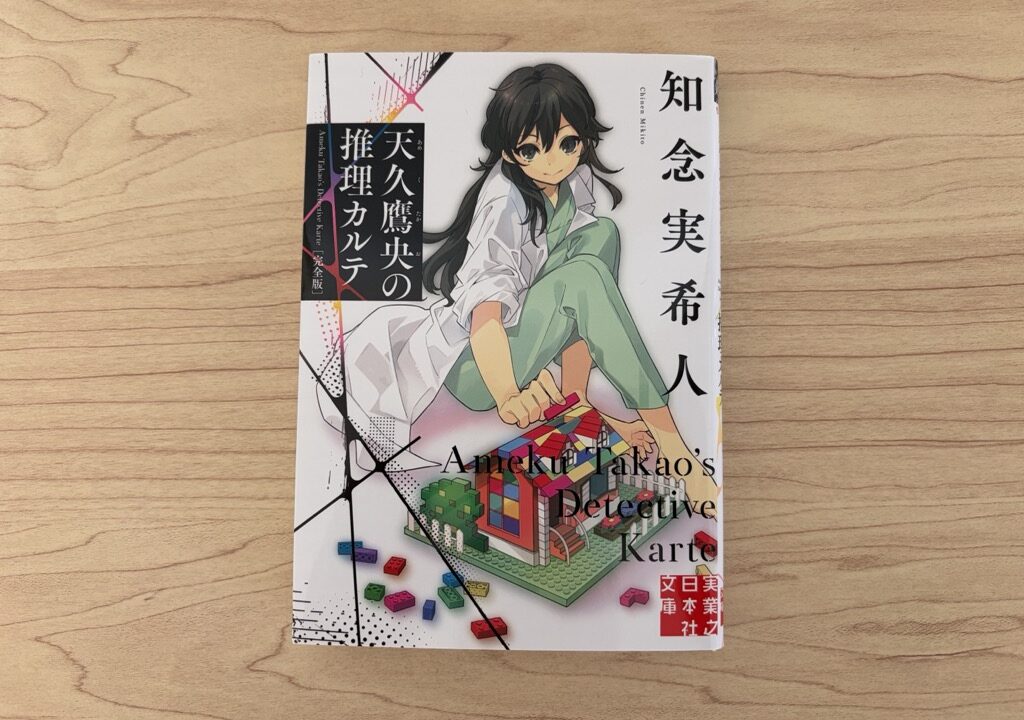
This article explains what lingered in my mind after finishing a well-known Japanese medical mystery—not the plot twists themselves, but the subtle sense of distance, structure, and atmosphere that remained.
It is written for readers who are interested in medical mysteries, character-driven detective stories, or long-running series, and who want to know how this book feels after the final page, rather than how cleverly it solves its cases.
I picked up this book not because I had been following the series, but because it was presented as a “Complete Edition”—a clearly defined entry point. I had seen the title mentioned before as a medical mystery, yet it was this framing that finally made me open it.
From the very beginning, I felt myself pausing—not at a crime or a puzzle, but at the relationship between the hospital setting and the doctor who steps forward as the detective figure. Before any mystery fully took shape, I found myself wondering whether this pairing of character and narrative voice could really carry the story forward.
As I continued reading, it became clear that this is the first installment of a medical mystery series centered on Ameku Takao, a doctor with extraordinary diagnostic abilities. The structure—combining medical knowledge with logical deduction—was easy enough to grasp. Still, my understanding felt less like “learning the setup” and more like repeatedly checking my footing as the story progressed.
1. A Hospital That Feels Both Stable and Confining
Most of the story unfolds within a specialized hospital department devoted to diagnostic cases. Medical settings are often difficult for readers to enter, given their technical nature, but in this case, the atmosphere settled in surprisingly quickly.
Repeated scenes of examination rooms, wards, and the exchange of test results create a steady rhythm. Over time, I began to feel that I understood how things move here—how decisions are made, how conversations unfold, how problems are approached.
That very stability, however, is what makes the anomalies stand out. Ordinary medical routines sit directly beside symptoms and events that resist easy explanation. As I read, I repeatedly felt small moments of friction—quiet signals that something didn’t quite belong. Those moments, more than suspenseful cliffhangers, were what kept me turning pages.
2. The Distance Between the Reader and Ameku Takao
As both doctor and detective, Ameku Takao is sharply defined. She prioritizes logic, shows little overt emotion, and does not hesitate to create friction with those around her. This consistency makes her actions easy to anticipate.
What is less accessible is her motivation. While I could follow what she was doing, I did not always feel aligned with why she pursued certain points so relentlessly. There is a deliberate emotional distance built into her character.
That distance is softened by the presence of the narrator, Yu Takanashi. Through his confusion, surprise, and occasional frustration, I felt as though I was observing Ameku from the same position he was. He functions as a buffer between her intensity and the reader. Without him, the experience might have felt oppressive rather than controlled.
3. What Remained More Than the Mystery Itself
The individual cases rely heavily on medical explanations. Some parts were easy to follow; others had to be accepted as expert knowledge. To be honest, the specific mechanics of the tricks mattered less to me than the method of reasoning behind them.
What stood out was the way problems are divided, categorized, and processed. The book leaves a stronger impression as a demonstration of diagnostic thinking than as a puzzle to be solved alongside the characters.
Even when a case reaches a conclusion, the story as a whole does not fully close. When I finished the book, I felt a slight sense of suspension—not frustration, but the impression that this place and these relationships are designed to continue.
4. The Lingering Question After Finishing
With some distance, I realized that this book made me think less about whether it succeeds as a medical mystery, and more about how I want to engage with the series going forward.
Ameku Takao is a powerful presence. That strength is compelling, but it is also divisive. I found her interesting, yet I am still unsure whether I can maintain the same reading distance over multiple volumes.
Even so, the combination of a hospital setting and a detective who relies almost exclusively on logic creates a distinct atmosphere. I hesitate to recommend it without reservation, but for readers who are drawn to the sensation of mysteries being handled calmly and methodically within a very real, clinical environment, this book is worth trying.
As for me, I’m curious enough to see how this feeling evolves in later volumes—and that curiosity may be the most telling aftertaste of all.