If you are after ramen in Nagasaki that is not heavy, the tomato ramen at Ramen Hiiragi in Dōza-machi is worth considering. It is neither tonkotsu nor shoyu, yet it holds together as ramen.
It opens 11:00 to 03:00 (to 05:00 on Fridays, Saturdays and the eve of holidays), closed Tuesdays. One minute from the Kankō-dōri tram stop, and open very late, which makes it useful in the centre of Nagasaki.
This is what I made of the tomato ramen with extra aubergine, the aosa seaweed ramen, and the small clam rice—less a score than what stayed with me during and after eating.
Sponsored
Ramen Hiiragi: the details
| Name | Ramen Hiiragi (らーめん 柊) |
|---|---|
| Address | 6-8 Dōza-machi, Nagasaki |
| Phone | 095-821-9210 |
| Hours | Mon, Wed, Thu, Sun, holidays 11:00–03:00 Fri, Sat, eve of holidays 11:00–05:00 |
| Closed | Tuesdays (occasional irregular closures) |
| Access | 1 minute from the Kankō-dōri tram stop |
| Seats | 13 (8 at the counter plus one table for five) |
Thirteen seats—it is small. It sits within the Shianbashi and Dōza drinking district and stays open into the early hours, so it works as a post-drinks bowl.
What I was judging
Four things:
- Whether the direction of the flavour is clear
- The balance between satisfaction and heaviness
- How complete it feels as a meal, including toppings and rice
- Whether I would think about coming back
Rather than rich versus light, the question was whether I found that direction comfortable to receive.
Sponsored
Who it suits (the conclusion first)
Likely a good fit if you
- Want ramen that is not standard tonkotsu or shoyu
- Like ramen but find heavy bowls tiring
- Enjoy something unconventional that still works as a meal
Probably pointing elsewhere if you
- Want something rich with real punch
- Feel strongly that ramen should be ramen
Tomato ramen with extra aubergine
First impression
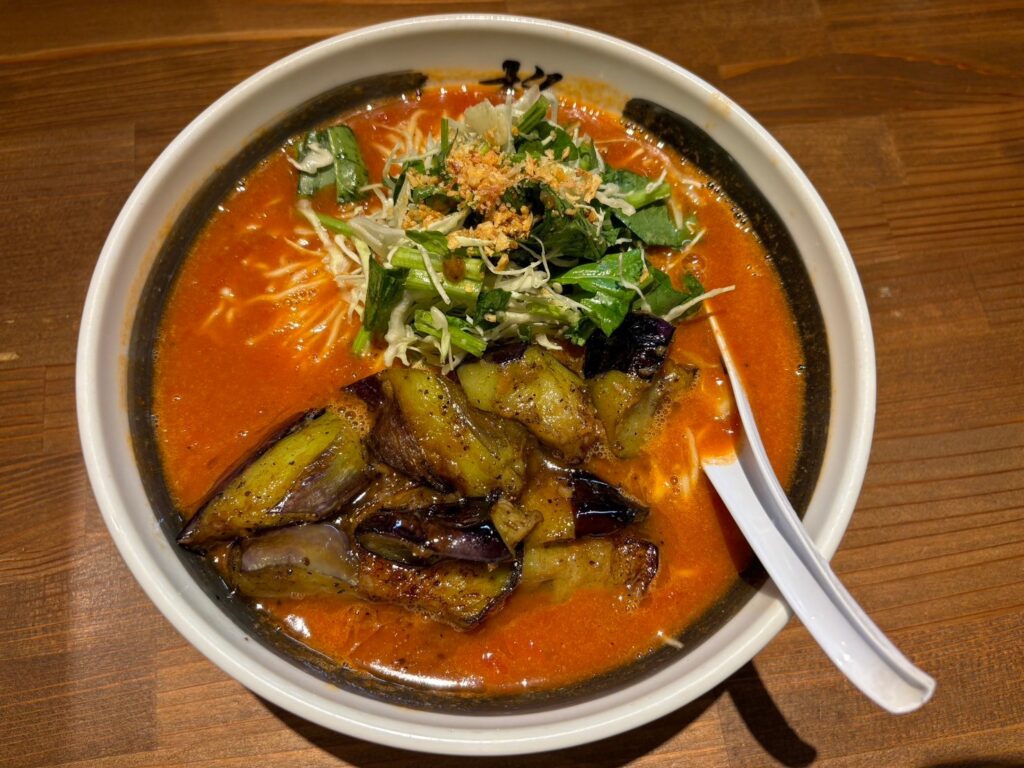
I started with the tomato ramen and added aubergine. If you are picturing conventional ramen, the look may surprise you.
The broth is red and the tomato is clearly present. But it does not read as pasta-adjacent—to me it stayed recognisably on the ramen side of the line. The acidity does not push forward, and the broth holds together.
Eating it
The strongest impression from the first mouthful was “lighter than expected”. The tomato acidity is there but not sharp, and the palate does not tire as you work through the bowl.
The extra aubergine adds fat and a change of texture, which stops it becoming monotonous. It does not assert itself; it sits naturally in the broth. Adding it was the right call.
When it fits
A day when you want something lighter, or when you want ramen without taxing your stomach. On a day when you want a bowl that hits hard, some people will find it insufficient.
Sponsored
Small clam rice
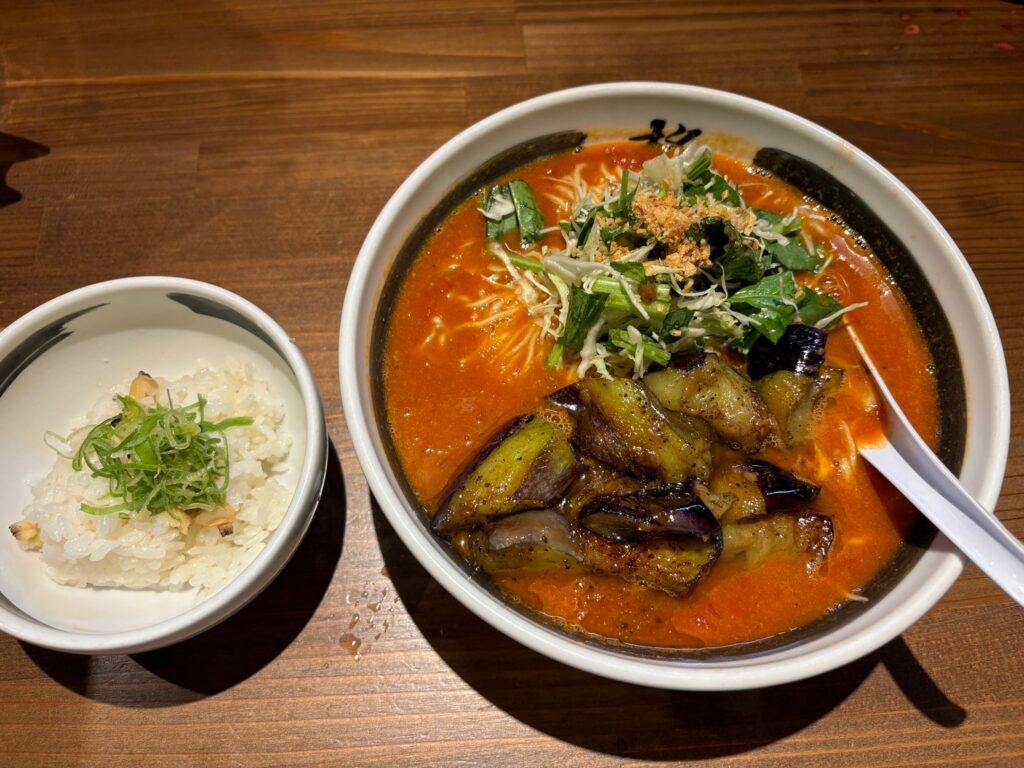
I ordered this alongside the tomato ramen. As the name says it is genuinely small—not a main item but something that sits quietly beside the bowl.
The clam flavour is not strong, and it does not compete with the ramen. For “the tomato ramen alone is a little light, but I do not want a full bowl of rice”, it is exactly the right size.
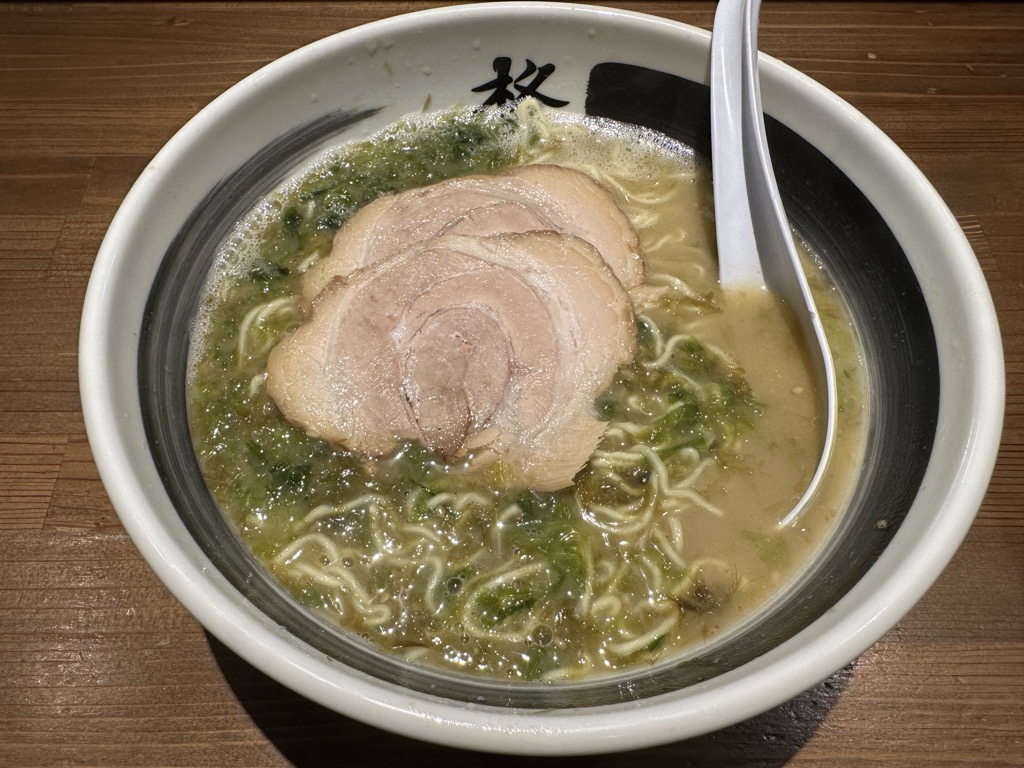
Aosa seaweed ramen
Direction
I had this on a different day. It points somewhere quite different from the tomato ramen—cleaner overall, with the aosa aroma at the front and a natural sense of the sea.
Eating it
The phrase that fits is “quietly good”, mouthful after mouthful. Nothing is showy, nothing jars as you drink the broth down, and it stays calm to the end.
It suits a tired day, or an evening out where you do not want anything stimulating.
Summary: is it worth going?
Ramen Hiiragi may not be a place to recommend to everyone. But for someone who arrives thinking “I want ramen that is unconventional but clearly considered”, it lands quietly.
I would not claim I will definitely return, but it is a place I expect to remember on a different sort of day.
Before you go:
- Closed Tuesdays (occasionally otherwise)
- 11:00–03:00, and to 05:00 on Fridays and Saturdays. Usable after drinking
- One minute from Kankō-dōri tram stop, in the Shianbashi area
- Only 13 seats, so expect to wait at peak times
- For a first visit: tomato ramen with extra aubergine, plus the small clam rice
Opinions will divide, which is precisely why it is worth eating once and deciding for yourself. If you are looking for a different kind of ramen experience in Nagasaki, keep it on the list.
Elsewhere in Nagasaki, I have written about Shokuenbo in Chinatown.