Short version: Hakobune (“The Ark”) is not for readers who want a clean resolution. The premise is extreme — nine people trapped in an underground structure, with roughly one week to identify a murderer before the water rises and kills everyone — but what stayed with me was not the satisfaction of a solved puzzle. It was being left to keep thinking.
My first thought on finishing was that this had been less a story about events than about the weight of a decision. Picking it up expecting catharsis will leave you off balance.
This article is built around what I actually felt while reading, so you can judge whether it suits you. No spoilers for the core of the story.
Sponsored
What kind of novel is it?
An orthodox mystery in which people sealed inside an underground structure must find a killer before the place floods.
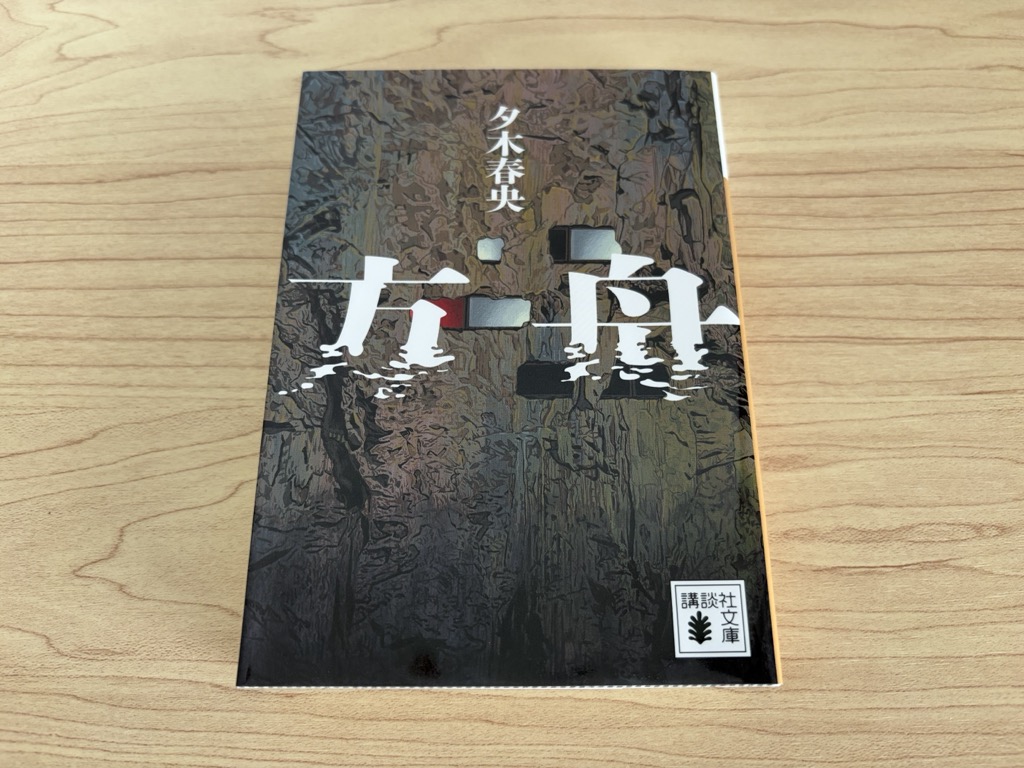
| Title | Hakobune (The Ark) |
|---|---|
| Author | Haruo Yuki |
| First published | September 8, 2022, Kodansha |
| Paperback | August 9, 2024, Kodansha Bunko (416 pages, 913 yen) |
| Recognition | No. 1, Shukan Bunshun Mystery Best 10 2022 (domestic); No. 1, MRC Grand Prize 2022; No. 2, Honkaku Mystery Best 10 2023; No. 7, Japan Booksellers’ Award 2023 |
The narrator visits a remote underground structure with university friends and a cousin, and ends up spending the night there alongside a family of three they happen to meet. An earthquake the next morning seals the entrance behind a boulder, and shifting ground starts letting water in.
Escape requires one person to be left behind. Then a murder happens. The killer should be the one sacrificed — and there is about a week to work out who that is. Deduction itself becomes the condition for survival.
The setup is extreme, but after the murder the book is largely people talking underground. There is no sustained action; there is a long stretch of the situation slowly getting worse. That gap between premise and texture defines how it reads.
What I was reading for
- The overall atmosphere and its temperature
- How the characters’ emotions move
- What lingers after finishing, more than what happens during
My axis is how it felt to read, not how clever the trick is. I will not be explaining the solution.
Sponsored
The air never fully tightens, and that is what unsettles
The atmosphere is neither continuously tense nor calm — it sits somewhere between.
They are sealed in with water rising, and yet they are not in constant panic. They eat. They make small talk. Which leaves a persistent question: is it safe to be this relaxed?
That discomfort became the tone of the whole book for me. Ordinary conversation continuing is scarier than shouting would be.
Because nothing lurches, you notice the shifts
There are few moments of emotional explosion. Instead, small hesitations accumulate quietly.
“That phrasing was slightly off.”
“That silence meant something.”
I spent a lot of time stopping to weigh things as I read. That care was both pleasant and slightly suffocating.
Having to choose one person changes the meaning of everything anyone says. A casual remark can function as an accusation, and the characters know it.
Sponsored
Understanding at a distance, not identification
This was closer to trying to understand the characters than to feeling with them.
I could not fully share their position, and I could not dismiss it either. I watched people making decisions under extreme pressure from the outside, the whole way through.
That distance suits the theme. Getting too close would make the book unreadable.
What lingered afterwards
There was no sense of relief on finishing. What I had instead was “how am I supposed to take this?” and some time spent sitting with it.
And that snag did not fade. I kept returning to it afterwards. That was the most memorable part of the experience.
This is a book that hands you space to keep thinking rather than an answer. The mystery does get solved; the reader’s feelings do not get settled. That structure is where opinions divide.
For another novel that leaves a question rather than an answer, I also wrote about Mizuki Tsujimura’s Goman to Zenryo.
Who it suits
| A good fit | Possibly not for you |
|---|---|
| Readers who like closed-circle mysteries | Readers who want to finish feeling resolved |
| Readers who prefer interiority to spectacle | Readers who prioritize pace and clear peaks |
| Readers who want an aftertaste worth sitting with | Readers who dislike a bitter finish |
| Readers comfortable without a clear rescue | Readers who need someone to identify with |
Picking it up purely because it is acclaimed can be disorienting at the end. Accept that, and the acclaim makes sense.
Verdict
For a stretch when you want quiet and aftertaste rather than momentum, I was glad to have read it.
It is not something to recommend universally. If this register suits you it lands hard; if not, it will not.
“I want a novel that makes me stop and think” or “I want emotional depth over spectacle” — on that basis, it is worth trying.
Summary
- Hakobune is an orthodox mystery by Haruo Yuki (Kodansha 2022; paperback 2024, 416 pages)
- No. 1 in the Shukan Bunshun Mystery Best 10 2022 and No. 7 in the 2023 Booksellers’ Award
- The premise: sealed underground, one week to give up a killer or everyone drowns
- Extreme setup, but mostly conversation after the murder — tension rather than action
- Conversation continuing normally is the frightening part
- Reading it means understanding at a distance, not identifying
- Not for readers who want resolution. What remains is a snag, not an answer