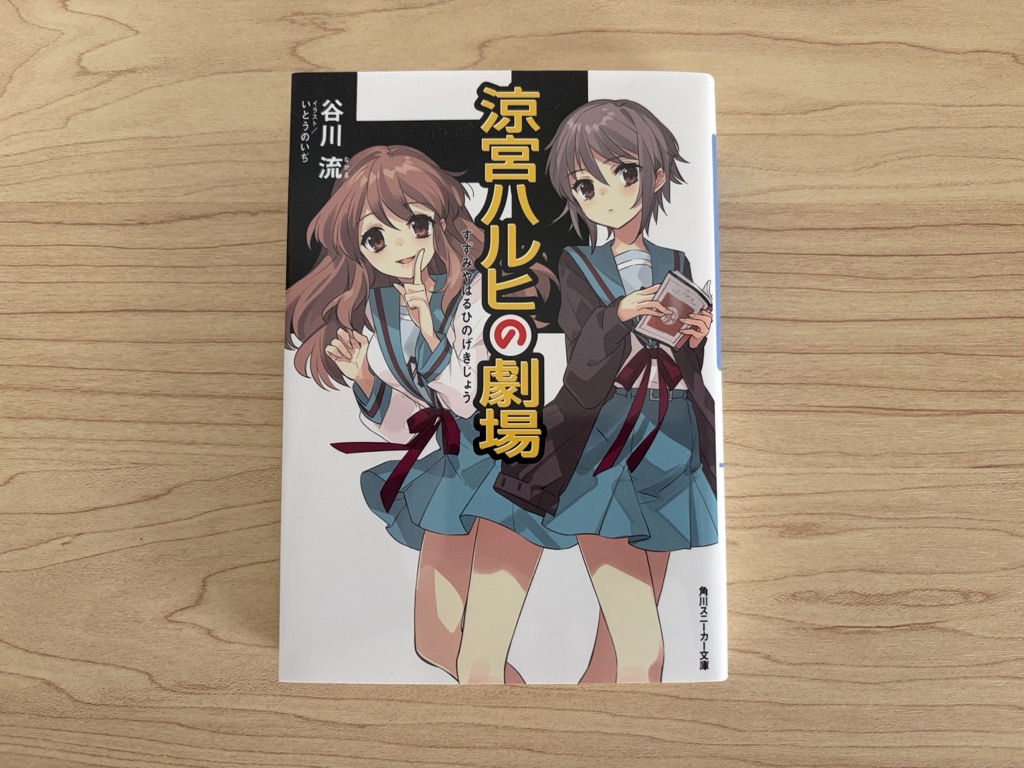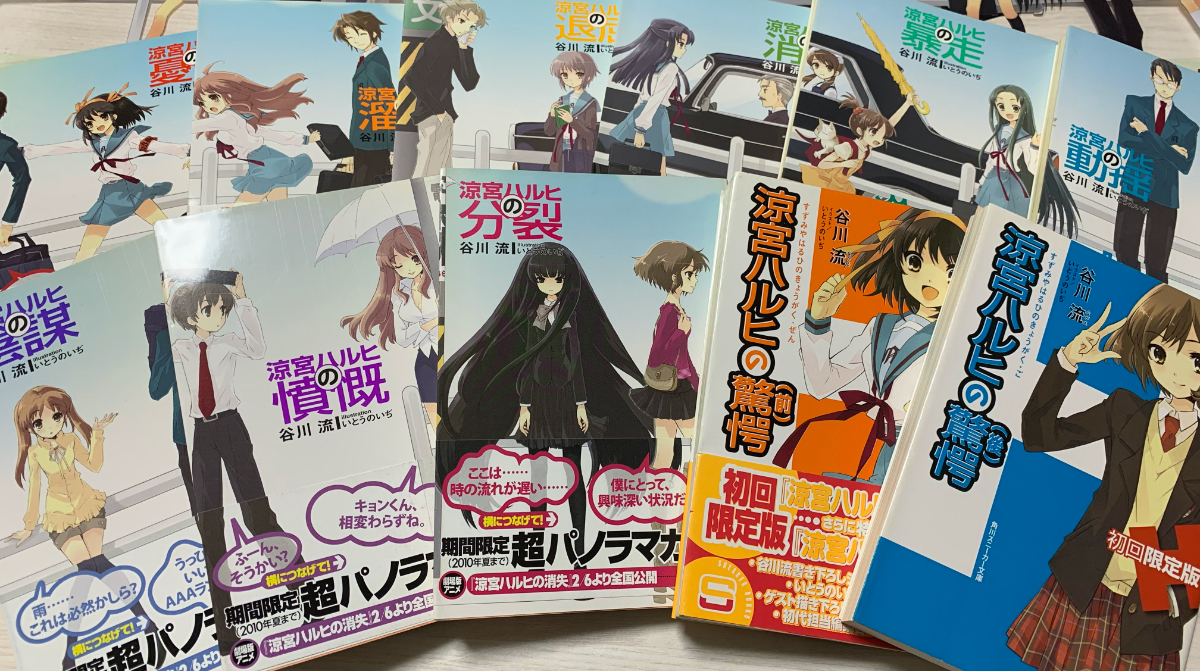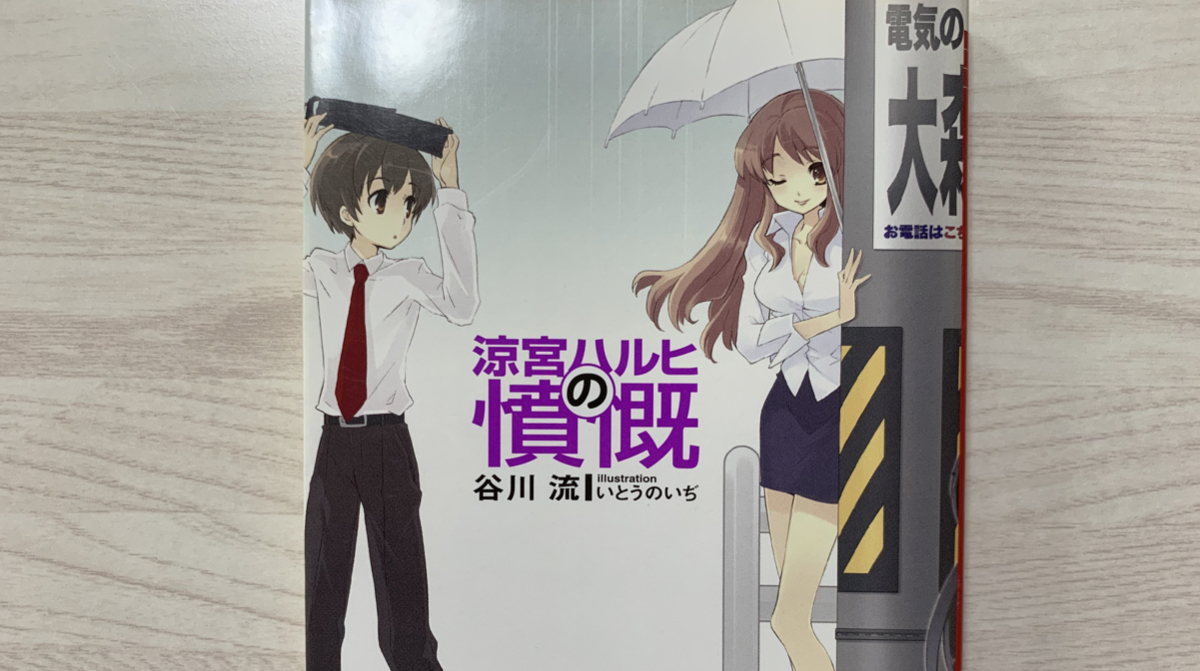
The Indignation of Haruhi Suzumiya (涼宮ハルヒの憤慨) occupies a slightly unusual position in the series. It does not push the overarching plot forward. It steps back and focuses on how the characters interact and how far the world can be played with in short form.
The short answer: nothing major moves, and the freedom of the short story format plus a small shift in Yuki Nagato make it worth reading. The tone is relaxed, sometimes playful, and never careless.
This article covers what role the volume plays, what the two stories do, and who will enjoy it.
Sponsored
1. What kind of book is The Indignation of Haruhi Suzumiya?
The short answer: it is the eighth volume of the series, a short story collection published on 1 May 2006 with two stories.
| Item | Detail |
|---|---|
| Author | Nagaru Tanigawa (谷川流) |
| Illustrator | Noizi Ito (いとうのいぢ) |
| Imprint | Kadokawa Sneaker Bunko (角川スニーカー文庫) |
| Japanese release | 1 May 2006 |
| Position | Volume 8 (short story collection) |
| Contents | Editor-in-Chief, Full Speed Ahead! / Wandering Shadow |
The previous book, The Intrigues of Haruhi Suzumiya, is a 440-page novel, so this two-story collection reads very light by comparison. It works less as a turning point and more as an expansion of the world.
2. What I paid attention to while reading
The short answer: I read for what the short format allows, not for plot progress.
Four things stood out.
- Creative freedom enabled by the short story format
- How clearly each character’s personality comes through
- Whether the stories leave an emotional or intellectual aftertaste
- How naturally Yuki Nagato’s changes are portrayed
Sponsored
3. Why does the short story format suit this volume?
The short answer: short stories allow risks that full-length novels avoid, and this book takes them.
Narrative voice can shift, structure can bend, and readers are more open to experimentation in a short piece. While reading, I often felt the author enjoying the process, and that sense of play carries through.
For longtime readers, the relaxed approach makes the book easy to enjoy without pressure.
4. Editor-in-Chief, Full Speed Ahead!: stories written by the characters
The short answer: the characters themselves contribute written pieces inside the story, and their personalities come through style alone.
The setup is that the SOS Brigade must prove it is a legitimate literary club by publishing a collection, with Haruhi Suzumiya installed as editor-in-chief.
Different voices, different temperatures
The short answer: even though everyone is “writing,” the tone differs sharply between Mikuru Asahina, Yuki Nagato and Kyon.
Mikuru Asahina’s writing keeps a gentle softness until Haruhi Suzumiya’s heavy-handed editing twists it into something off-balance. That contrast produces humour that feels intentional and self-aware.
Yuki Nagato’s quiet inner expression
The short answer: her contribution is not easy to interpret, and it reads as a rare glimpse into her internal state.
Rather than presenting information directly, it suggests emotion through abstraction. To me it felt less like something written by an information entity and more like something shaped by her time in the SOS Brigade.
Kyon’s characteristic distance
The short answer: his piece keeps a step back even when the subject is romance.
He leaves interpretation to the reader, which is true to his role as the series’ observer and narrator.
Sponsored
5. Wandering Shadow: classic Haruhi with added depth
The short answer: it starts as a light mystery about a haunting on a local dog walk and moves steadily into heavier thematic territory.
From everyday mystery to deeper reflection
The short answer: the gap between the opening and the conclusion is one of the series’ trademarks.
The story reads smoothly, and its final implications keep working after the book is closed.
Subtle growth in Yuki Nagato
The short answer: her responses differ slightly from earlier volumes, enough to signal change without drawing attention to it.
Because the shift is understated, it feels natural. For readers who have followed her since The Disappearance of Haruhi Suzumiya, it is deeply satisfying.
6. What stayed with me after reading?
The short answer: not an ending, but the atmosphere of the SOS Brigade itself.
The book avoids spectacle, and in doing so lets relationships and quiet character development take centre stage. It reads like a pause in the journey.
That pause does not last. The ninth volume, The Dissociation of Haruhi Suzumiya, changes the mood of the series completely.
7. Who is this book for?
The short answer: it rewards readers who want character nuance and disappoints readers who want plot.
| Likely to enjoy it | Likely to struggle with it |
|---|---|
| Readers who enjoy character interaction and dialogue | Readers looking for major revelations |
| Readers who prefer experimental, flexible storytelling | Readers who want intense narrative momentum |
| Readers watching Yuki Nagato’s gradual development | Readers not following the series closely |
8. Is it worth reading?
The short answer: yes, if you value character nuance and tonal experimentation over dramatic progression.
Readers seeking strong twists will find it subdued. For anyone interested in the quieter evolution of these characters, especially Yuki Nagato, and in the playful flexibility of short stories, it is a rewarding read.
For anyone who has followed the series closely, it offers a welcome moment to slow down.