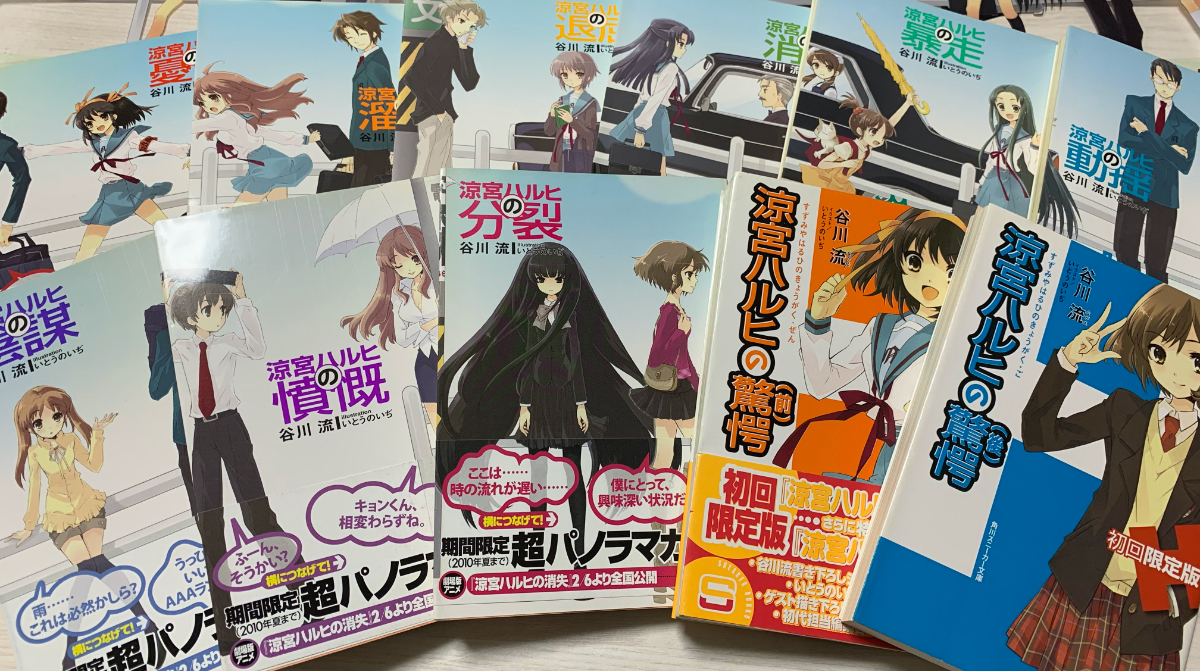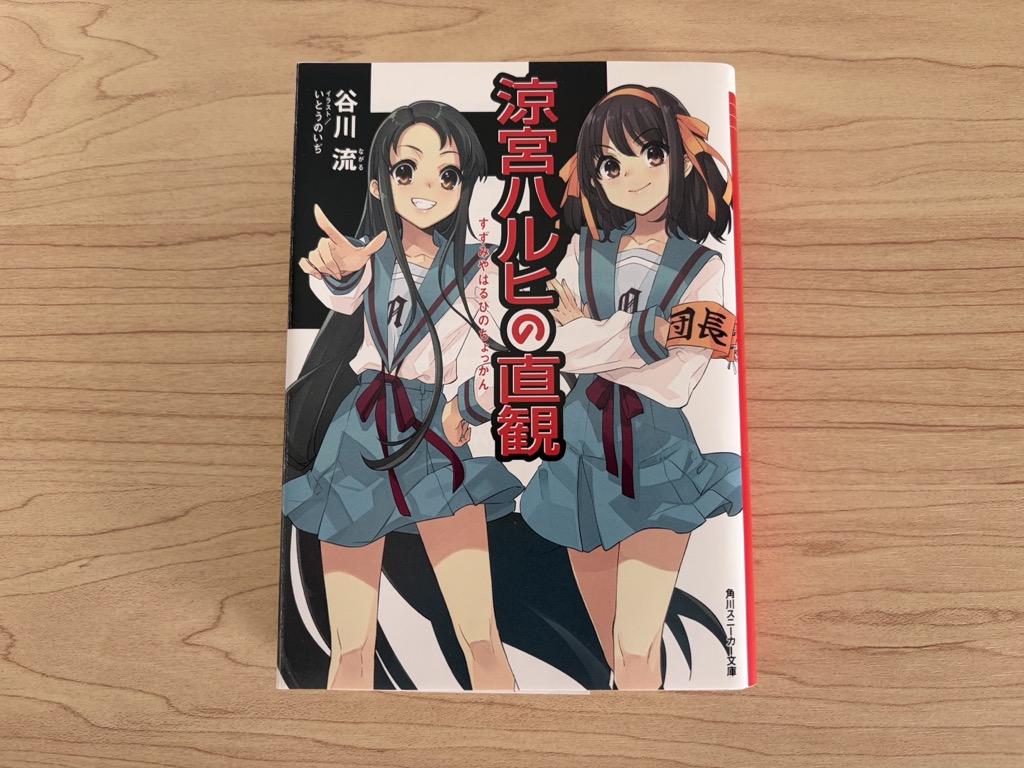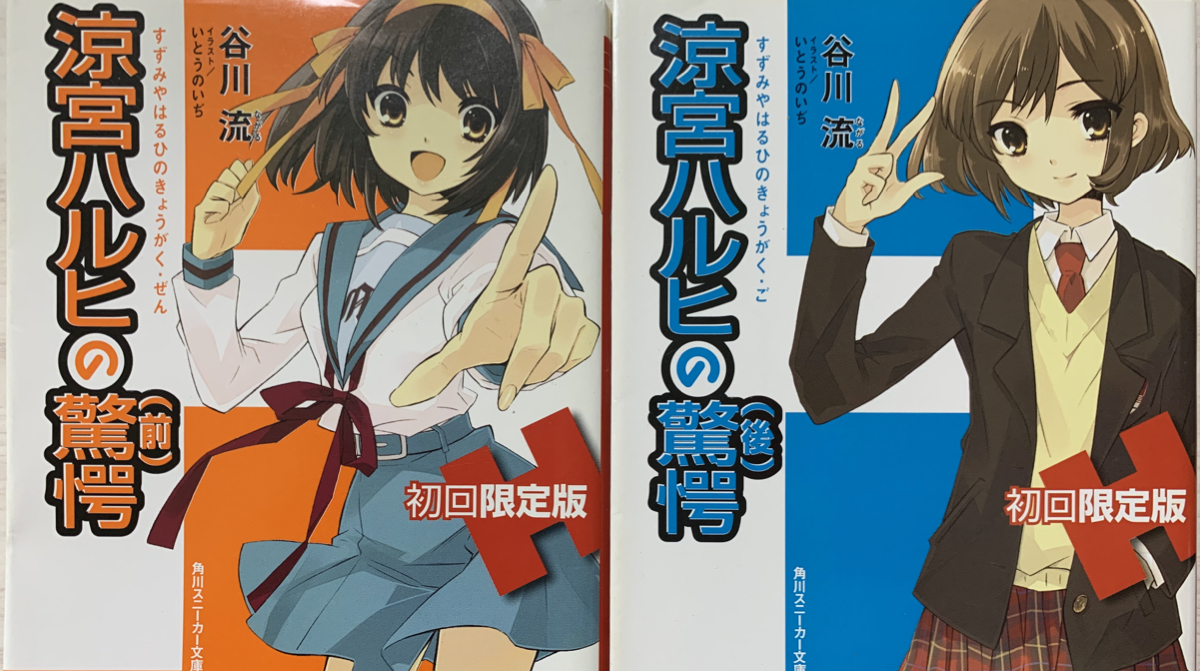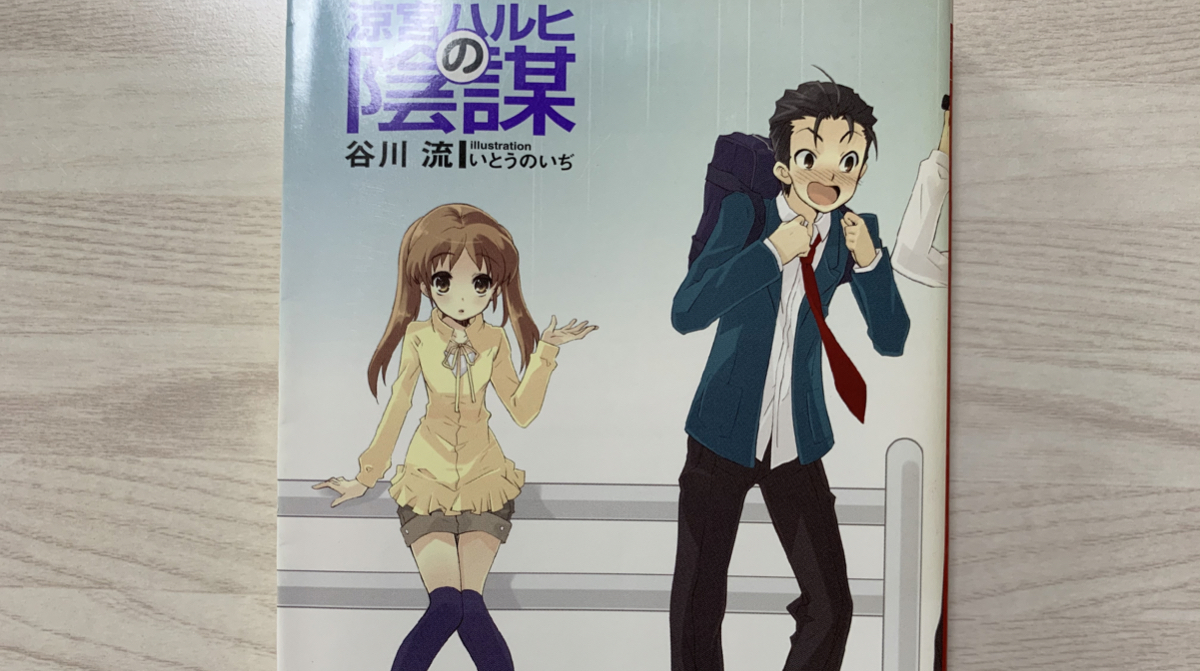
The Intrigues of Haruhi Suzumiya (涼宮ハルヒの陰謀) runs to 440 pages, and picking it up I assumed it would be a dense, heavy read.
The short answer: the pacing is smooth and I finished it far faster than expected. This novel does not rely on constant shocks or dramatic turning points, and it still leaves a strong sense of completion at the end.
This article covers what kind of story it is, where it sits in the series, and who is most likely to appreciate it. Major spoilers are avoided.
Sponsored
1. What kind of book is The Intrigues of Haruhi Suzumiya?
The short answer: it is the seventh volume of the series, a 440-page full-length novel published on 31 August 2005.
| Item | Detail |
|---|---|
| Author | Nagaru Tanigawa (谷川流) |
| Illustrator | Noizi Ito (いとうのいぢ) |
| Imprint | Kadokawa Sneaker Bunko (角川スニーカー文庫) |
| Japanese release | 31 August 2005 |
| Pages | 440 |
| Position | Volume 7 (full-length novel) |
The first volume runs 328 pages, so this is a noticeably thick book by the standards of the series. Coming straight after the short story collection The Wavering of Haruhi Suzumiya, it feels like a return to a proper novel.
2. What I paid attention to while reading
The short answer: I focused on character tone and emotional aftertaste rather than on how the plot mechanism works.
Four things stood out.
- The balance created by parallel everyday and non-ordinary storylines
- Moments where Haruhi Suzumiya feels less like a force and more like a normal high school girl
- Subtle emotional shifts in Yuki Nagato and Mikuru Asahina
- The clean feeling at the end, and the sense that the series is moving forward
How I approach book reviews here is set out in my blog policy and how I think about writing articles.
Sponsored
3. Who is this novel best suited for?
The short answer: it suits readers who like the slice-of-life side of the series, and feels calm to readers who want incident.
| Likely to enjoy it | Likely to struggle with it |
|---|---|
| Readers who enjoy the quieter, slice-of-life side of the series | Readers expecting nonstop dramatic incidents |
| Readers who appreciate small changes in relationships and distance | Readers who need constant escalation to stay engaged |
| Readers who prefer meaning that builds gradually | Readers who want one book to settle everything |
| Readers following closely since The Disappearance of Haruhi Suzumiya | Readers dipping in and out of the series |
Within the larger series this is a quietly pivotal installment rather than filler.
4. What makes the two parallel storylines work?
The short answer: one thread follows the everyday activities of the SOS Brigade, the other a time-related storyline involving Mikuru Asahina and Kyon.
By alternating between them, the novel reinforces a core idea of the series: beneath ordinary school life, another layer of tension is always running.
What stood out was how enjoyable the waiting became. You read minor moments expecting them to connect later, and when the resolution arrives it feels logical rather than confusing.
Sponsored
5. How is Haruhi Suzumiya portrayed here?
The short answer: far more human than the title led me to expect.
I assumed a more aggressive or chaotic version of her. Instead she hesitates, worries and occasionally looks uncertain.
Rather than someone who unconsciously reshapes the world, she often reads as a high school girl trying slightly too hard to do something meaningful. Because of that, the meaning of the title only lands near the end, and when it does it feels natural rather than forced.
6. What changes in Yuki Nagato and Mikuru Asahina?
The short answer: both move a small, deliberate step, without any announcement.
Yuki Nagato’s gradual shift
The short answer: there are moments where she chooses on personal intent rather than pure obligation.
Since The Disappearance, her behaviour has kept evolving in small, noticeable ways. The changes are understated, and precisely because of that restraint they carry weight. The novel trusts you to notice instead of explaining.
Mikuru Asahina and the time narrative
The short answer: she starts to feel that her presence has meaning.
Whenever Mikuru Asahina is involved, time travel enters the story, and here it adds depth rather than spectacle. She is still swept into chaotic situations, and she appears to gain a small measure of confidence through them.
7. What does this volume set up?
The short answer: positions and factions that were previously vague start to take shape.
The introduction of a clearly defined opposing force gives the sense that the series is entering a new phase. Not everything is resolved, and the remaining uncertainty is the point.
Those factions move properly in the ninth volume, The Dissociation of Haruhi Suzumiya.
8. Is it worth reading?
The short answer: yes, and it is one of my personal favourites in the series.
This novel values accumulation over spectacle. Everyday life and the non-ordinary blend naturally, and character emotions shift quietly but meaningfully.
What works for me is Haruhi Suzumiya’s unexpectedly human portrayal, the continued development of Yuki Nagato and Mikuru Asahina, and the clean feeling on the last page.
Readers wanting constant high-impact twists will find it subdued. If you follow this series for character evolution and subtle emotional progression, this volume is well worth your time.
The next book, The Indignation of Haruhi Suzumiya, is another short story collection and lets the tension out again.