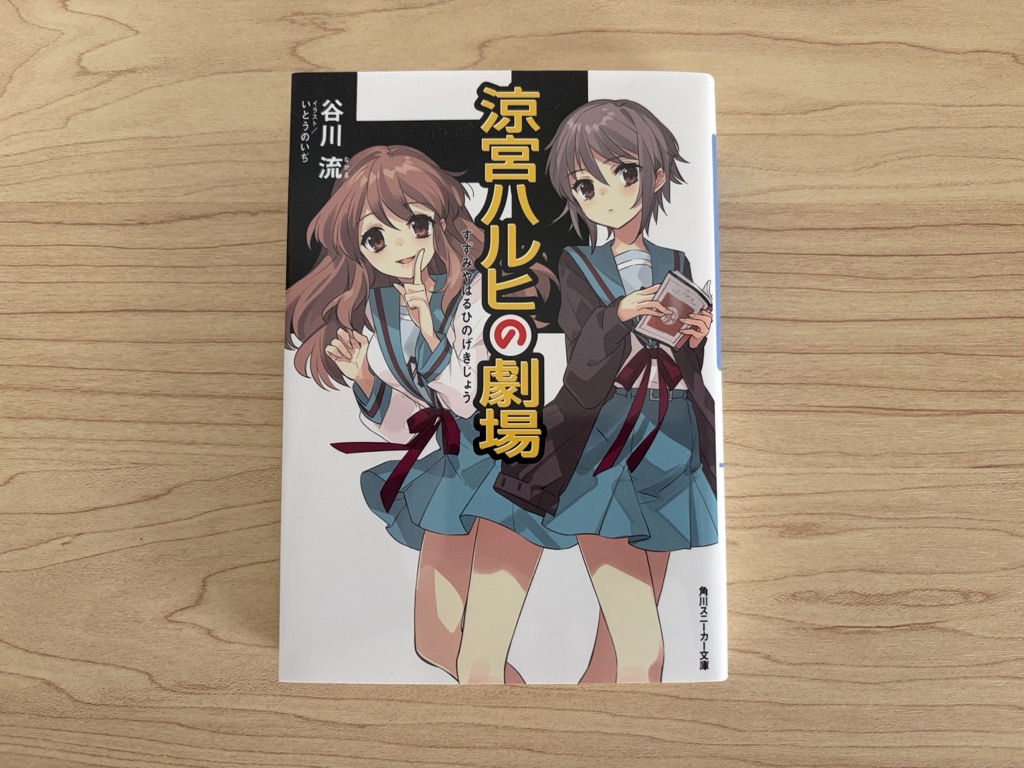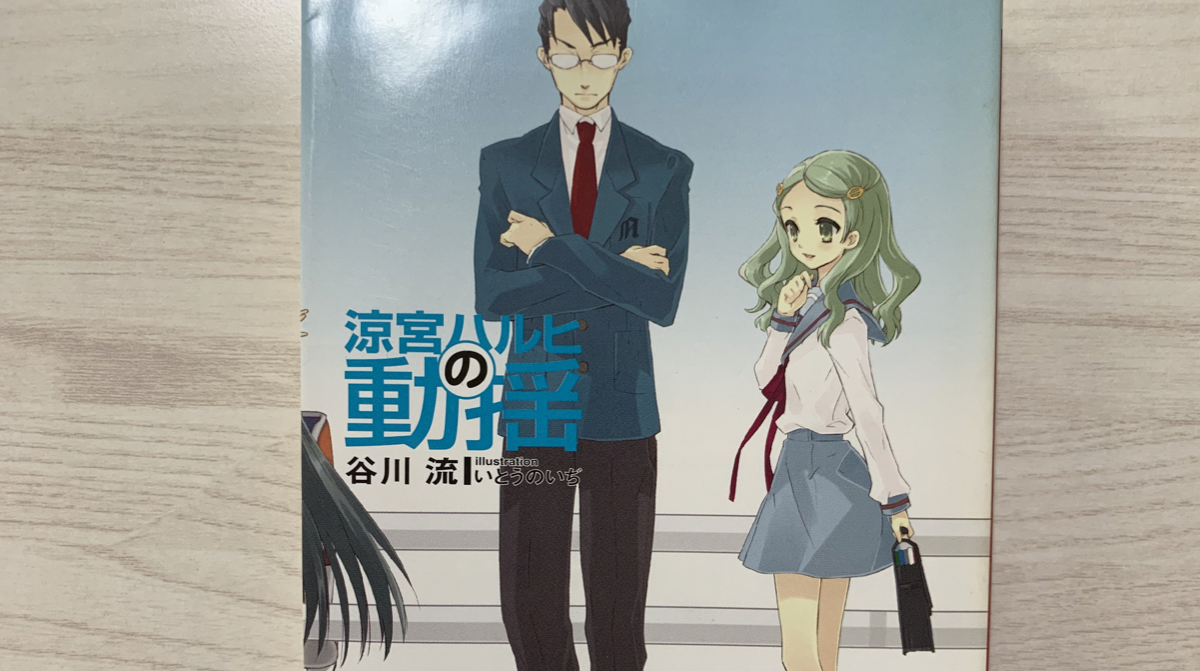
After finishing The Wavering of Haruhi Suzumiya (涼宮ハルヒの動揺), what stayed with me was not a shocking twist. It was a quiet sense of emotional displacement: small shifts in characters who look unchanged on the surface.
The short answer: this is a collection that gets better the longer you have been reading the series. Nothing seems to happen, and something has undeniably changed by the end.
This article covers what makes this volume distinct and who it suits. It is written for readers already familiar with the series.
Sponsored
1. What kind of book is The Wavering of Haruhi Suzumiya?
The short answer: it is the sixth volume of the series, a short story collection published on 31 March 2005 with five stories.
| Item | Detail |
|---|---|
| Author | Nagaru Tanigawa (谷川流) |
| Illustrator | Noizi Ito (いとうのいぢ) |
| Imprint | Kadokawa Sneaker Bunko (角川スニーカー文庫) |
| Japanese release | 31 March 2005 |
| Position | Volume 6 (short story collection) |
| Contents | Live Alive / The Adventures of Mikuru Asahina: Episode 00 / Love at First Sight / Where Did the Cat Go? / The Melancholy of Mikuru Asahina |
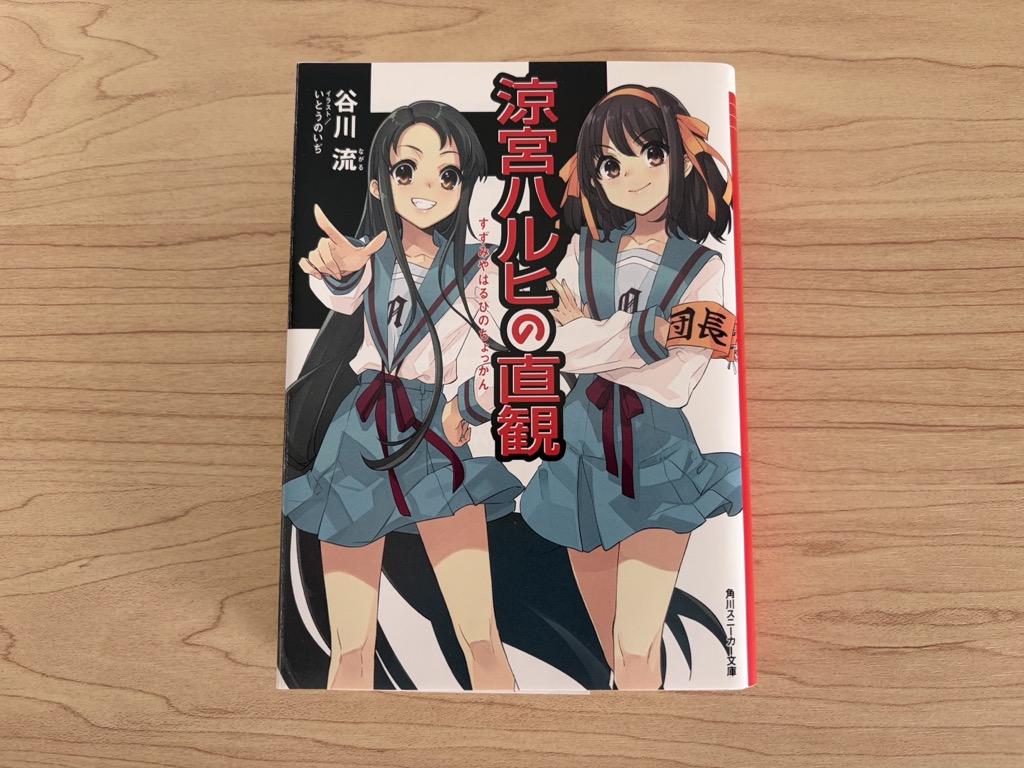
The previous collection, The Rampage of Haruhi Suzumiya, concentrated on Yuki Nagato. This one spreads its attention across all five members instead.
2. What I paid attention to while reading
The short answer: I read for instability, and for the moments where characters slip slightly out of their usual positions.
Each character largely behaves as expected. Haruhi Suzumiya stays impulsive, Yuki Nagato quiet, Mikuru Asahina uncertain, Itsuki Koizumi composed, and Kyon observant and ironic. In each story their default positions shift a little, and the deviations are deliberate.
Rather than pushing the plot, this volume deepens what is already there. Every character steps half a level further into themselves. That subtle progression is what gave the book its weight for me.
Sponsored
3. Live Alive: when the ordinary flips
The short answer: a school festival story in which everyday life turns extraordinary at a single point.
Even without the animated adaptation, the original prose communicates the surge of energy that disrupts the ordinary atmosphere.
What stood out was not the event itself but the switch. Haruhi Suzumiya’s momentum, and the way everyone else instinctively adapts to her chaos, compresses the core dynamic of the series into one story.
For readers outside Japan: the school festival (bunkasai) is a student-run event, so a stage performance like this one is organised entirely by the students themselves.
4. The Adventures of Mikuru Asahina: Episode 00, and Kyon’s accumulated fatigue
The short answer: on the surface this is Mikuru Asahina’s episode, and I read it as a record of Kyon’s exhaustion.
This is the finished form of the amateur film the SOS Brigade shot in the second volume, The Sigh of Haruhi Suzumiya.
As Mikuru Asahina visibly struggles, Kyon absorbs the work of keeping things coherent: explaining, correcting and compensating. The light tone does not erase the sense that being the permanent mediator has a cost.
That perspective only becomes visible after spending time with the series, which is what makes this short story quietly revealing.
Sponsored
5. Love at First Sight: Yuki Nagato’s subtle transformation
The short answer: a minor incident forces Yuki Nagato to confront her own internal response.
Being the target of someone’s affection is the whole of the plot. The shift it produces is understated and real: she moves from a being who lacks emotion to one who has it and does not yet know how to interpret it.
There is no dramatic declaration. The change settles quietly, which makes it land hardest for readers who have followed her closely.
6. Where Did the Cat Go?: Itsuki Koizumi’s quiet struggle
The short answer: this mystery is more about Itsuki Koizumi’s role than about the puzzle.
Koizumi usually appears flawless. This episode reveals the unseen effort behind that composure. Even with extraordinary abilities, he relies on careful preparation and ordinary labour, and the contrast carries irony and a little melancholy.
The mystery itself is well built, which says something about how comfortably Nagaru Tanigawa moves between genres.
7. The Melancholy of Mikuru Asahina: the quiet weight at the end
The short answer: this story avoids dramatic events altogether and focuses on Mikuru Asahina’s powerlessness.
She is a time traveller who cannot act freely in the present. Her frustration is not exaggerated. It simply exists, quietly and persistently.
Restrained in scope, this story still does real work in reinforcing her emotional foundation for the rest of the series.
8. Who is this volume for?
The short answer: it rewards long-term readers and underwhelms newcomers.
| Likely to enjoy it | Likely to struggle with it |
|---|---|
| Readers who appreciate gradual character development | Readers looking for high-impact plot twists |
| Readers who enjoy watching relationships and emotional balance shift | Readers using this as their entry point to the series |
| Readers who have followed the series long enough to notice small changes | Readers who want each book to move the plot forward |
9. Is this volume worth reading?
The short answer: yes, if you already care about this series.
It does not rely on spectacle. It refines what is already there: emotions, tensions and quiet transformations.
If you enjoy stories where nothing seems to happen and something has undeniably changed, this one will land. For long-term readers it works slowly and effectively.
The next volume, The Intrigues of Haruhi Suzumiya, returns to a full-length novel and picks up the instability from the plot side.