What Lingers After the Diagnosis: Reading 『The Phantom Ward』 in the Ameku Takao Medical Mystery Series
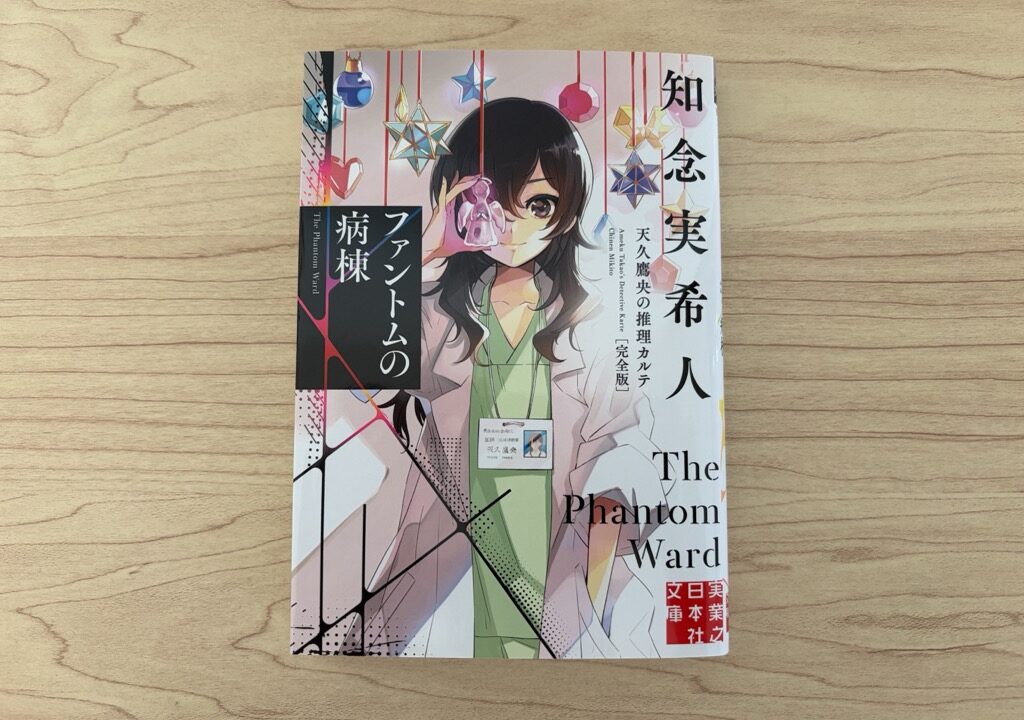
This article examines what remains after reading The Phantom Ward, focusing less on plot resolution and more on the atmosphere, unease, and emotional texture left behind—especially through the character of Ameku Takao and the hospital ward setting.
Who this article is for:
This piece is for readers interested in medical mystery novels who value mood, ambiguity, and restrained storytelling over clear-cut answers and dramatic emotional payoff.
I didn’t immediately walk away from this book remembering the twists of the mystery. Instead, what stayed with me were fragments of atmosphere: the closed-off hospital ward, the clinical precision of medicine, and the quiet presence of things that resist explanation. None of these elements were aggressively emphasized, yet more than once I found myself slowing down mid-page, unsettled in a way that was difficult to name.
Before reading, I understood the basics. This novel belongs to the medical mystery genre and is part of a series centered on Ameku Takao, a physician defined by extraordinary diagnostic ability. I knew the author, Mikito Chinen, is known for blending real-world medical practice with deductive reasoning, and that the series consistently operates at the intersection of healthcare and mystery.
Even with those expectations firmly in place, the experience of reading suggested that the story’s true center of gravity lies somewhere else—away from the obvious “medicine × puzzle-solving” framework.
1. A Hospital Ward That Never Feels Stable
From the very beginning, the ward is portrayed as an uneasy space. Its medical functions are clearly explained, yet it never feels reassuring. As I read, I couldn’t immediately articulate why—it was simply the persistent sense that something here was off.
Hospitals are supposed to be environments governed by rationality: test results, symptoms, diagnoses, treatment plans. Everything is categorized, labeled, and explained through language and data. Against that backdrop, the ambiguity implied by the word phantom becomes deeply unsettling. Are the events supernatural, or are they misinterpretations? The story refuses to commit either way for a long stretch of time, gradually eroding the reader’s sense of footing.
This instability is not accidental. Rather than fear, it is the unresolved state itself—the fact that something remains unexplained—that propels the reading experience forward.
2. The Emotional Temperature of Ameku Takao
Ameku Takao is established throughout the series as a genius diagnostician: exceptional knowledge, exceptional reasoning, and notable difficulty in human relationships. That reputation precedes her.
What stood out to me here was not her dialogue or deductions themselves, but the emotional distance she maintains from those around her. She approaches the strange events in the ward with unwavering rationality. And precisely because of that composure, the anxiety and confusion of others become more visible.
While reading, I found myself thinking that she is not a character who offers comfort. That observation didn’t register as criticism. In fact, her refusal to engage emotionally feels appropriate for this story. Emotional reassurance would dilute the tension; methodical accumulation of facts sustains it.
By anchoring the narrative with Ameku at its center, the novel keeps its emotional temperature remarkably constant—and that constancy only amplifies the ward’s sense of wrongness.
3. Medical Explanations—and What Slips Through Them
The medical explanations in this book are clear and carefully handled. Even when technical terms appear, the narrative makes an effort not to leave non-specialist readers behind. As someone without medical training, I rarely felt confused simply due to lack of knowledge.
Yet not everything is explained. Certain gaps feel deliberate. This is where the novel becomes uncomfortable—and interesting. Each rational explanation briefly promises closure, only for another unresolved element to appear shortly after.
This repeated disruption subtly alters the reader’s rhythm. Just as you begin to settle, something else resists being neatly resolved.
4. Smooth Prose, Persistent Friction
On the surface, the book is very readable. Dialogue is frequent, pacing is brisk, and scenes move efficiently. Ironically, that readability makes the moments of friction more noticeable.
The friction isn’t about plot speed—it’s about emotional processing. Events occur, explanations follow, and the story moves on, sometimes before the reader has fully decided how to feel about what just happened.
Some readers may interpret this as emotional thinness. Others may appreciate the restraint. I finished the book without firmly landing on either side.
5. What Remains After Finishing
Time has passed since I finished the novel, and I’m not left with a clear conclusion or a strong emotional high. Instead, what lingers are impressions: the ward’s atmosphere, Ameku Takao’s position within it, and the shifting boundary between what is explained and what is not.
Readers seeking clean mystery resolutions may find this frustrating. Those intrigued by ambiguity within a realistic medical setting may find it quietly compelling.
I wouldn’t recommend this book indiscriminately. But for readers who find comfort in stories that do not over-explain themselves, it may be worth exploring. What stays with you afterward will likely vary significantly—and that variability feels intentional.
Although this novel is one entry in the Ameku Takao Medical Mystery series, it stands on its own in terms of atmosphere and character portrayal. Whether to continue the series probably depends on how you respond to the lingering roughness it leaves behind. I’m still undecided myself.