A Kakuchi Discovery in Tenjin and Daimyo: A Perfect Glass of Sake and Small Plates at Kotani Shuho
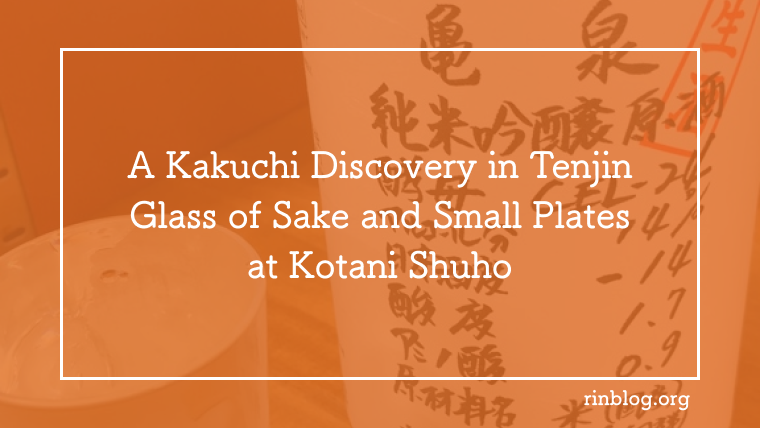
This article explains what it’s actually like to drink sake at a traditional kakuchi—a standing bar inside a liquor store—in the Tenjin–Daimyo area of Fukuoka, based on firsthand experience rather than reputation or hype.
It’s written for readers who enjoy sake, are curious about Japanese drinking culture, or want a low-pressure place to explore different styles of sake without committing to a full sit-down meal.
Before visiting, I understood the basic idea: this was a liquor store with a small standing area where you could order sake by the glass along with simple food. I imagined a place you drop into briefly, choosing one drink at a time rather than settling in for hours.
What I didn’t expect was how naturally the experience created pauses—small, comfortable gaps that let me focus on choosing, tasting, and deciding when I was done.
1. The First Glass Set the Tone Immediately
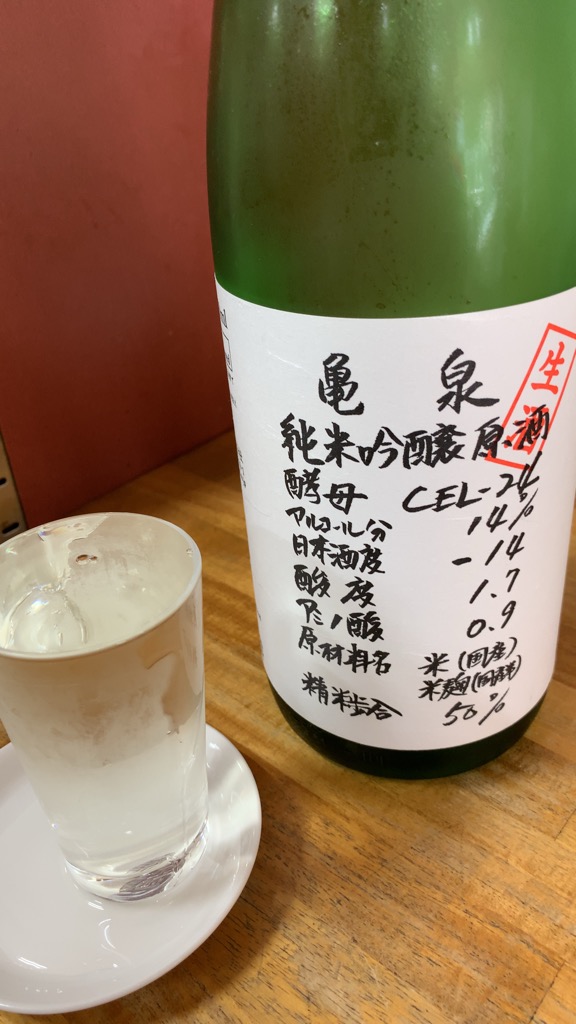
I started with a fruity, aromatic sake known for its gentle sweetness. I chose it intentionally as a first glass, expecting something approachable—and it delivered. The aroma was clear, the flavor easy to understand, even for someone who doesn’t analyze sake professionally.
Drinking this style of sake while standing made a difference. There was no pressure to “evaluate” it seriously. I could simply focus on how it tasted. That’s when it clicked: this was a place where you didn’t need to overthink anything.
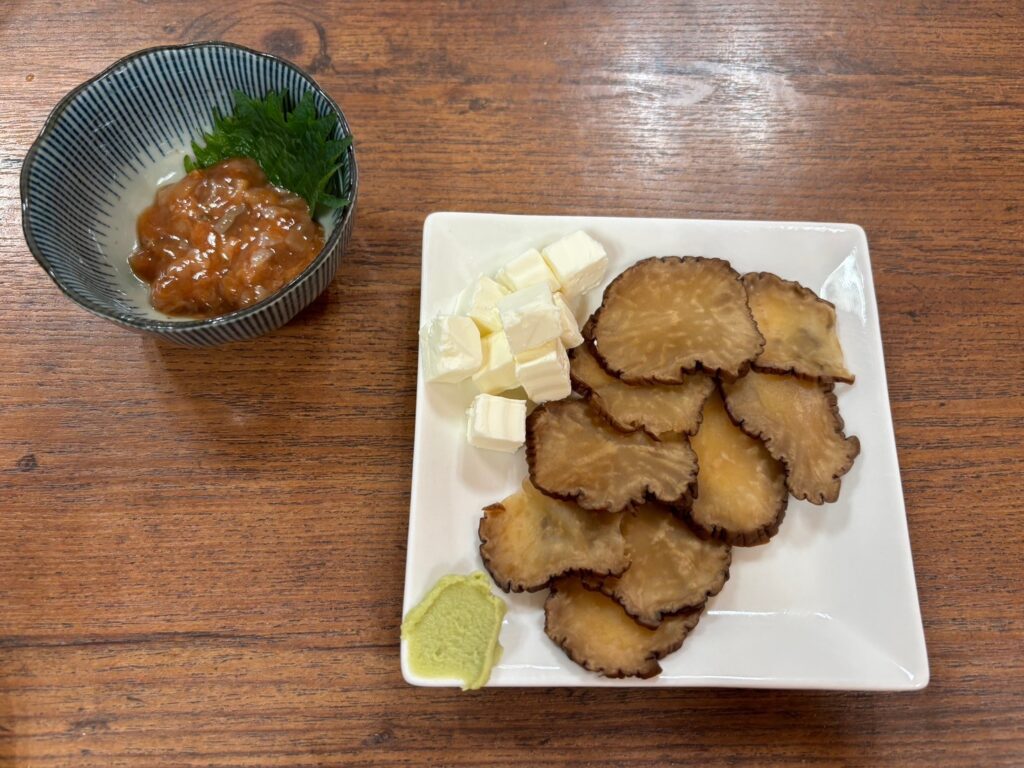
The first food pairing was a fermented tuna delicacy with strong salinity and depth—clearly designed to be eaten with sake, not on its own. Taken in small bites, it amplified the sweetness of the drink. Alternating between glass and plate felt natural.
To contrast that intensity, I added smoked pickles with cream cheese. The smoky aroma and richness worked as a reset, helping shift my palate between sips.
2. Changing the Sake Changed How I Drank
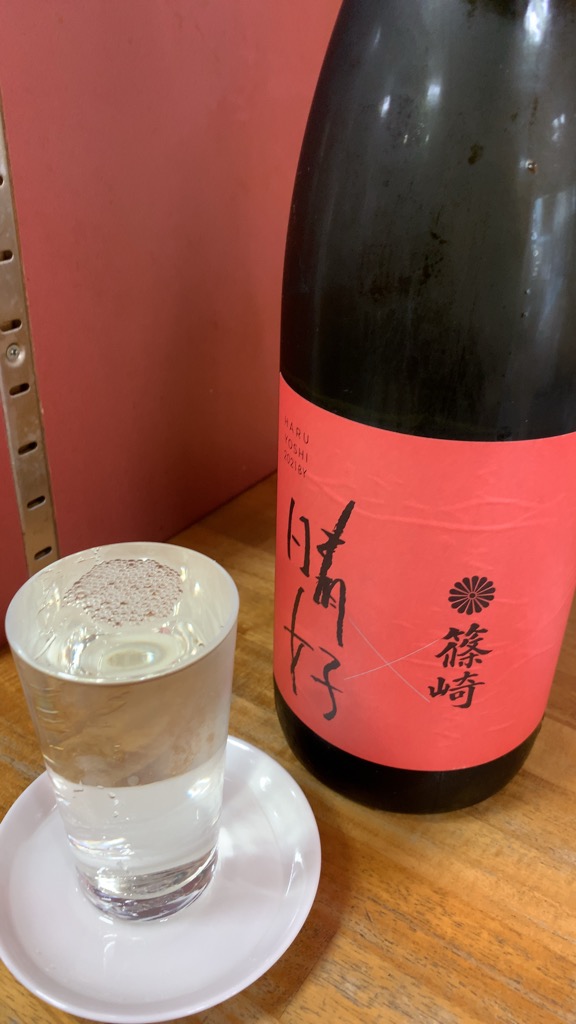
For the second glass, I chose a calmer, more restrained sake. It wasn’t sweet-forward; instead, it lingered quietly after each sip. Without realizing it, my pace slowed. I found myself drinking without food for longer stretches, letting the aftertaste fade before the next sip.
That kind of drinking isn’t guaranteed in a standing bar—but it worked here. The selection supported it.
By this point, I’d also relaxed into the space itself. Prices were clearly set per glass, and orders were pay-as-you-go. That structure lowers the mental barrier to trying “just one more.” Choosing sake became part of the enjoyment, not a decision you had to justify.
3. A Simple Dish That Left a Strong Impression
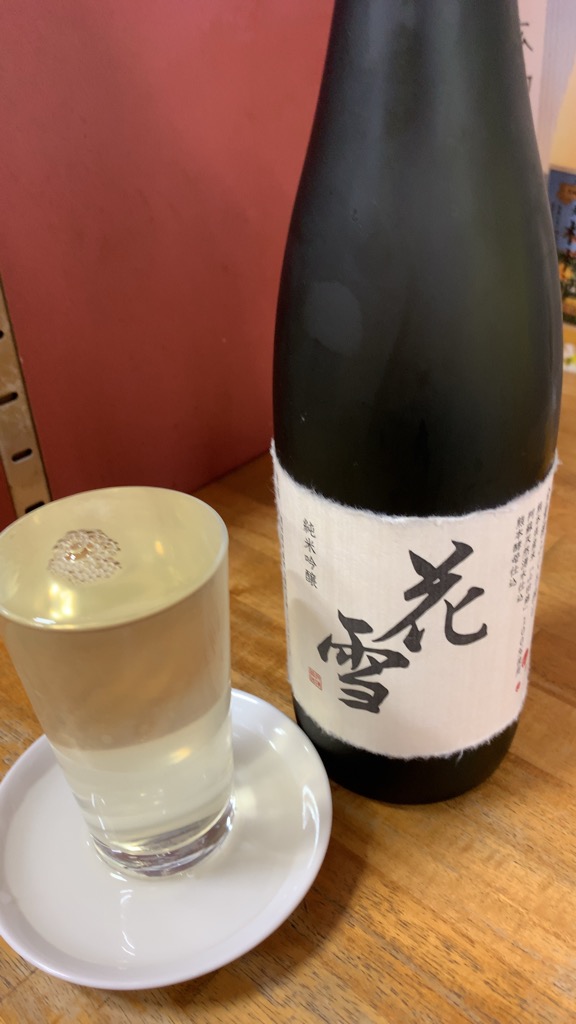
Next, I chose a softer, less assertive sake and paired it with a small plate of yakisoba. This wasn’t a heavy closing dish—it felt more like something to nibble between drinks. The portion was modest, intentionally so, and it didn’t interrupt the standing rhythm of the place.
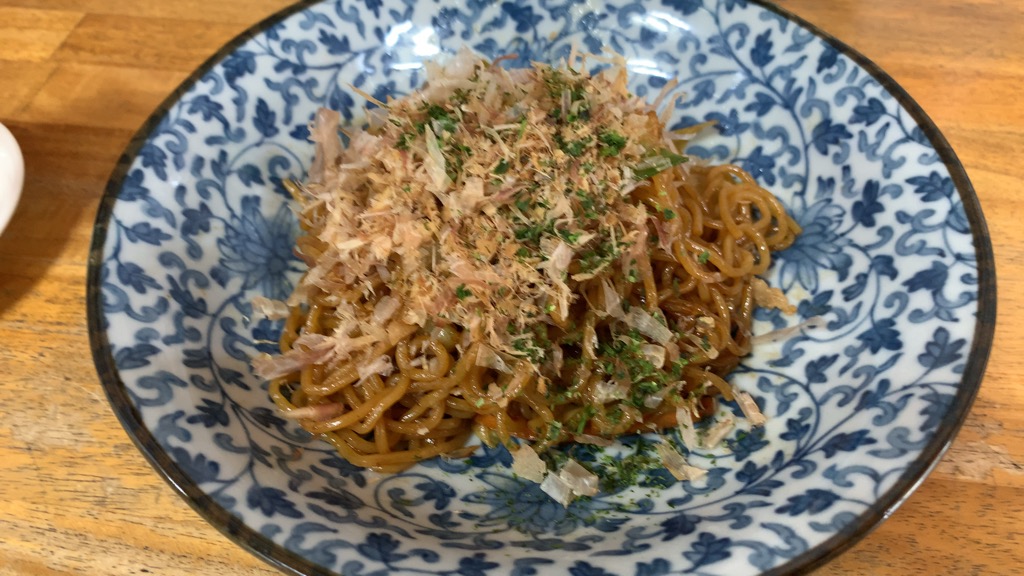
The savory aroma of the noodles and sauce briefly reset my palate. It wasn’t about eating until full; it was about staying comfortable while continuing to drink. This combination fit a very specific moment: when you’re not done drinking, but your body wants something grounding.
4. What Lingered Wasn’t Heaviness, but Aftertaste
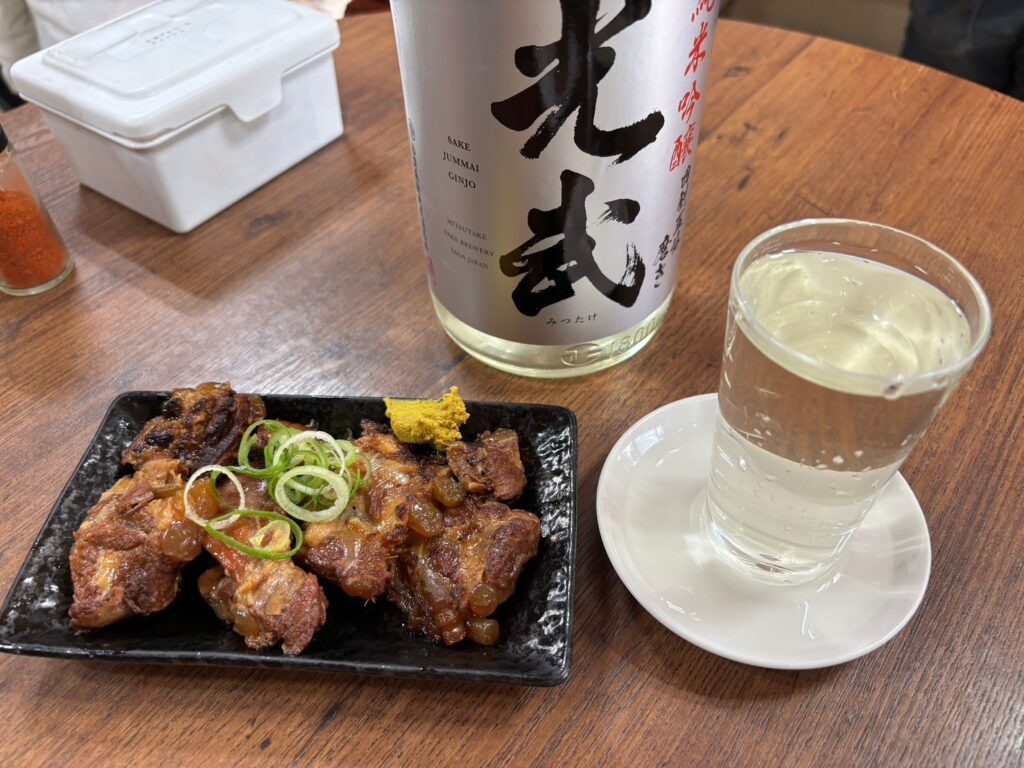
The final pairing was a crisp, umami-driven sake with grilled pork cartilage. The sake held its presence even alongside food, while the dish rewarded slow chewing—texture and aroma unfolding gradually.
When I finished, I wasn’t full in the usual sense. Instead, there was a clean sense of closure. I stopped not because I had to, but because it felt right. That’s one of the strengths of the kakuchi format: you choose your ending, one item at a time.
5. What Became Clear After Leaving
Looking back, this wasn’t a place to drink a lot of sake. It was a place to enjoy the act of choosing sake.
No single dish or bottle dominated my memory. What stayed with me was the flow—the way drinks and food connected, and how naturally I could adjust my pace.
People who love sake will appreciate the selection, but even those without deep knowledge can drink comfortably here. On the other hand, if you’re looking to sit down, relax, and stay for hours, a different type of bar may suit you better.
For me, it’s the kind of place I’d happily return to when I have a little time in Tenjin and want just one well-chosen glass.
Shop Information
Name
Kotani Shuten
Type
Kakuchi (standing sake bar inside a liquor store)
Location
Daimyo, Chuo Ward, Fukuoka City, Japan
Nearest Station / Access
Tenjin area / Walking distance from Akasaka Subway Station
Opening Hours
From around midday to evening (hours vary by day)
Closed
Sundays
Price Range (Approx.)
Sake: from a few hundred yen per glass
Small dishes: around a few hundred yen each