A Quiet Aftertaste of Missed Connections『Aftershock of the Painful Love』
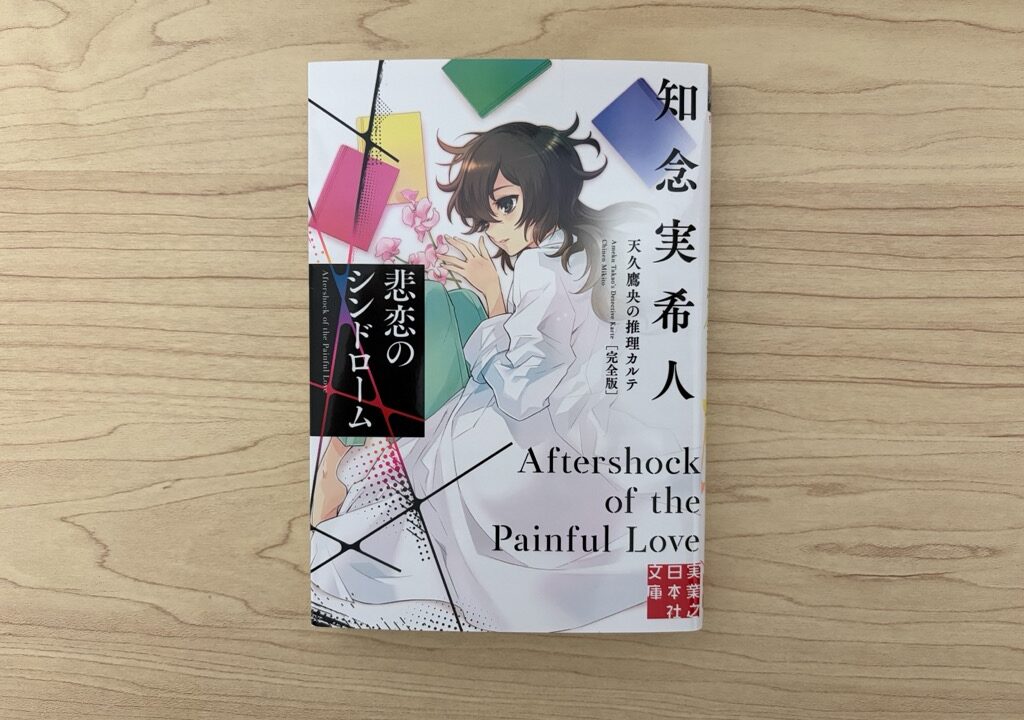
Some time has passed since I finished reading this volume, yet what lingers in my mind is not the case itself, but the emotional distance between the characters.
When I look back on this story, it isn’t a dramatic reveal or a shocking twist that stands out. Instead, what stays with me are the things left unsaid, and the choices that were never taken. Even while reading, I often found myself pausing—not because the plot was unclear, but because certain moments quietly demanded reflection rather than momentum.
This article explains how Hiren no Syndrome shifts the focus of the Ameku Takao series from intellectual problem-solving to emotional dissonance, and why that shift leaves an unresolved aftertaste.
This is for readers who are familiar with medical mystery fiction and are interested in how character relationships, not just logic, can shape the impact of a story.
1. A Medical Mystery Where Emotion Moves to the Foreground
This novel is part of the Ameku Takao’s Diagnostic Chart series, set once again in a hospital environment and centered on Ameku Takao, a diagnostician who approaches cases through medical knowledge and strict reasoning. As with other entries in the series, illnesses, symptoms, and clinical logic form the backbone of the mystery.
Structurally, the case follows the familiar framework of medical deduction. However, as I read on, my attention gradually shifted away from the mechanics of the case and toward the emotional turbulence of the people involved.
The word “tragic love” appears in the title, so I expected a story built around romance. What I found instead was something quieter: emotions that never quite aligned, and relationships whose small misalignments eventually cast a shadow over the incident itself. Rather than a melodramatic love story, this felt like a study of how unresolved feelings can accumulate consequences.
2. Why Ameku Takao Feels Colder Than Usual in This Volume
Ameku Takao is portrayed, as always, as a character who prioritizes facts and logic over emotion. In this story, however, that approach often comes across as “correct, but not comforting.”
She does not ignore other people’s feelings. She understands them. Yet she chooses not to step into them.
Or perhaps she decides that stepping in is unnecessary.
As a reader, I could logically accept her stance, but emotionally, it left me unsettled. From the perspective of solving the case, her distance is justified. From the perspective of human connection, there are moments where emotions seem quietly abandoned. That tension is never resolved, and I believe that is intentional.
3. How the Meaning of “Tragic Love” Changes After Reading
The relationships depicted in this story are not doomed from the beginning. On the contrary, they feel like connections that could have worked under slightly different circumstances. The tragedy unfolds gradually, through small choices that drift, almost imperceptibly, toward a point of no return.
While reading, I repeatedly caught myself thinking, “If only they had chosen differently here.” But this was not a feeling of blame. It felt closer to recognizing patterns of judgment and hesitation that people make in real life.
By the time I finished the book, the phrase “tragic love” no longer meant heartbreak in a romantic sense. It came to represent something broader: the loss of a possibility—the future where mutual understanding might have existed, but never did.
4. A Case That Is Solved, Yet Emotionally Unsettled
As a medical mystery, the case is properly resolved. The explanations are thorough, and the facts are clearly laid out, in line with what the series promises.
And yet, as I read the resolution, I felt emotionally out of sync.
The mystery is solved.
The truth is revealed.
Still, the emotional weight has nowhere to settle. This lingering discomfort does not feel like dissatisfaction. It feels more like a quiet acknowledgment that some things cannot be neatly processed, even when all the answers are known.
5. Whether I Would Recommend This Book — With Some Hesitation
If you read the Ameku Takao’s Diagnostic Chart series primarily for sharp logic and decisive medical reasoning, this volume may feel different. The focus on emotional misalignment makes the reading experience heavier than usual.
That said, for readers who want to see Ameku Takao from another angle—as a figure whose rational correctness sometimes fails to heal—this book leaves a strong impression.
I could not immediately say that I “liked” it after finishing. Yet it is a story I have found myself revisiting in thought, long after closing the book.
I would not strongly recommend it to everyone. But if you are looking for a story that leaves a subtle, unresolved tension behind rather than a clean sense of closure, Hiren no Syndrome delivers exactly that kind of aftertaste.