If you want to visit a Japanese oyster hut in Itoshima, Fukuoka without renting a car, Kaki House Maruhachi at Funakoshi Fishing Port is the one to pick. I have been three times since moving to Fukuoka, and the reason is always the same three points.
Most oyster huts in Itoshima grill over gas. Maruhachi uses charcoal. It is also reachable from Hakata or Tenjin by train and bus, so you can drink beer without worrying about driving. On top of the grilled shellfish, the menu has seafood rice bowls—squid, salmon roe, sea urchin, tuna negitoro—at roughly 550 to 650 yen, which is unusual for this kind of place.
The interior has been renovated, with partitions between tables and clean restrooms. After visiting many oyster huts over the years, that comfort is what keeps bringing me back. Below is what I actually ate, how to get there without a car, and what to bring with you.
Sponsored
Kaki House Maruhachi: address, hours, and season
The short version: Maruhachi is a seasonal restaurant open roughly from mid-October to mid-April, serving 10:00–17:00 with last order at 15:30. Reservations are not accepted on weekends and holidays, so during busy months you should aim for opening time.
| Name | Kaki House Maruhachi (カキハウス マルハチ) |
|---|---|
| Address | 415-17 Shima Funakoshi, Itoshima, Fukuoka 819-1332 (Funakoshi Fishing Port) |
| Phone | 092-328-2848 |
| Hours | 10:00–17:00 (last order 15:30) |
| Closed | Irregular |
| Season | Roughly mid-October to mid-April (sometimes extended into early May) |
| Reservations | By phone. Not accepted on weekends and holidays |
| Grill | Charcoal |
The opening and closing dates of the season shift from year to year, so a quick phone call before you go is worth it.
Oyster rice, oysters, turban shell, scallops, and clams
If you order only two grilled items, make them oysters (about 1,300 yen per platter) and scallops (about 450 yen each). The oysters carry the charcoal smoke; the scallops carry melted butter. They pull in completely different directions.
When you sit down, you are served a small bowl of oyster rice as a complimentary dish. Instead of being aggressively seasoned, the flavor is calm and balanced. It works well as something to eat alongside grilled shellfish rather than overpowering the meal early. Because the oyster flavor does not dominate, it stays enjoyable through the later stages of the meal.
At around 350 yen per pack, ordering a second portion is easy. I recommend eating it gradually while grilling other seafood.
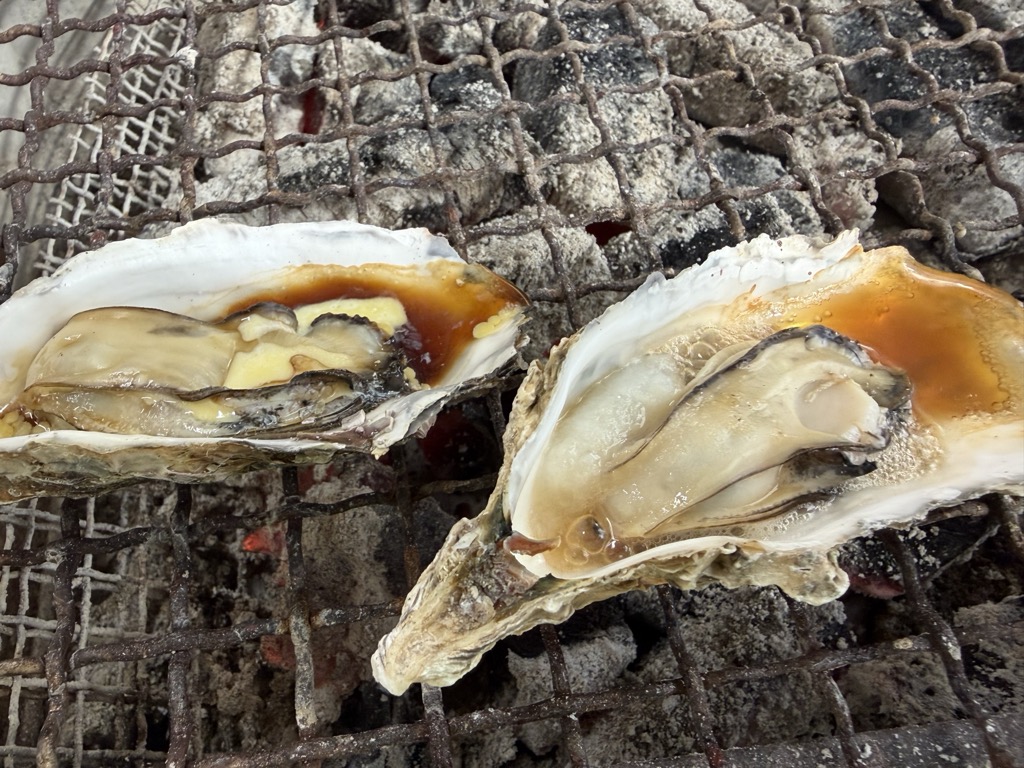
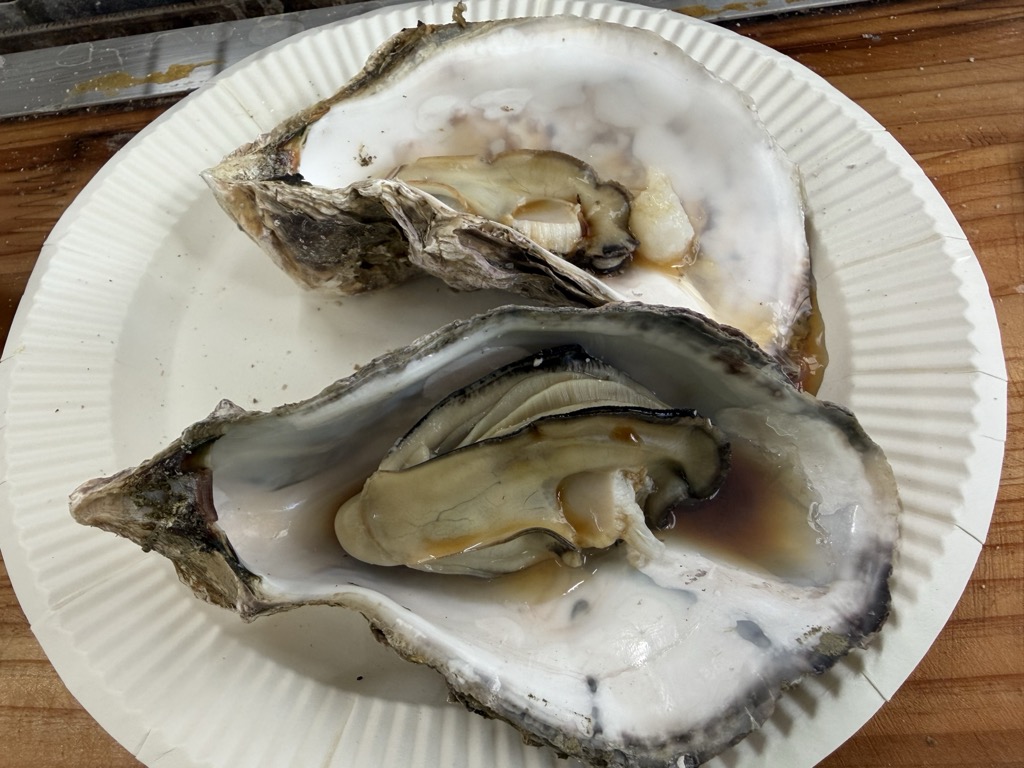
A platter of oysters costs roughly 1,300 yen. You grill the oysters yourself at your own pace. I prefer to cook them thoroughly, and here that choice feels natural rather than risky. Once cooked, the oysters tighten slightly, but release a gentle sweetness when bitten. Instead of strong minerality, the first impression is how approachable they are. The charcoal grilling leaves a subtle smoky finish that lingers pleasantly.
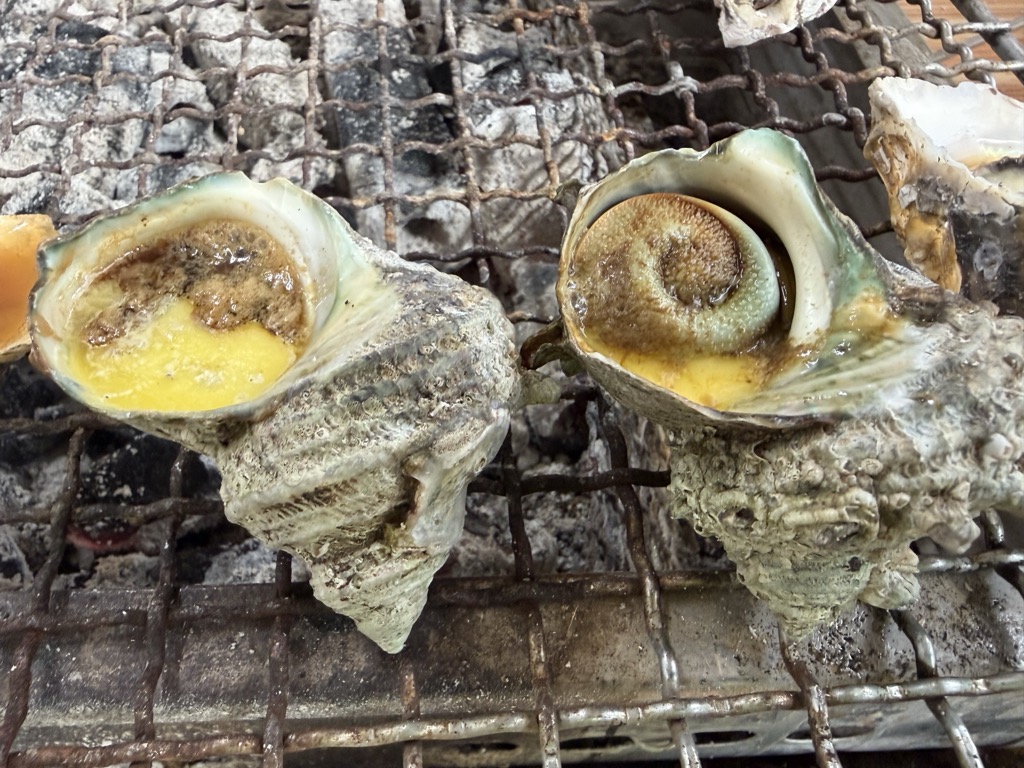
Turban shell is priced at around 1,100 yen per serving. I expected a sharper bitterness, but what stood out was the balance—clearly ocean-forward, yet without harsh edges. Eating it after oysters helps reset the palate and prevents the meal from becoming monotonous.
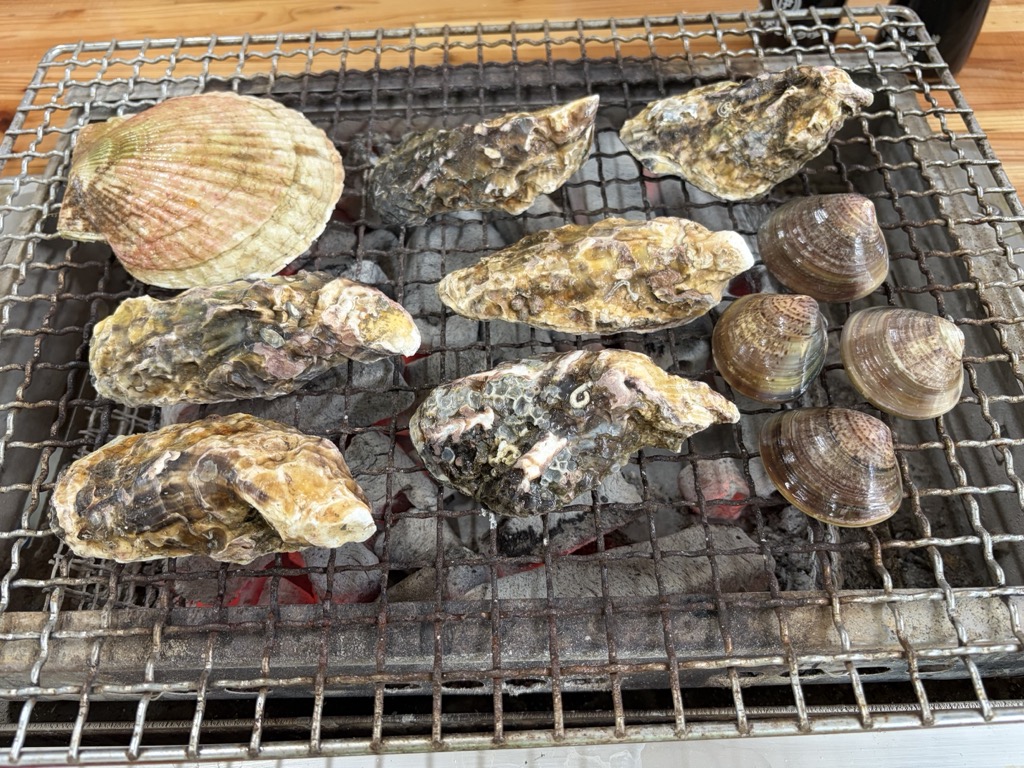
Scallops are about 450 yen each. When the butter melts into the scallop, the aroma becomes rich and immediate. Compared to oysters, the satisfaction comes from a different direction—more sweetness, less brine.
Clams cost around 500 yen per plate. They are not as sweet as scallops, but their umami develops slowly and stays with you. This understated quality makes them surprisingly effective at keeping the meal from feeling heavy, even with multiple shellfish dishes in a row.
Sponsored
Which seafood rice bowl should you order?
If you only order one, order the squid rice bowl (about 550 yen). It resets a palate that has gone heavy from grilling, and it lets you keep eating in the second half of the meal.
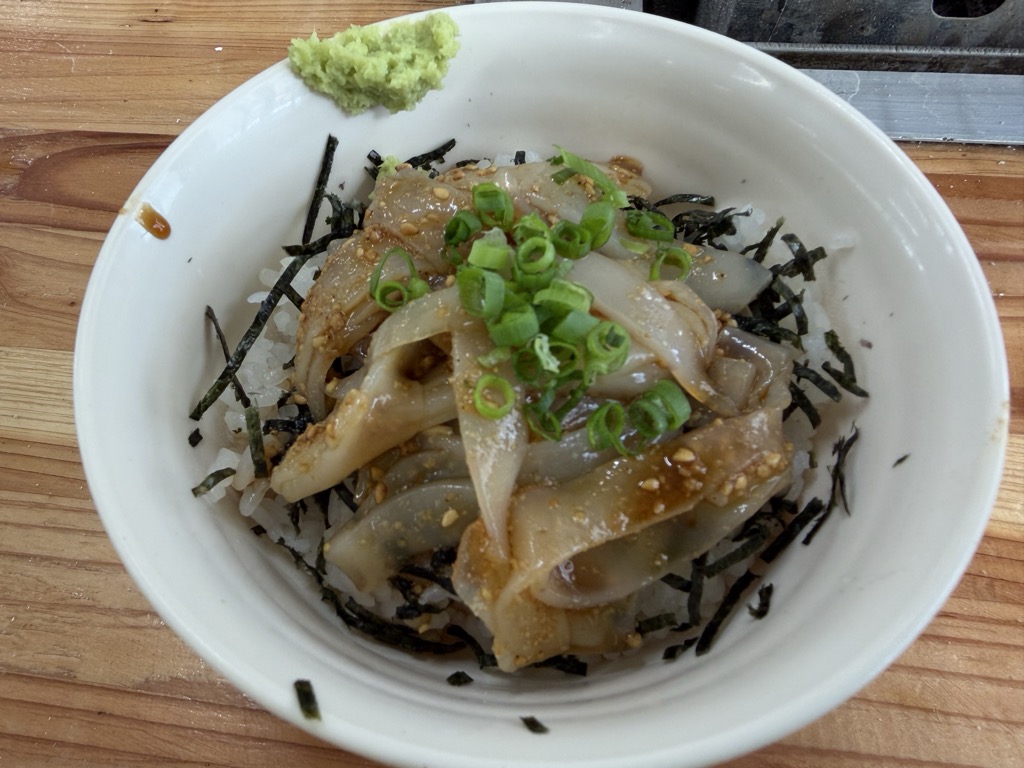
After eating several grilled items, I moved on to rice bowls. The squid rice bowl costs about 550 yen. I ordered it at the point when my palate was becoming saturated from grilling, and the timing was perfect. The squid is easy to bite through, and its sweetness arrives quickly. It resets the mouth and gives the meal a second wind.
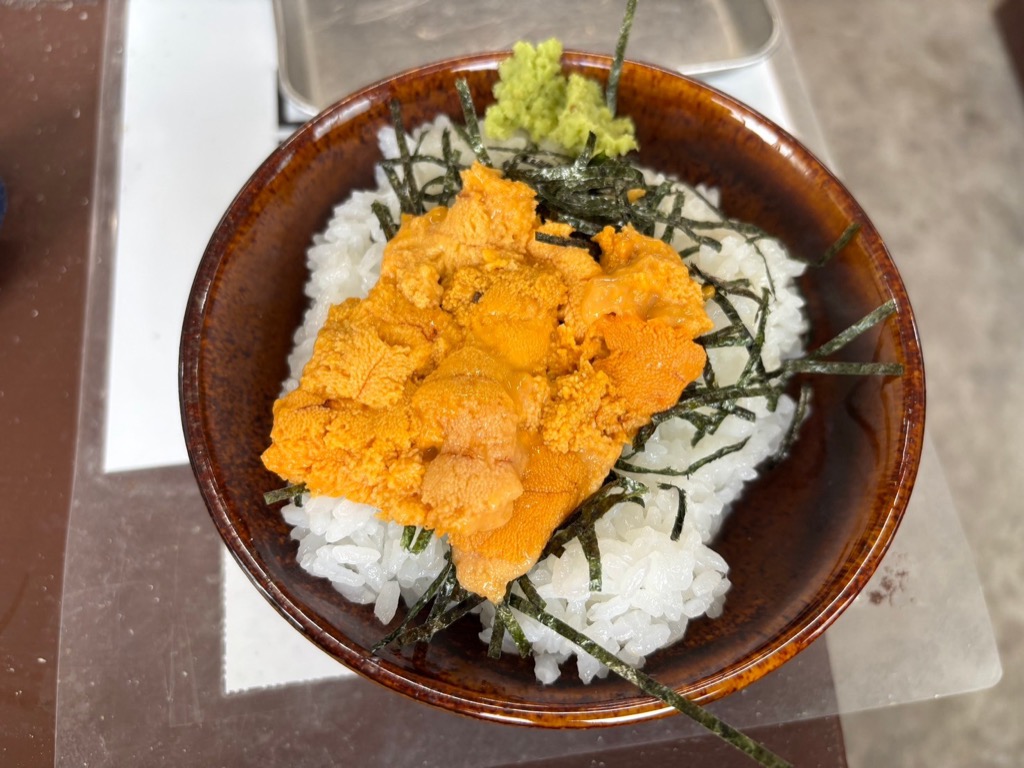
The sea urchin bowl was available that day, and because this restaurant takes its rice bowls seriously, the uni works especially well in this format. After the continued smokiness of grilled dishes, the rich, creamy texture of the sea urchin clearly shifts the mood of the meal.
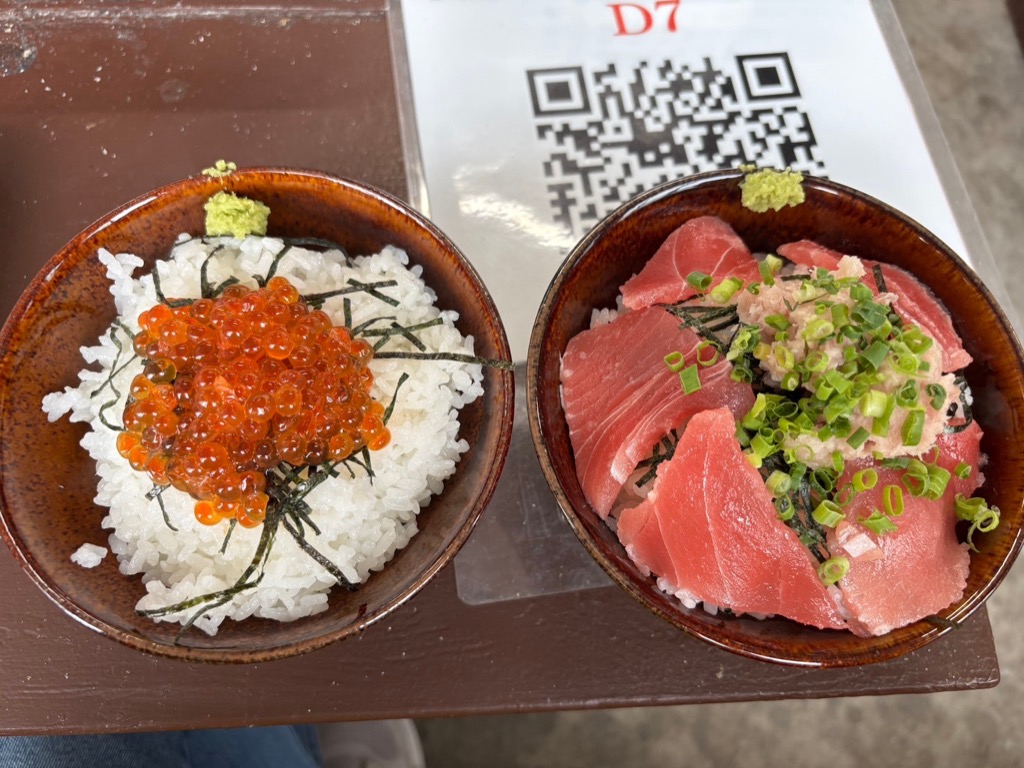
The salmon roe bowl costs around 650 yen. The individual eggs stand out clearly, and even after grilled oysters, the flavor does not get lost. Rather than relying on saltiness, the appeal comes from the moment the roe bursts in your mouth. In a back-and-forth rhythm of grilled items and rice bowls, this was the point where the meal peaked for me.
The tuna negitoro bowl is around 550 yen. If the fat were heavier, it could become overwhelming, but here it stays within a comfortable range while still delivering depth. In oyster huts, ordering rice bowls can sometimes feel repetitive, but the softness of negitoro contrasts well with shellfish textures and keeps the meal balanced.
If you want seafood served as bowls and sushi rather than grilled, Hakata Toyoichi at Bayside Place Hakata is the other place I would compare this to.
Live kuruma shrimp, conger eel, shrimp fry, and the ajillo set
To keep the meal from turning into an hour of shellfish, add live kuruma shrimp (from about 400 yen each) and the ajillo set. Both break the rhythm in a useful way.
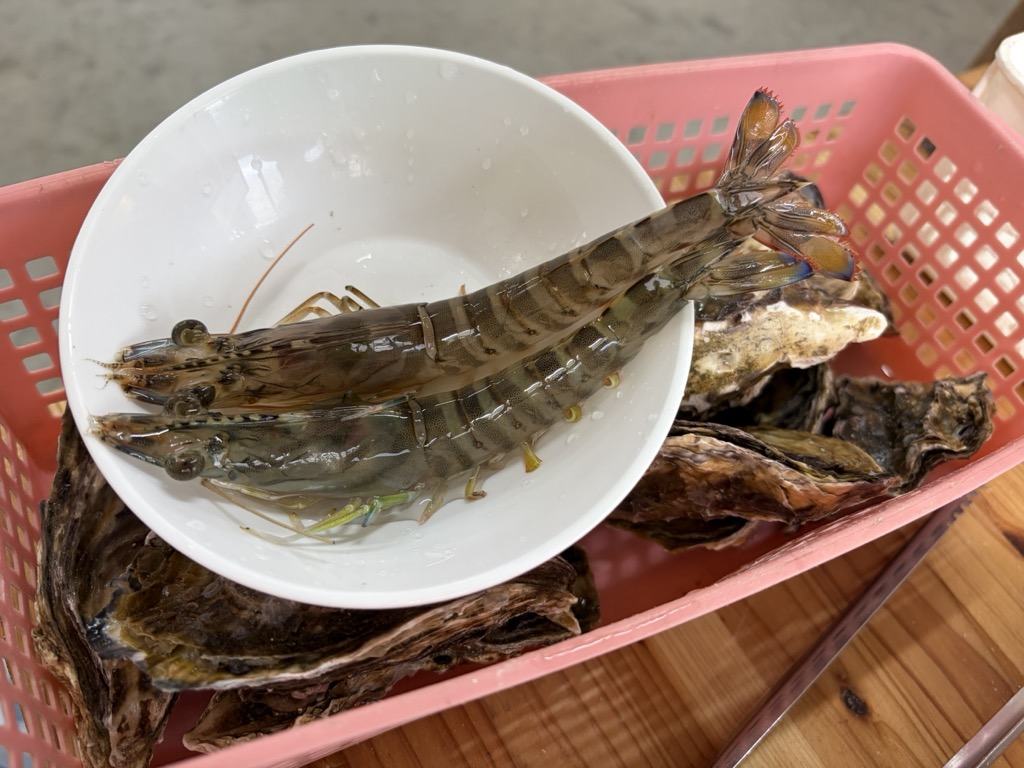
Live kuruma shrimp start at around 400 yen per piece. Once grilled, the texture stays springy rather than falling apart. The sweetness appears immediately when you bite in, which feels distinctly different from oyster sweetness. That quick payoff makes it especially satisfying.
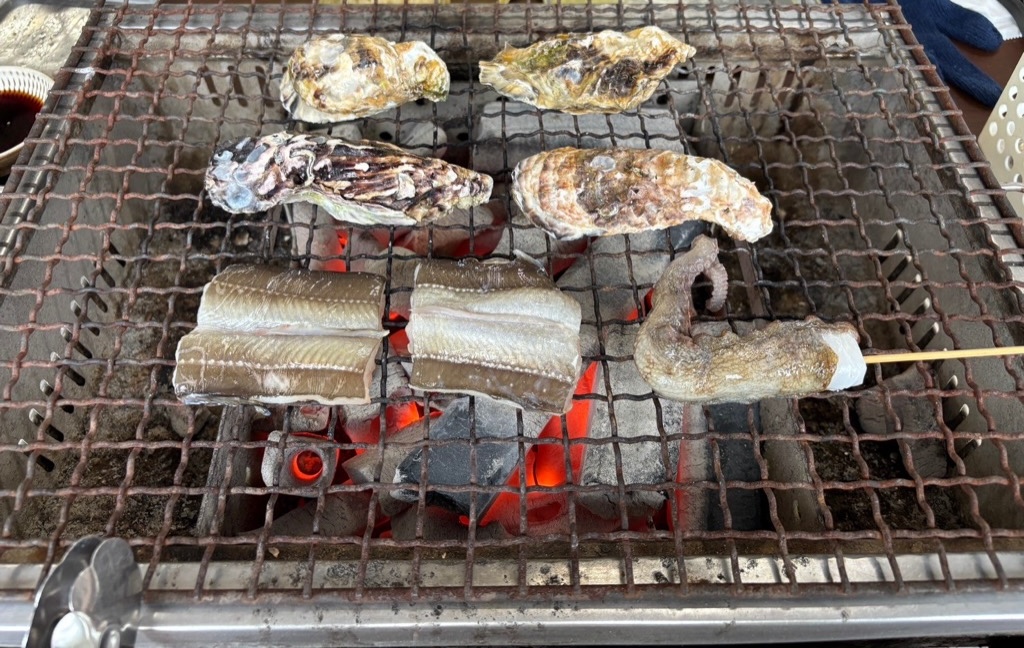
Conger eel starts at around 800 yen per plate. I ordered it between grilled shellfish dishes, and it fit naturally into the flow. The fat is present but restrained, and the soft texture changes the rhythm of chewing in a welcome way.
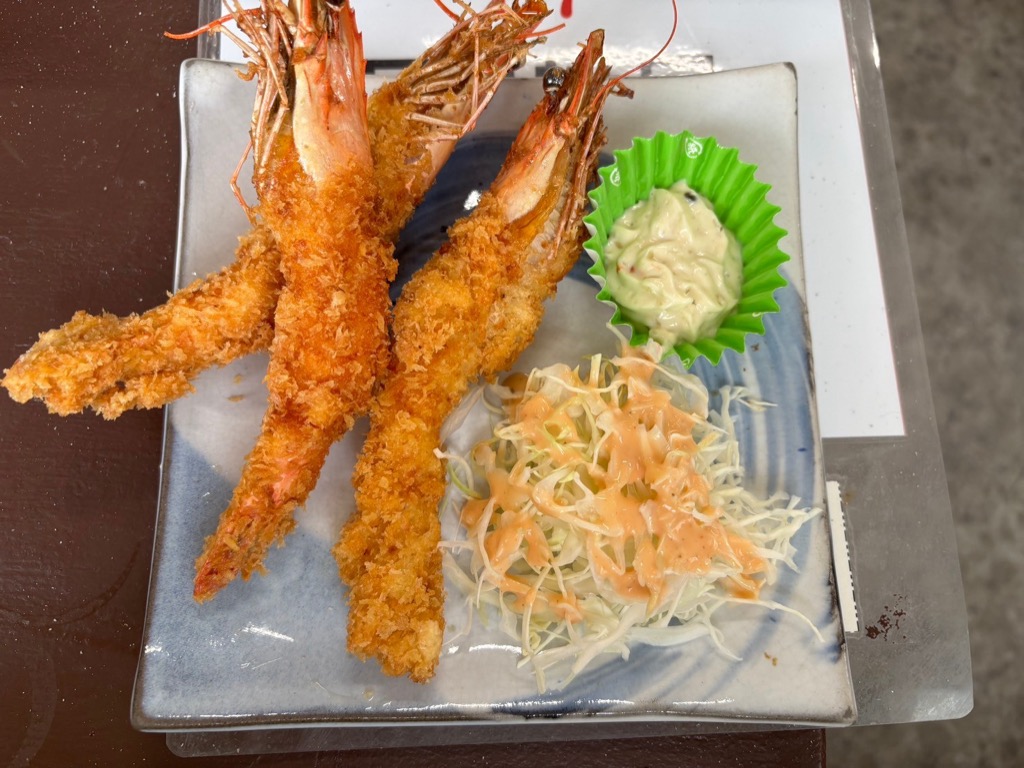
The kuruma shrimp fry was a daily special. Fried items can quickly feel heavy, but here the batter does not dominate. The shrimp remains the main presence. Even after extended charcoal grilling, the aroma of frying stands out as something entirely separate, lifting the energy of the meal near the end.
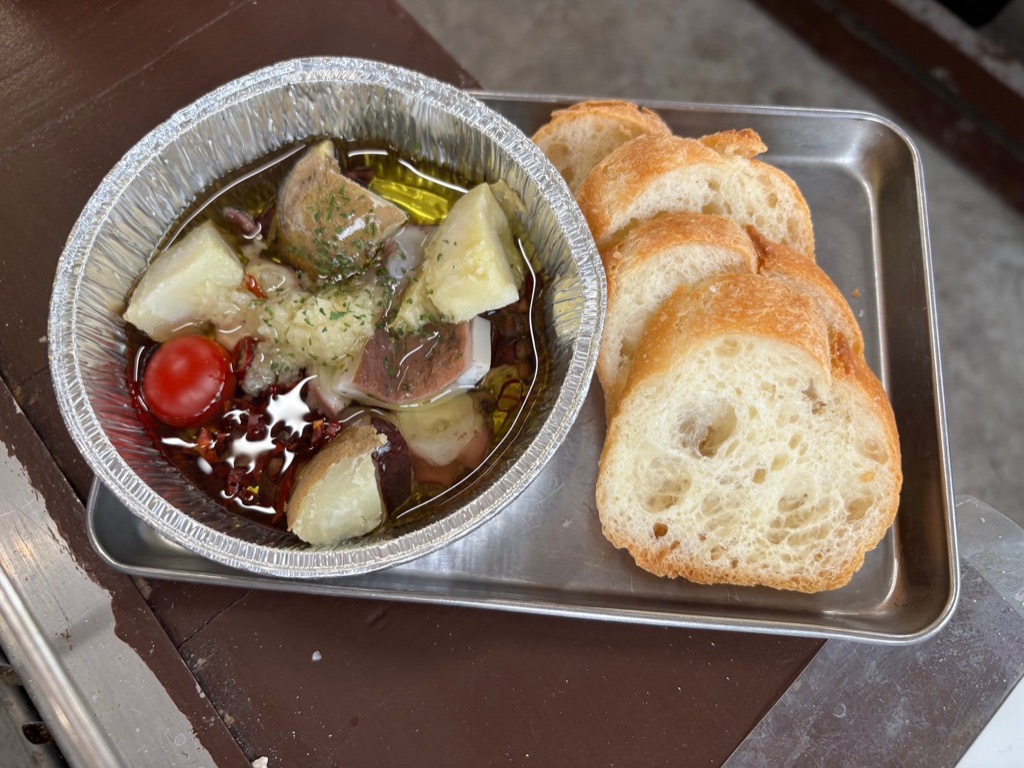
The ajillo set is slightly unusual for an oyster hut. Because I had been focused on grilling, the introduction of oil-based flavors immediately transformed the meal. Bread is provided, allowing you to fully enjoy the oil rather than leaving it behind. Instead of simply grilling and finishing, this dish neatly gathers the remaining flavors and brings the meal to a satisfying close.
Sponsored
How to reach Kaki House Maruhachi without a car
The route is Hakata or Tenjin → (subway and JR Chikuhi Line) → Chikuzen-Maebaru → (Funakoshi Line bus) → Funakoshi. Total travel time is around one hour and twenty minutes.
- Hakata / Tenjin → Chikuzen-Maebaru Station (about 40 minutes)
- From Maebaru Station North Exit, take the Funakoshi Line bus → Funakoshi (about 30 minutes)
After checking local bus routes in Itoshima, the Funakoshi Line is the one you will use. Buses are infrequent, so check the timetable before you leave.
The schedule I recommend:
- Reserve a table for opening time, around 10:00 (weekdays only—weekends and holidays take no reservations, so line up at opening instead)
- Arrive at Chikuzen-Maebaru Station by 9:30
- Take the Funakoshi Line bus departing around 9:35 and arrive in Funakoshi just after 10:00
This gets you seated before the queue forms, and because you are not driving, you can order a beer.
What to bring, and how reservations work
Maruhachi allows you to bring your own alcohol and seasonings, but any trash from what you bring must go home with you. One garbage bag makes the whole day easier.
Soy sauce and ponzu are provided by the restaurant. If you want to bring more, these three are what I recommend:
- Lemon — for oysters, especially once you have eaten several in a row
- Grated daikon — also for oysters; with ponzu it keeps things light late in the meal
- Butter — for turban shell and scallops
Reservations are taken by phone (092-328-2848), but not on weekends or public holidays. If you are going on a weekend, plan around the 10:00 opening. Rules on bringing your own items can change with the season, so confirm when you call.
For other Fukuoka meals worth planning a trip around, I have also written about Saiya, a Miyakojima-style Okinawan restaurant and Hakata Nadai Yoshizuka Unagiya.
Summary
Kaki House Maruhachi is rare among Itoshima oyster huts because it combines charcoal grilling, public-transport access, and cheap seafood rice bowls.
- Grilled: oysters (about 1,300 yen per platter) and scallops (about 450 yen each) are the core
- Bowls: order one squid bowl (about 550 yen) to reset your palate mid-meal
- Season: roughly mid-October to mid-April, 10:00–17:00 (last order 15:30)
- No reservations on weekends or holidays—arrive at opening
- Bring your own drinks and seasonings, and take your trash home
Three visits in, what makes me want to go back is not only the seafood but the partitioned seating and clean restrooms. If you are choosing your first oyster hut in Itoshima, this is a safe place to start.